
Part 2 of 2
The technician pointed toward a narrow gap near the ceiling vent.
At first, I could barely see it.
It looked like nothing more than a thin shadow where the wall met the trim.
But when he shined a flashlight into the opening, everything changed.
There was movement inside.
Not one insect.
Several.
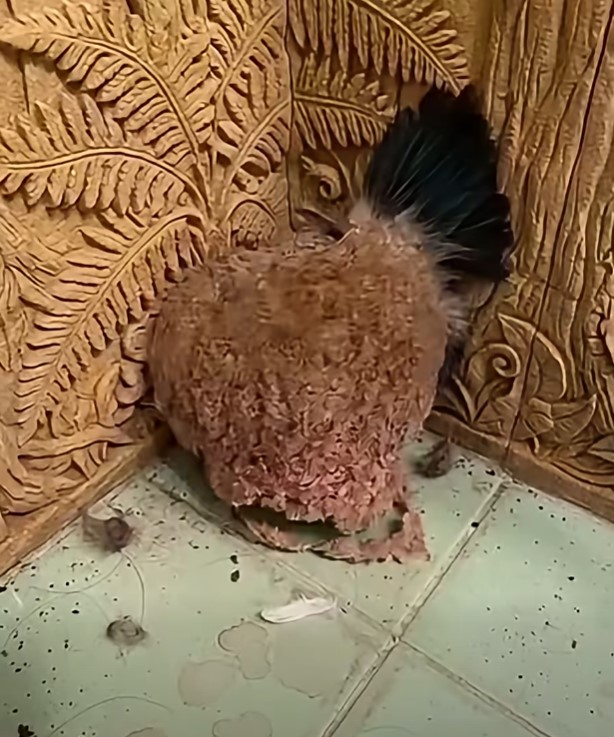
The visible nest in the corner had not appeared by accident.
The insects had found a way into a hidden space behind the bathroom wall.
From there, they had begun expanding outward.
The technician explained that social wasps and hornets can use surprisingly small exterior gaps to reach wall cavities, roof spaces and vents.
Once inside, a protected cavity can become an ideal nesting location.
It stays relatively dry.
It is sheltered from wind.
And if the insects are not disturbed, the colony can continue growing unnoticed.
That appeared to be exactly what had happened in our home.
While we were away, the house had been quiet.
No showers.
No doors opening and closing.
No one entering the bathroom several times a day.
The insects had essentially been left alone.
The technicians began tracing the route from inside the bathroom toward the exterior of the house.
Eventually, they found the likely entry point.
A small damaged area near an exterior vent had created enough space for insects to pass through.
From outside, it barely looked significant.
From the insects’ perspective, it was an open doorway.
The technicians prepared the room before doing anything else.
The bathroom was isolated.
Protective equipment was put on.
We were told to remain well away from the area.
That was when I fully understood how different professional removal was from simply knocking down a nest.
The visible paper structure was only one part of the problem.
If we had struck it with a broom or sprayed it blindly, we could have triggered defensive insects without addressing the hidden access point.
The technicians carefully treated the active colony.
They waited until insect activity had dropped before beginning removal.
Then the visible structure came down.
Layer by layer, the nest revealed its internal chambers.
Seeing it up close was astonishing.
What had looked like a strange lump from the doorway was actually an organized structure built from chewed plant and wood fibers.
Inside were multiple sections created for the colony.
And there was more material tucked into the hidden area than we had been able to see from the bathroom.
That was the part that unsettled us most.
We had been judging the danger entirely by what was visible.
The real activity extended beyond it.
Once the nest material was removed, the technicians inspected the surrounding cavity.
They checked for remaining insects and additional nest material.
Only after they were satisfied that the immediate activity had been dealt with did they begin discussing prevention.
The damaged exterior gap needed to be repaired.
The vent required proper screening.
Other openings around the house needed inspection as well.
That afternoon, we walked around the exterior with entirely new eyes.
Small cracks that had never concerned us suddenly looked important.
Loose trim.
Openings around utility lines.
Damaged vent covers.
Tiny gaps beneath roof edges.
None looked dramatic.
But neither had the opening that led to our bathroom.
Over the next several days, we sealed obvious gaps and replaced damaged screening.
We also began paying more attention to insect activity around the exterior.
One or two insects flying near a house may mean nothing.
Repeated traffic into the same small opening is different.
It can be a sign that a nest is hidden somewhere inside.
The bathroom was thoroughly cleaned.
Eventually, it looked exactly as it had before our vacation.
But it never felt quite the same.
For weeks afterward, I found myself glancing automatically toward the ceiling every time I walked inside.
The experience had changed something surprisingly basic.
I had always thought of our house as a sealed environment.
Outside was nature.
Inside was us.
But houses are full of tiny boundaries.
Vents.
Rooflines.
Pipes.
Windows.
Siding.
And when even one of those boundaries fails, wildlife and insects can sometimes take advantage of it.
The most important decision we made that day turned out to be the simplest one.
We did not touch the nest.
We did not try to prove we could handle it ourselves.
We recognized that we did not know what we were dealing with and called someone who did.
That choice may have prevented a much more dangerous situation.
Anyone who discovers a large or active wasp or hornet nest inside a home should avoid disturbing it, especially if anyone in the household has a known severe allergy to stings.
Professional identification and removal can be the safer option when the nest is large, difficult to access or located inside a wall or occupied room.
For us, the experience ended without injury.
The entry point was sealed.
The bathroom became ours again.
And our vacation ended with one lesson we never expected to bring home.
Sometimes the most dangerous thing you can do when you discover something unfamiliar is act before you understand what you are looking at.