
Part 1 of 2
You have probably seen one before.
A large star painted on the side of an old barn.
Sometimes it is simple.
Sometimes it is surrounded by circles, flowers, hearts or brightly colored geometric patterns.
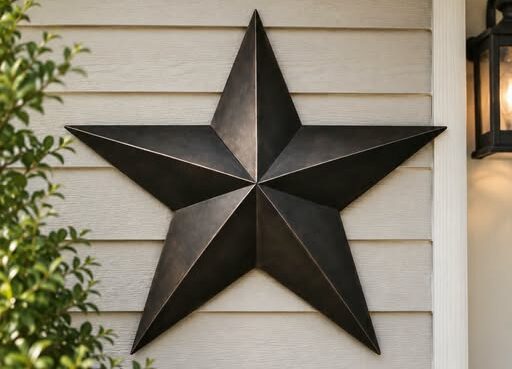
Today, similar stars appear on porches, garages and garden sheds across the country.
They are often sold as rustic decorations.
But their history goes much deeper.
Barn stars are strongly associated with Pennsylvania German, often called Pennsylvania Dutch, folk culture.
During the 19th century, elaborate painted stars and floral patterns became a familiar sight on barns throughout southeastern Pennsylvania, particularly in areas such as Berks, Lehigh, Bucks, Northampton and Montgomery counties.
To the people who created them, these designs were commonly called stars or flowers.
The term “hex sign” came later.
And that distinction matters.
For years, popular stories claimed farmers painted these symbols on barns to ward off evil, protect livestock or bring supernatural good fortune.
It is an irresistible story.
But historians say the reality is more complicated.
Researchers studying Pennsylvania German culture have found that the traditional barn designs were primarily a form of decorative folk art and cultural expression.
Stars, suns, moons and flowers appeared repeatedly in Pennsylvania German decorative traditions.
They were found not only on barns, but across everyday material culture.
The designs reflected craftsmanship, identity, religion, beauty and a strong connection to place.
Then, during the early 20th century, outsiders began giving the symbols a more mysterious interpretation.
Travel writers started describing them as magical “hex signs.”
The idea spread.
By the middle of the century, Pennsylvania Dutch tourism had become increasingly popular.
Artists began producing smaller decorative signs specifically for visitors.
Some of those artists intentionally assigned meanings to particular designs.
Stars might be sold as symbols of luck.
Birds could represent happiness.
Hearts might represent love.
Other designs were marketed as symbols of protection, prosperity or abundance.
Over time, those newer interpretations became mixed together with the much older barn-painting tradition.
That is why you may now encounter detailed lists claiming every barn-star color has a fixed meaning.
Red may be described as strength.
Blue as peace.
Green as fertility or growth.
White as purity.
Black as protection.
Those associations exist in modern folk-art traditions and commercial interpretations.
But historians caution against assuming that every farmer who painted a red or blue star centuries ago intended exactly the same symbolic message.
The original tradition was far less standardized.
What is clear is that these stars mattered visually and culturally.
They transformed huge barn walls into something distinctive.
A farmer could look across the countryside and immediately recognize a building decorated in a style associated with the region.
Some painters became especially skilled at creating enormous geometric designs.
The patterns could be surprisingly complex.
Circles had to be measured.
Points had to align.
Colors had to work together from a distance.
A design that looked simple from the road could require hours of careful work high above the ground.
And as generations passed, the stars became part of the landscape itself.
They were no longer merely decorations.
They became visual reminders of families, farms and communities that had lived in the region for generations.
Then tourism changed everything.
Small versions of the designs began appearing in shops.
Their supposed meanings became increasingly elaborate.
And the humble barn star slowly transformed from regional folk art into something recognized far beyond Pennsylvania.
But the story of how these old barn paintings became the “hex signs” people recognize today is even more surprising.