
Part 1 of 2
Australian rock has lost one of its most unmistakable voices.
Gary “Angry” Anderson, the longtime frontman of Rose Tattoo, has died at the age of 79.
Anderson died on Monday, September 21, 2026, surrounded by loved ones in Australia.
His death came only weeks after he suffered a cardiac arrest while Rose Tattoo was touring Europe.
The medical emergency forced the band to cancel the remaining dates of its European tour while Anderson was hospitalized in Germany.
He later returned to Australia for treatment.
His family and bandmates confirmed his death in a statement, describing him as a devoted father and a deeply loved member of the music and entertainment community.
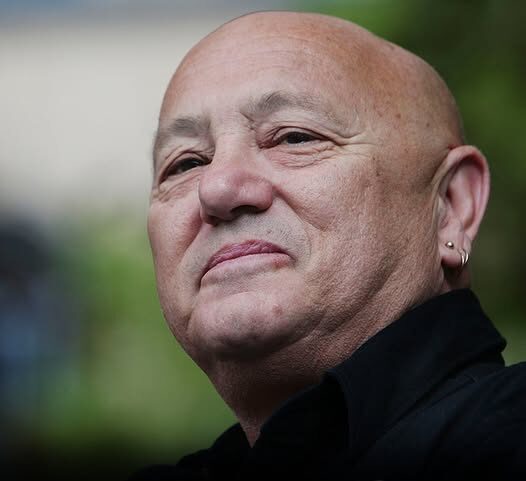
For generations of Australian rock fans, Anderson was impossible to mistake.
The shaved head.
The tattoos.
The fierce stage presence.
And above all, that unmistakably rough voice.
Born Gary Stephen Anderson in Melbourne on August 5, 1947, he grew up in working-class Coburg.
Long before international tours and packed venues, Anderson had developed the toughness that would later become part of his public persona.
He became known as “Angry Ant” after developing a reputation for taking on men considerably larger than himself.
Eventually, he shortened the nickname.
“Angry” remained with him for the rest of his life.
By the mid-1970s, Anderson had already been performing with Australian bands including Buster Brown.
But everything changed when he became the voice of Rose Tattoo.
Formed in Sydney in 1976, the band developed a hard, aggressive sound built around powerful vocals, slide guitar and an outlaw image that stood apart even in Australia’s already formidable rock scene.
Anderson was at the center of it.
Rose Tattoo’s self-titled debut album arrived in 1978.
It helped establish the band as one of the country’s most uncompromising rock acts.
Songs including Bad Boy for Love, Rock ’n’ Roll Outlaw, Nice Boys and We Can’t Be Beaten became closely associated with the band’s raw style.
Australia did not immediately understand what Rose Tattoo was doing.
The band was loud.
Confrontational.
Unpolished.
And very different from many acts appearing on mainstream television and radio at the time.
But outside Australia, their reputation began to grow.
They became one of the country’s significant rock exports and developed a following overseas.
The band’s influence also extended beyond its commercial success.
Rose Tattoo’s hard-edged sound would later be cited as an influence by younger rock musicians internationally.
Decades after the group first appeared, its place in Australian rock history was formally recognized.
Rose Tattoo was inducted into the ARIA Hall of Fame in 2006.
By then, Anderson had become much more than the singer of one legendary hard-rock band.
His career had expanded into television, acting, charity work and youth advocacy.
Behind the intimidating stage persona was a public figure whose interests and work increasingly moved beyond music.
He also became a father, something he later described as profoundly changing him.
But there was another side of Anderson’s career that surprised even some of Rose Tattoo’s hardest-rocking fans.
In 1987, he released a solo ballad that sounded almost nothing like the music that had made him famous.
The song was called Suddenly.
And after it was used during one of the most famous weddings in Australian television history, Anderson found himself with an entirely new kind of audience.
The hard-rock frontman known for screaming his way through “We Can’t Be Beaten” was suddenly being heard during one of television’s most romantic moments.