
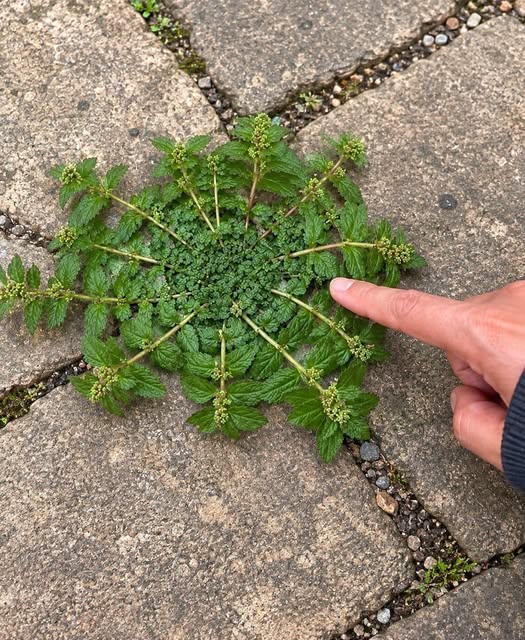
Santa Lucía Herb: The Common Plant Many People Remove Without Knowing Its Traditional Uses
A Small Wild Plant With a Long Place in Traditional Home Remedies
Many people see a small plant growing between paving stones, beside sidewalks, or inside flowerpots and remove it without giving it a second thought.
To them, it is simply another unwanted weed competing with garden plants.
Yet in many households, the same humble herb has carried a very different meaning for generations.
Known as Santa Lucía herb, or Euphorbia hirta, the plant has long been associated with traditional home preparations used during periods of digestive discomfort, breathing difficulties, swelling, and other everyday concerns.
Its appearance is modest, but the plant has remained part of family knowledge in places where herbal preparations have traditionally been passed from one generation to the next.
For some people, seeing the herb brings back memories of grandparents or older relatives preparing warm infusions in the kitchen and explaining how different plants were used around the home.
Why Many People Mistake It for an Ordinary Weed
Santa Lucía herb does not have the appearance of a dramatic ornamental plant.
It is small, green, and capable of appearing in places where people may not expect anything useful to grow.
It may emerge along sidewalks, in yards, around flowerpots, or in other disturbed areas where small wild plants are often quickly removed.
Because of this, many people may never learn its name or recognize the traditional significance attached to it.
One of its noticeable characteristics is the white latex-like liquid that can appear when part of the plant is cut or damaged.
That feature can make the plant memorable once someone learns to identify it, but identification should never depend on a single characteristic alone.
Traditional Knowledge Gave the Herb a Different Reputation
For generations, some families have treated plants growing around the home as more than background vegetation.
Older relatives often learned which herbs were traditionally prepared as teas or infusions and when those preparations were commonly used.
Santa Lucía herb became part of that tradition.
It has been prepared in simple household infusions and used as part of traditional practices associated with digestion, breathing comfort, and fluid balance.
These uses belong to traditional knowledge rather than serving as proof that the plant can diagnose, cure, or treat medical conditions.
That distinction is important, especially when discussing herbal remedies in a modern health context.
Digestive Comfort Is One of Its Traditional Associations
One of the reasons the herb has remained familiar in some households is its connection with digestive comfort.
Traditional preparations have sometimes been consumed when a person felt digestive uneasiness or wanted a gentle herbal drink after meals.
Simple infusions were often the preferred form because they could be prepared with basic household equipment.
The plant would be used in a modest preparation and consumed as part of a broader tradition of home care.
However, digestive symptoms can have many different causes.
A traditional herbal drink should not be treated as a replacement for medical evaluation when symptoms are severe, persistent, or unusual.
The Herb Has Also Been Linked With Breathing Comfort
Santa Lucía herb has also been remembered in some families for its traditional association with breathing comfort.
Warm herbal preparations were sometimes used during periods of seasonal discomfort or when someone wanted relief from the feeling of respiratory irritation.
These practices were often based on family experience and knowledge passed down orally.
For older generations, preparing an herbal infusion could be part of a familiar routine during times when someone in the household was not feeling well.
The comfort associated with the preparation could involve the warmth of the drink, the ritual itself, and the sense of care surrounding it.
Even so, breathing problems should always be taken seriously.
Difficulty breathing, worsening respiratory symptoms, or persistent discomfort require appropriate medical attention rather than reliance on an herbal preparation.
Fluid Balance and Swelling Were Part of Traditional Use
The herb has also been associated with traditional practices related to fluid balance.
Some people have used preparations made from the plant when experiencing mild swelling or when they wanted to support normal elimination as part of traditional home care.
This is another example of how a small wild plant became part of household knowledge despite being dismissed by others as a weed.
Stories about these uses were often preserved through observation rather than written instructions.
A grandparent might show a younger family member the plant, explain how it was traditionally prepared, and describe the situations in which people once used it.
That type of knowledge can become strongly connected with family memory.
Traditional Use Does Not Mean the Plant Is Appropriate for Everyone
The fact that an herb has been used for generations does not automatically mean it is safe for every person or every situation.
Traditional remedies can still have unwanted effects, and different people may react differently to plant-based preparations.
This is especially important for pregnant people, children, and individuals living with chronic health conditions.
People who take medications may also need to be cautious with herbal products because natural substances are not automatically free from possible interactions or side effects.
For these reasons, traditional herbal practices should be approached thoughtfully rather than casually.
Correct Identification Is Essential
One of the most important concerns with any wild herb is correct identification.
Plants growing naturally in yards, along roadsides, or between paving stones can resemble one another closely.
A person who relies only on a photograph, one leaf shape, or one feature such as white latex may confuse one species with another.
That mistake can create unnecessary risk.
Anyone considering the use of a wild plant should be certain of its identity before handling or preparing it for consumption.
Guessing is not a safe approach when several similar-looking plants may grow in the same environment.
Where the Plant Grows Matters Too
Even correctly identified herbs may not be suitable for preparation if they have been growing in contaminated areas.
A plant found beside a busy road, in polluted soil, near treated surfaces, or in places exposed to unknown chemicals may have absorbed substances that people would not want in a homemade infusion.
This is one reason simply finding the herb outdoors does not mean it should automatically be harvested.
The condition of the surrounding soil and environment matters.
A plant growing naturally can still be exposed to pollutants that are invisible to the person collecting it.
Simple Kitchen Infusions Were Part of the Tradition
In households where Santa Lucía herb was traditionally used, preparation was often simple.
The plant was commonly associated with basic herbal infusions rather than complicated recipes.
Warm water and plant material formed the basis of the preparation, creating the kind of tea-like drink commonly found in household herbal traditions.
For many families, the importance of the preparation extended beyond the herb itself.
The process represented care, familiarity, and knowledge passed from one generation to another.
Someone preparing the infusion might remember learning about the plant from a parent or grandparent many years earlier.
The Plant Carries Cultural and Family Meaning
Herbal traditions often survive because they are tied to memories as much as to practical use.
A small plant growing in an ordinary corner of a yard can remind someone of childhood, family kitchens, or the advice of an older relative.
That emotional connection helps explain why Santa Lucía herb continues to be remembered even as modern medical care becomes more accessible.
For many people, traditional herbs do not represent rejection of modern medicine.
Instead, they represent a connection with the ways previous generations cared for themselves using the natural materials available around them.
That history can remain meaningful without treating traditional remedies as substitutes for professional medical care.
Health Concerns Still Require Proper Medical Attention
Some of the symptoms traditionally associated with the herb, including breathing discomfort, digestive problems, or swelling, can sometimes indicate conditions that require medical evaluation.
For that reason, herbal tea should never be used to delay necessary care.
Persistent symptoms, severe discomfort, sudden changes, or breathing difficulties should be assessed appropriately.
Traditional remedies may have a place in cultural practice, but they should not create false confidence when a person may need professional treatment.
This is particularly important when symptoms involve children, pregnant people, elderly individuals, or anyone with an existing medical condition.
Natural Does Not Automatically Mean Risk-Free
One of the most common misunderstandings surrounding herbal remedies is the assumption that anything natural must also be harmless.
Plants contain active natural substances, and those substances can affect the body in different ways.
Some people may tolerate an herb without difficulty, while others may experience unwanted reactions.
The appropriate amount can also matter.
A preparation that has traditionally been used in small quantities should not automatically be assumed to remain safe when consumed in larger or more concentrated forms.
Caution remains important even when an herb has a long history of household use.
Why the Herb Continues to Attract Attention
Part of the fascination with Santa Lucía herb comes from the contrast between its ordinary appearance and the significance people have attached to it.
It can grow unnoticed in places where people walk every day.
One person may pull it from the ground and throw it away immediately.
Another may recognize it as a plant remembered from childhood and associate it with family traditions stretching back decades.
That difference shows how knowledge can completely change the way people look at something growing in an ordinary yard.
A Humble Plant With Generations of Stories Behind It
Santa Lucía herb, or Euphorbia hirta, remains an example of how traditional plant knowledge can survive through family experience.
Its small leaves, tiny flowers, and white latex-like sap may not appear remarkable to someone unfamiliar with the plant.
Yet for others, it represents years of inherited knowledge involving simple infusions and traditional approaches to digestive comfort, breathing ease, and fluid balance.
Those traditional associations should be understood carefully and without exaggeration.
The plant should not be presented as a cure or replacement for medical treatment.
Correct identification, safe harvesting, and awareness of personal health conditions remain essential.
Tradition and Caution Can Exist Together
The story of Santa Lucía herb does not have to be reduced to a choice between rejecting traditional knowledge and accepting every old remedy without question.
Both tradition and caution can exist at the same time.
Families can preserve memories of how an herb was used while also recognizing the importance of modern medical guidance and safe identification.
That balanced approach allows the plant to remain part of cultural memory without encouraging unsafe health decisions.
For many people, its greatest value may ultimately be the connection it creates between everyday nature and the knowledge of previous generations.
A plant growing quietly between stones or beside a flowerpot can carry stories, habits, and memories far larger than its size suggests.
And that is why something dismissed by one person as a common weed may still be remembered by another as a meaningful part of family tradition.