
A Farmer Found Clear, Jelly-Like Clusters in His Soybean Field. What Were They?
A shallow pool left by rain offered a possible glimpse into the lives of frogs and other amphibians
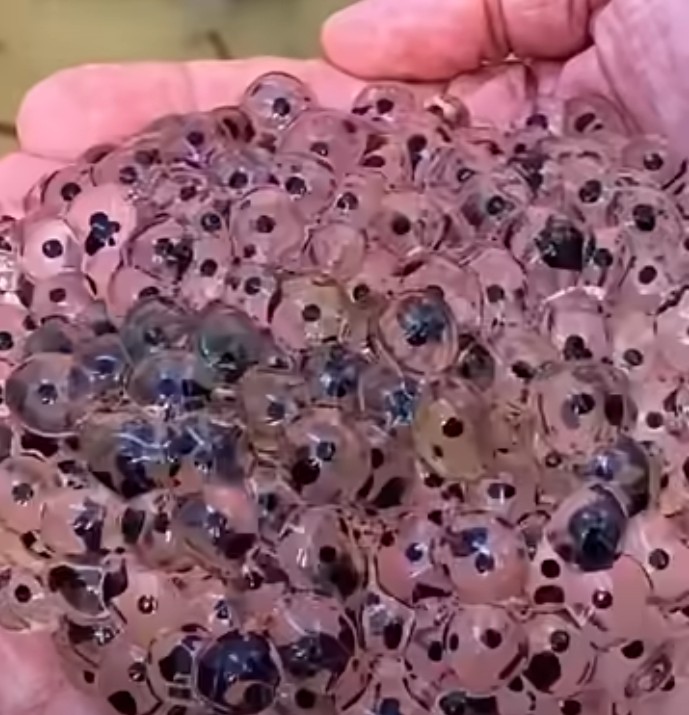
After a stretch of rain, a farmer walked through his soybean field to see where water had collected. In one low spot, he noticed several clusters of small, transparent spheres. They looked like beads suspended in jelly. He photographed them where they were and shared the pictures with people familiar with local wildlife.
One possibility was that he had found amphibian eggs. The clusters may have belonged to a local frog, though the account gives no confirmed identification. The shallow water was a clue worth following. For some amphibians, a pool that appears only part of the year can provide just the right conditions to lay eggs.
Why some frogs breed in temporary pools
A low spot that fills with rainwater can offer an advantage over a permanent pond. Seasonal pools dry out, so they generally lack the fish that would otherwise eat amphibian eggs and larvae. Wood frogs and some salamanders use these temporary pools to reproduce. If the water lasts long enough, their young have time to hatch and develop before the pool dries.
Timing matters. A pool that disappears too soon can strand eggs or larvae, and a wet patch that looks promising after one storm may dry out within days. Returning to the same spot after another rain or later in the season can reveal how long the water stays and whether the clusters have changed.
Several kinds of amphibians lay eggs in gelatinous masses. A clear photo can help narrow down the possibilities, especially if it shows how the eggs are arranged and whether they are attached to a stem or twig. The general location and time of year can also help a local specialist determine which species are likely to be breeding there.
What a wet corner of a field can offer wildlife
Amphibians use different parts of the landscape at different stages of life. A seasonal pool may serve as a breeding site, while nearby grasses, leaf litter, or shaded ground offer shelter after the young leave the water. On farmland, that can make the edges of a pond, ditch, or field as relevant to wildlife as the water itself.
Vegetation around wet areas can also slow runoff and trap some of the soil and nutrients it carries. Where field operations allow, keeping a strip of vegetation between cultivated ground and a pond or seasonal wetland can help protect water quality while providing cover for wildlife. A local conservation group can help a landowner assess whether an existing wet area is worth preserving and what kind of buffer would suit the site.
What to record when something unusual turns up
A close photograph can show the individual spheres, while a wider image can capture the shape of the pool and the vegetation around it. The date, recent rainfall, and a note about whether the pool normally dries out give a wildlife specialist more context. Photographs taken on a second visit can document changes while leaving the clusters undisturbed.
Farmers who regularly walk the same fields can notice patterns that a single visit would miss. A low spot may fill after every heavy rain, hold water for weeks in spring, or show signs of wildlife at roughly the same time each year. The farmer’s first photograph captured an unfamiliar cluster. A series of observations could show whether that small stretch of the soybean field serves as a seasonal breeding site.