
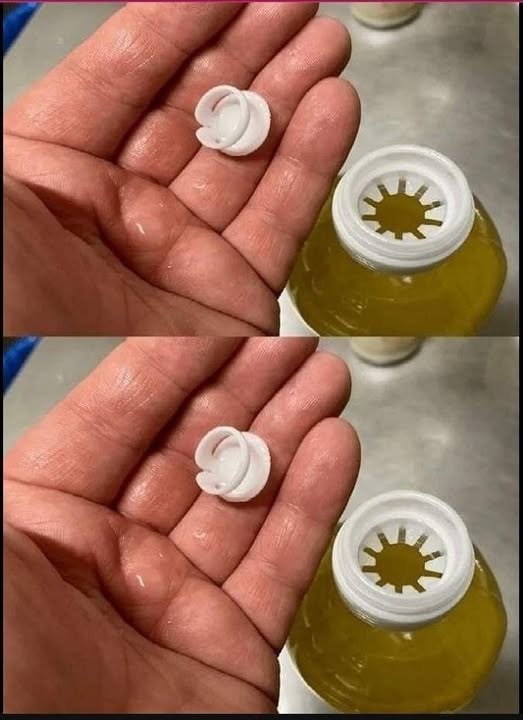
The Hidden Purpose of Oil Bottle Seals and Why They Shouldn’t Be Thrown Away
A Common Kitchen Frustration
Many people have experienced the irritation that comes with opening a new bottle of cooking oil. The plastic seal beneath the cap often requires force to remove, and in some cases, it can lead to spills or break unexpectedly.
This small component can feel like an unnecessary obstacle, especially when it resists removal or snaps in an inconvenient way. For those who cook regularly, this repeated experience can quickly become frustrating.
Because of this, it is common for people to discard the plastic ring or seal immediately after opening the bottle, assuming it serves no further purpose.
However, this seemingly insignificant piece of plastic actually plays an important role that extends beyond its initial function.
Understanding the Design of the Seal
The plastic tab or ring located under the cap is not simply a disposable cover. Its design includes specific features that allow it to serve multiple functions once repositioned correctly.
After removing the seal, it can be placed back into the bottle opening. This step is often overlooked, but it is essential to unlocking its full usefulness.
When reinserted properly, the seal fits within the grooves of the bottle’s neck. Its slightly asymmetrical shape ensures that a small gap remains, even when it is secured.
This small detail is intentional and plays a key role in how the oil is dispensed from the bottle.
Creating a Controlled Pour
One of the most practical benefits of the plastic seal is its ability to regulate the flow of oil. Without it, oil can pour out too quickly, making it difficult to control the quantity being used.
When the seal is placed back into position, it partially restricts the opening of the bottle. This allows the oil to flow in a thinner, more controlled stream.
This feature is particularly useful when preparing recipes that require precise measurements. Instead of accidentally pouring too much, users can better manage the amount of oil they add.
Over time, this can lead to less waste and more consistent cooking results.
Preventing Mess and Spills
Another advantage of using the seal correctly is the reduction of spills. A fully open bottle can release oil quickly, especially when tilted too far or handled without care.
By narrowing the flow, the seal helps prevent sudden surges of liquid. This makes it easier to pour oil without creating a mess on countertops or stovetops.
For those who frequently cook, this simple adjustment can make a noticeable difference in maintaining a clean workspace.
It also reduces the need for constant wiping and cleanup, saving time during meal preparation.
Supporting Better Oil Preservation
Beyond controlling the flow, the plastic seal also contributes to preserving the quality of the oil. It acts as a barrier that limits exposure to air when the bottle is closed.
Air exposure can affect oil over time, leading to changes in flavor and freshness. By reducing the amount of air that enters the bottle, the seal helps maintain the oil’s original characteristics.
This added layer of protection can extend the usability of the product, especially for those who use oil less frequently.
Maintaining freshness is particularly important for cooking oils that are sensitive to environmental factors.
A Simple Yet Effective Solution
The usefulness of the plastic tab lies in its simplicity. It does not require additional tools or complicated adjustments to function effectively.
Once reinserted, it naturally creates a more controlled pouring experience while supporting preservation at the same time.
This dual-purpose design demonstrates how small details in packaging can significantly improve everyday use.
Despite its practicality, many people remain unaware of this feature and continue to discard the seal without a second thought.
Common Misunderstandings About the Seal
The primary reason the plastic tab is often overlooked is that its purpose is not immediately obvious. Its initial role as a protective cover can lead users to believe that it has no further value.
Additionally, the effort required to remove it can create a negative impression, reinforcing the idea that it is simply an inconvenience.
Without clear instructions, it is easy to assume that the seal is meant to be thrown away after opening the bottle.
This misunderstanding prevents many people from benefiting from its practical design.
Proper Use and Handling
To make the most of the seal, it should be handled carefully when being placed back into the bottle. Gentle pressure is enough to secure it within the grooves.
It is important not to push too hard, as excessive force could cause the tab to fall inside the bottle, making it difficult to retrieve.
Once positioned correctly, the seal should remain stable while still allowing a controlled flow of oil.
This simple step ensures that the seal functions as intended without causing additional complications.
Improving Everyday Cooking Habits
Using the plastic seal effectively can lead to small but meaningful improvements in daily cooking routines. It allows for greater precision, reducing the likelihood of overuse.
This can be especially beneficial when preparing dishes that require careful measurement or when trying to manage ingredient portions.
In addition, minimizing spills contributes to a more efficient and enjoyable cooking experience.
These practical advantages make the seal a valuable tool rather than a disposable piece of packaging.
A Detail Worth Noticing
In many cases, useful design features go unnoticed simply because they are not widely explained. The plastic tab on oil bottles is one such example.
What appears to be a minor component actually serves multiple purposes that enhance both functionality and convenience.
Recognizing and using these features can make everyday tasks easier and more efficient.
It also highlights the importance of understanding how common household items are designed to be used.
Rethinking What Gets Discarded
Instead of immediately throwing away the seal, taking a moment to understand its function can change how it is used.
This shift in perspective allows users to take advantage of a built-in feature that improves control and reduces waste.
Small adjustments like this can have a lasting impact on how products are used over time.
By making use of what is already included, there is less need for additional tools or accessories.
A Practical Tip for Everyday Use
The next time a bottle of oil is opened, the plastic seal can be repurposed instead of discarded. Placing it back into the bottle opening creates a simple yet effective pouring solution.
This approach requires minimal effort but offers noticeable benefits in terms of control and cleanliness.
It also helps preserve the quality of the oil, ensuring it remains suitable for use over a longer period.
In a kitchen setting, where efficiency and precision are important, even small improvements can make a difference.
A Small Feature with Big Benefits
The plastic tab under the cap of an oil bottle may seem insignificant at first glance. However, its design reveals a thoughtful approach to everyday usability.
By serving both as a protective seal and a flow regulator, it addresses common challenges associated with pouring oil.
Understanding its purpose transforms it from a frustrating obstacle into a practical tool.
With proper use, this small feature can enhance cooking experiences, reduce waste, and simplify tasks that are often taken for granted.