
Inside Japan’s Ultra-Narrow Homes: How Limited Space Becomes a Livable Reality
A Home That Defies First Impressions
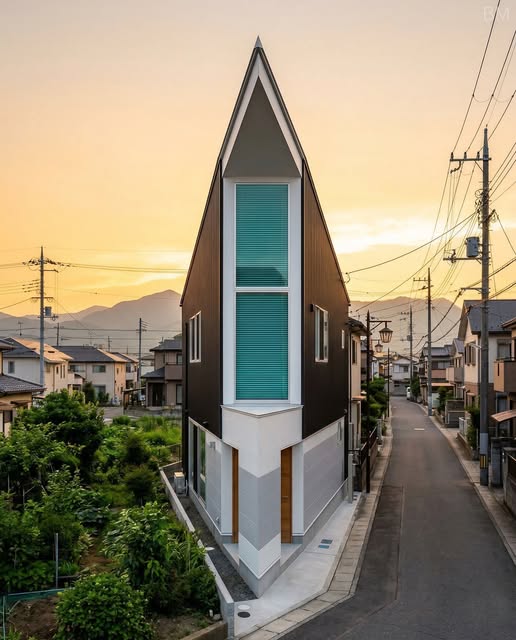
At first glance, a narrow home tucked between buildings in Japan may seem impractical or even unlivable.
With its slim exterior and tight footprint, it can appear too confined to support everyday life.
Yet stepping inside reveals a completely different experience, where thoughtful design transforms limitations into comfort.
Understanding the Rise of Narrow Homes
Japan’s cities are known for their high population density and restricted land availability.
As urban areas grow tighter, architects are often required to build on small or irregular plots that would be considered unusable elsewhere.
This challenge has led to the development of compact residential designs known as “kyosho jutaku,” or micro-homes.
Designing for Limited Space
These homes are created with a clear goal: make every inch count.
Instead of expanding outward, architects build upward, using vertical layouts to maximize living space.
The result is a home that feels complete despite its narrow base.
Exterior Simplicity and Misleading Appearances
From the outside, narrow homes often appear minimal and extremely compact.
Their slim profiles can resemble corridors rather than traditional houses.
Some are only a few meters wide, reinforcing the impression that the interior must be equally restrictive.
The Reality Inside: Space Reimagined
Once inside, the perception changes dramatically.
The interior layout creates a sense of openness that contrasts sharply with the exterior appearance.
Careful planning allows these homes to feel functional, organized, and even spacious.
Vertical Living as a Core Strategy
One of the most important design principles in narrow homes is vertical organization.
Instead of spreading rooms across a single floor, spaces are stacked across multiple levels.
This approach turns limited ground space into a full living environment.
Compact staircases connect each level, ensuring efficient movement throughout the home.
In some designs, split-level platforms replace traditional room divisions, creating a layered layout that feels dynamic.
Open-Concept Layouts Enhance Flow
Many narrow homes avoid unnecessary walls and partitions.
By reducing physical barriers, spaces flow naturally into one another.
This open-concept approach makes interiors feel larger than their actual size.
Instead of separate rooms, areas are defined subtly through changes in height or function.
This creates continuity while still allowing each space to serve a specific purpose.
Light as a Design Tool
Natural light plays a critical role in shaping the atmosphere inside narrow homes.
Large windows and skylights are often used to bring in as much daylight as possible.
Bright interiors reduce the sense of confinement and create a welcoming environment.
Light-colored walls and surfaces further enhance this effect.
They reflect sunlight throughout the space, making rooms feel more open and airy.
Furniture Designed for Efficiency
In compact living spaces, furniture must serve more than one function.
Multi-purpose pieces are a key feature of narrow home interiors.
They allow residents to maximize usability without overcrowding the space.
Common solutions include beds with built-in storage, foldable tables, and integrated shelving.
These elements help maintain organization while reducing visual clutter.
Minimalism as a Guiding Principle
Japanese design often emphasizes simplicity and functionality.
This philosophy is especially important in narrow homes, where excess items can quickly overwhelm the space.
By focusing only on essential elements, interiors remain clean and balanced.
This minimalist approach not only improves organization but also enhances comfort.
A clutter-free environment can feel significantly larger than one filled with unnecessary objects.
Creative Use of Structural Elements
Architects frequently incorporate multi-functional features into the structure itself.
Instead of treating walls, stairs, and corners as separate elements, they are designed to serve multiple purposes.
Staircases often double as storage units.
Walls can include built-in shelving or hidden compartments.
Open areas may be adapted for different uses throughout the day.
Turning Constraints Into Opportunities
Rather than viewing limited space as a disadvantage, designers approach it as a creative challenge.
Every constraint becomes an opportunity to rethink how space is used.
This mindset leads to innovative solutions that make narrow homes both practical and appealing.
Even in extreme cases where plots are exceptionally small, these design strategies allow homes to remain livable.
The result is a unique form of architecture that prioritizes efficiency without sacrificing comfort.
Why These Homes Feel Larger Than They Are
The sense of space inside a narrow home is not determined by its size alone.
Instead, it is shaped by how the space is organized and experienced.
Vertical height replaces horizontal width, allowing rooms to extend upward.
Continuous layouts eliminate visual interruptions.
Strategic lighting enhances openness.
Together, these elements create an environment that feels significantly larger than the actual square footage suggests.
Lessons for Everyday Living
The principles used in narrow homes can be applied to many living spaces, regardless of size.
Simple adjustments can improve functionality and comfort in any home.
Using vertical storage can free up valuable floor space.
Reducing clutter can make rooms feel more open and manageable.
Maximizing natural light can transform the overall atmosphere.
Choosing furniture that serves multiple purposes can also improve efficiency.
These strategies demonstrate that thoughtful design can enhance any environment.
A New Perspective on Space
Narrow homes in Japan challenge traditional ideas about what makes a home livable.
They show that size alone does not define comfort or usability.
Through careful planning and creative design, even the smallest spaces can become functional and inviting.
What appears limited on the outside can offer surprising possibilities within.
Conclusion
This type of home highlights an important concept: more space is not always necessary for a fulfilling living experience.
When design is approached thoughtfully, constraints can lead to innovation.
The transformation from a narrow exterior to a spacious-feeling interior reflects the power of smart architecture.
Ultimately, it demonstrates that how space is used matters more than how much space is available.