
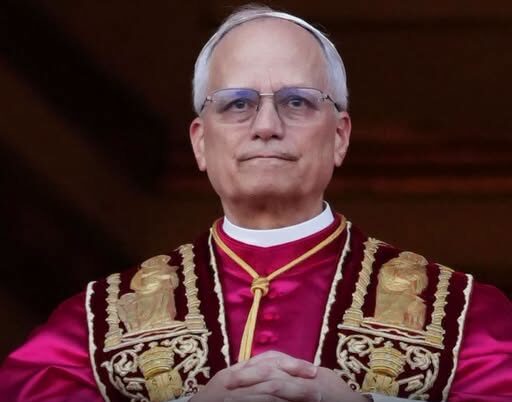
Pope Leo XIV Announces He Will Undergo Lung Surgery After Doctors Discover a Nodule, As Vatican Shares Health Update
The 71-Year-Old Pontiff Revealed the Unexpected Medical Finding During His Sunday Blessing, Asking for Prayers as Doctors Prepare to Remove a Small Lung Nodule at Rome’s Gemelli Hospital.
Pope Leo XIV has announced that he will undergo surgery after doctors discovered a small nodule in one of his lungs during recent medical examinations.
The 71-year-old leader of the Catholic Church personally shared the news with thousands of faithful gathered in St. Peter’s Square on Sunday, October 11, 2026.
Speaking during his traditional Angelus blessing, the Pope explained that the abnormality had been detected at an early stage and was well localized.
His medical team recommended removing it through surgery.
After considering their advice, Pope Leo decided to proceed with the operation.
The announcement immediately drew attention around the world, with Catholics and other observers expressing concern for his health.
However, the Vatican emphasized that the Pope remained in generally good health and continued carrying out his responsibilities ahead of the planned hospitalization.
On Monday, October 12, the Holy See confirmed that Pope Leo would be admitted to Rome’s Agostino Gemelli University Hospital on Tuesday, October 13.
He is expected to spend approximately one week recovering.
The Vatican has canceled his public audiences through October 20 to accommodate the procedure and recovery period.
One important detail remains unknown.
Officials have not announced whether the nodule is benign or malignant.
The announcement does not establish that the Pope has lung cancer, and no confirmed cancer diagnosis has been disclosed.
For now, his medical team is proceeding with a planned operation while the world’s Catholic community awaits further information.
The Pope Shared the News During His Sunday Angelus
Pope Leo made the announcement on October 11, near the conclusion of his weekly Sunday address.
The Angelus is one of the most familiar public appearances of the Pope.
Each Sunday, pilgrims and visitors gather in St. Peter’s Square to hear the pontiff reflect on religious matters, address world events, and offer his blessing.
On this occasion, Leo concluded the address with an unusually personal statement.
He explained that recent medical examinations had revealed a small, localized nodule in his lung.
He described the finding as having been detected at a very early stage.
The Pope said his doctors believed surgical removal was appropriate and that he had accepted their recommendation.
He thanked the faithful for their support and asked them to remember him in their prayers.
His Announcement Was Calm and Direct
The Vatican published an official English translation of the Pope’s remarks.
Rather than leaving speculation to develop around possible changes to his schedule, Leo chose to explain the situation himself.
He described the medical finding, confirmed the planned intervention, and expressed appreciation for the prayers of those listening.
His message did not identify the exact type of nodule.
Nor did it provide detailed information about the surgical technique doctors intended to use.
Instead, the Pope focused on the central facts.
A nodule had been discovered.
Doctors advised removing it.
And he had agreed to undergo surgery.
He Asked the Faithful to Pray for Him
One of the most significant parts of the announcement was the Pope’s request for prayers.
At the end of his remarks, Leo thanked the faithful for their spiritual closeness.
He then entrusted himself to their prayers.
The message reflected the importance of prayer and community within Catholic life.
It also introduced a personal dimension to an address usually centered on religious teachings and public issues.
For many Catholics, the Pope is a spiritual leader whose health and ability to continue his ministry carry special significance.
His announcement prompted messages of encouragement from religious leaders and faithful around the world.
The Vatican Confirmed the Hospitalization Date
On October 12, Vatican officials provided additional details.
According to the Director of the Holy See Press Office, Pope Leo was scheduled to be admitted to Gemelli Hospital late in the morning on Tuesday, October 13.
The hospital is one of Rome’s most prominent medical institutions.
It has treated previous popes and is closely associated with papal medical care.
The Vatican did not publicly specify the exact time of the operation.
It confirmed that the planned intervention would involve removing the localized lung nodule.
The hospitalization required changes to the Pope’s public schedule.
Public Audiences Have Been Canceled Until October 20
Following the announcement, the Vatican canceled Pope Leo’s public audiences through Tuesday, October 20.
The decision was intended to allow time for hospitalization and postoperative recovery.
The anticipated recovery period was described as approximately one week.
However, recovery schedules are estimates rather than guarantees.
The actual length of hospitalization depends on the procedure, postoperative observations, and the patient’s medical condition.
The Vatican has not announced that complications have occurred.
As of the October 12 update, the surgery was planned rather than completed.
What Is a Lung Nodule?
A lung nodule is a small, localized area of abnormal tissue within the lung.
Such findings are often discovered during imaging examinations, sometimes when tests are performed for unrelated reasons.
Lung nodules can develop for several reasons.
Some are associated with previous infections or inflammation.
Others are benign growths.
A proportion may represent early cancers or other conditions that require further evaluation.
The presence of a lung nodule does not, by itself, establish a cancer diagnosis.
Doctors evaluate features such as its size, appearance, location, growth over time, and the patient’s medical history.
These findings help determine whether monitoring, additional testing, biopsy, or surgical removal is appropriate.
Does Pope Leo Have Lung Cancer?
There has been no official announcement that Pope Leo has lung cancer.
The Vatican has described the finding as a small, localized nodule detected during medical examinations.
It has not disclosed whether the tissue is benign or malignant.
That distinction is essential.
A lung nodule can have several possible explanations.
Even when doctors recommend surgery, the decision does not automatically confirm cancer.
Removal may be recommended for diagnosis, treatment, or other medical reasons.
Until the Vatican provides additional information, it would be inaccurate to describe the Pope as having a confirmed malignant tumor.
Why Doctors Might Recommend Removing a Small Nodule
Medical specialists sometimes recommend removing a lung nodule when they believe the benefits of intervention outweigh the risks.
The decision can depend on the nodule’s features, the patient’s age and general health, and the likelihood of different diagnoses.
In some cases, doctors monitor nodules through repeated imaging.
In others, further testing or removal is appropriate.
Surgically removed tissue can also be examined by pathologists to determine its nature.
For Pope Leo, doctors concluded that an operation was the appropriate next step.
But the Vatican has not published the full medical reasoning behind that recommendation.
Early Detection Is an Important Part of the Announcement
Pope Leo emphasized that the nodule had been detected at an early stage and was well localized.
Those details were included in the Vatican’s official account of the announcement.
In general, identifying a medical abnormality while it is small can provide doctors with more options for evaluation and treatment.
However, the meaning of early detection depends on the specific condition.
Without a confirmed diagnosis, it is not possible to predict the Pope’s long-term medical outcome.
The reassuring element of the announcement is that the finding was discovered during examinations and that doctors were able to plan an intervention.
The Exact Surgical Method Has Not Been Announced
Medical specialists use different surgical techniques to remove lung nodules.
Some procedures can be performed using minimally invasive methods.
Others may require a different approach depending on the location and characteristics of the tissue.
Minimally invasive thoracic surgery may involve small incisions and specialized instruments.
But it would be premature to assume that Pope Leo will receive a particular technique.
The Vatican has not publicly identified the surgical approach selected by his doctors.
That information may become available following the operation, depending on what the Pope and his medical team choose to disclose.
Gemelli Hospital Has a Long History of Treating Popes
The Agostino Gemelli University Hospital is one of Italy’s best-known medical centers.
Located in Rome, it has provided treatment to several modern popes.
Pope John Paul II was hospitalized there on multiple occasions during his pontificate.
Pope Francis also received treatment at Gemelli during his years as leader of the Catholic Church.
The hospital has therefore become closely associated with papal healthcare.
For Pope Leo, the planned admission continues that history.
His treatment will be carried out within an established hospital setting with specialist medical teams.
Pope Leo Continued Working Before the Operation
Despite the upcoming surgery, Pope Leo maintained his public and administrative responsibilities on Monday, October 12.
The Vatican reported that he participated in scheduled meetings and audiences.
He met with groups including bishops and members of a charitable organization.
His continued activity was consistent with the Vatican’s statement that he remained in generally good health.
Officials nevertheless made arrangements to suspend public appearances during the planned recovery period.
The changes demonstrate the need to balance his ongoing duties with medical treatment.
The Announcement Comes During His Second Year as Pope
Leo XIV was elected pope on May 8, 2025, following the death of Pope Francis.
Born Robert Francis Prevost in Chicago, Illinois, he became the first pope from the United States.
Before his election, he spent many years working within the Catholic Church, including extensive service in Peru.
His election attracted international attention because of his American background and missionary experience.
Since becoming pope, he has led the Catholic Church through religious celebrations, meetings with world leaders, and international visits.
The planned lung operation is the first significant health issue publicly disclosed during his pontificate.
He Has Generally Maintained an Active Lifestyle
Pope Leo has been described as physically active.
Before becoming pope, he was known to enjoy tennis and other recreational activities.
He has continued managing a demanding schedule involving public appearances, religious ceremonies, and administrative responsibilities.
The Vatican’s recent statement described him as otherwise being in good health.
However, physical activity and general wellness do not eliminate the possibility of medical conditions being discovered during routine examinations.
The lung nodule was identified through medical testing rather than through a previously announced serious illness.
Why This Health Update Has Attracted Worldwide Attention
The Pope occupies a unique position as both the spiritual leader of the Catholic Church and the sovereign of Vatican City State.
His responsibilities extend far beyond the walls of Vatican City.
He oversees a global institution, addresses international issues, and leads major religious celebrations.
Because of that role, even a planned medical procedure can become a subject of international interest.
The announcement also came relatively early in Leo’s papacy.
His health had not previously been the focus of major public concern.
As a result, the confirmation of surgery prompted attention from religious communities, governments, and international news organizations.
Religious Leaders Have Offered Their Prayers
Following the announcement, messages of support began arriving from Catholic leaders and communities around the world.
The United States Conference of Catholic Bishops shared a statement expressing prayerful support.
Other bishops and Catholic organizations also offered encouragement.
The messages reflected a common response to news that a religious leader is facing surgery.
They also echoed Pope Leo’s own request that people remember him in their prayers.
The Vatican’s decision to communicate publicly gave religious communities an opportunity to respond to the situation with accurate information rather than speculation.
Italy’s Prime Minister Also Expressed Support
Italian Prime Minister Giorgia Meloni was among the political leaders who reacted to the news.
She expressed support for the Pope and conveyed good wishes for his recovery.
Italy maintains a close relationship with Vatican City, whose territory is surrounded by Rome.
The health of the Pope is therefore a matter of public interest within Italy as well as internationally.
Messages from political leaders joined the expressions of concern coming from Catholic organizations.
The Vatican Has Been Open About the Planned Procedure
Pope Leo’s decision to personally announce his medical condition is a notable aspect of the story.
Rather than issuing only a brief statement after the operation, he informed the public before entering the hospital.
The Vatican then provided further information about the date of his admission and expected recovery period.
This approach has allowed observers to distinguish confirmed medical details from speculation.
It also provides a clearer explanation for the cancellation of his public engagements.
However, the disclosure does not mean that every aspect of his private medical information will become public.
Specific diagnostic findings and treatment details remain matters for the Pope and his healthcare team.
His Upcoming South American Trip Remains on the Calendar
Before the medical announcement, Pope Leo was preparing for an important international journey.
The Vatican had scheduled an apostolic visit to Uruguay, Argentina, and Peru from November 6 through November 17, 2026.
The journey would take him to ten cities across the three countries.
The trip is particularly significant because of his longstanding connection to Peru.
Leo spent many years serving in the country and later became a Peruvian citizen.
As of the October 12 reporting, the Vatican had not announced the cancellation of the visit.
Whether the medical procedure requires changes will depend on his recovery and subsequent official decisions.
The Journey Is Expected to Begin in Uruguay
The first stage of the planned trip is scheduled for November 6 through November 8.
Pope Leo is expected to visit Uruguay, including Montevideo, Paysandú, and Florida.
The visit would be an important occasion for the country’s Catholic community.
The Vatican published an itinerary outlining religious and public events planned for the journey.
At the time of the surgery announcement, the schedule remained in place.
However, any future adjustments would need to be confirmed by the Holy See.
Argentina Is the Second Planned Destination
From November 8 through November 11, the Pope is scheduled to visit Argentina.
The itinerary includes Buenos Aires, Córdoba, and Luján.
Argentina was the homeland of Pope Francis, Leo’s predecessor.
Francis was born in Buenos Aires and led the Catholic Church from 2013 until his death in 2025.
The upcoming journey would provide Pope Leo with an opportunity to visit a country closely connected to the history of the modern papacy.
It is also expected to attract substantial attention from Catholics throughout the region.
Peru Has Special Personal Meaning for Pope Leo
The final stage of the planned journey is scheduled for November 11 through November 17.
The Pope is expected to visit Peru, including Lima, Chiclayo, Cusco, and Pucallpa.
His connection to Peru extends back decades.
He first arrived there as a missionary in the 1980s.
He later served as Bishop of Chiclayo.
His experience in the country became an important part of his life and religious leadership.
Returning as pope would carry particular significance for the communities he once served.
Will His Surgery Affect the November Journey?
That remains uncertain.
The Vatican has not announced that the trip will be canceled or postponed.
It has also not provided a definitive medical assessment of whether the Pope will be ready for every scheduled activity.
The planned recovery period of approximately one week would, under ordinary circumstances, conclude well before the November departure.
But a projected recovery timeline does not guarantee that travel will be medically appropriate.
The final decision will depend on the Pope’s postoperative condition and his doctors’ recommendations.
The Health Announcement Followed Comments About the Death Penalty
One day before his Sunday Angelus, Pope Leo made another public statement that attracted attention.
On Saturday, October 10, he used his official social media account to reaffirm the Catholic Church’s opposition to capital punishment.
The message coincided with the World Day Against the Death Penalty.
Leo emphasized the Catholic teaching that every human being possesses inherent dignity.
He also argued that modern systems of detention can protect society while preserving the possibility of rehabilitation and redemption.
His remarks reflected established Catholic teaching rather than a new medical or administrative development.
What Pope Leo Said About Capital Punishment
The Pope’s statement reiterated that the Catholic Church considers the death penalty inadmissible.
The position is expressed in the Catechism of the Catholic Church, which emphasizes the dignity of human life.
Leo argued that justice and public safety can be pursued without execution.
His remarks highlighted the importance of protecting society while recognizing the humanity of people who have committed serious crimes.
The statement also reflected positions he had expressed previously during his pontificate.
It was separate from the medical announcement, but both developments attracted public attention during the same weekend.
His Position Reflects Existing Catholic Teaching
The Catholic Church’s current teaching on the death penalty was significantly clarified during Pope Francis’s pontificate.
In 2018, the Catechism was revised to describe capital punishment as inadmissible.
The Church now advocates for its abolition worldwide.
Pope Leo has reaffirmed that teaching in public statements and messages.
In April 2026, he addressed participants commemorating the abolition of the death penalty in Illinois.
His October social media post continued that position.
The remarks were not connected to the medical reasons for his upcoming surgery.
What Happens When a Pope Is Hospitalized?
The Vatican continues operating when a pope receives medical treatment.
Administrative offices, departments, and other institutions remain active.
Scheduled public events may be canceled, postponed, or delegated to other church leaders.
Major papal decisions may be delayed if the pontiff needs time to recover.
There is no indication that Pope Leo’s planned hospitalization involves a change in leadership.
The procedure has been announced as a scheduled medical intervention with an anticipated recovery period.
The Vatican has made practical adjustments to his calendar while maintaining normal institutional operations.
The Vatican Has Arranged Coverage for Some Religious Events
With Pope Leo’s public engagements suspended during hospitalization, other senior Catholic officials are expected to fulfill certain responsibilities.
Vatican reporting indicated that Cardinal Luis Antonio Tagle would lead a scheduled Mass at St. Peter’s Square during the Pope’s absence.
Such arrangements allow religious events to continue when the pontiff is unavailable.
They do not imply a change in the Pope’s authority.
They are practical measures intended to support continuity while he receives treatment.
Why the Medical Findings Should Not Be Exaggerated
News involving the health of a major religious leader can circulate rapidly.
Headlines may emphasize surgery, hospitalization, or the possibility of serious disease.
But accurate reporting requires distinguishing between what has been confirmed and what remains unknown.
In Pope Leo’s case, the Vatican has confirmed a localized lung nodule and the decision to remove it.
It has not confirmed cancer.
It has not announced that the Pope is critically ill.
And it has not reported that the operation has already taken place.
Those distinctions are essential for avoiding unnecessary speculation.
What We Know About His Health So Far
As of the Vatican’s October 12 announcement, several important facts are confirmed.
Pope Leo XIV is 71 years old.
Doctors discovered a small, localized nodule in his lung during recent medical examinations.
They recommended surgical removal.
The Pope accepted that recommendation and announced the decision on Sunday, October 11.
He is scheduled to enter Gemelli Hospital on Tuesday, October 13.
Public audiences have been canceled through October 20.
His recovery is expected to take approximately one week.
The nature of the nodule remains undisclosed.
His November trip to South America has not been officially canceled.
What Information Is Still Missing?
The Vatican has not publicly disclosed the exact size of the nodule.
It has not identified the lung in which the abnormality was found.
It has not announced whether the tissue is benign or malignant.
And it has not confirmed the exact surgical technique doctors will use.
Those details may become available after the operation, but their release is not guaranteed.
The Pope is entitled to medical privacy, even as public interest in his health remains substantial.
The most reliable updates will come from official Vatican statements and confirmed reporting following the procedure.
A Week of Recovery Is Expected
Vatican officials have indicated that the Pope may need approximately one week to recover.
The expected timeline helps explain why scheduled public audiences have been suspended until October 20.
During that period, his doctors will be able to assess his response to treatment.
The recovery period may involve postoperative monitoring and restrictions on some activities.
However, the Vatican has not provided detailed information about the rehabilitation plan.
There is no confirmed report of complications at this stage.
The outcome will become clearer after the planned surgery and subsequent medical evaluations.
Catholics Around the World Await Further News
Following the announcement, messages of support spread through Catholic communities in different countries.
Many faithful responded to the Pope’s request for prayers.
Religious leaders also expressed hopes for a successful operation and recovery.
For people who follow the Pope’s public ministry, the coming days will bring attention to Vatican medical updates.
The situation has not prevented the Holy See from continuing its institutional responsibilities.
But Leo’s temporary absence from public appearances will be noticeable during a busy period on the Catholic calendar.
The Pope’s Own Words Remain Central to the Story
The most important information came directly from Pope Leo.
He told the faithful that doctors had found a small nodule during recent examinations.
He explained that it had been detected early.
He confirmed that his medical team recommended surgery.
And he said he would follow that advice.
Rather than discussing an unverified diagnosis or predicting the operation’s outcome, his remarks focused on the medical plan already established.
He concluded with gratitude and a request for prayers.
That message continues to guide the Vatican’s public communications about his condition.
What Happens Next for Pope Leo XIV?
The next major development will be his scheduled admission to Gemelli Hospital on October 13.
Doctors are expected to remove the lung nodule and monitor his condition afterward.
The Vatican may release information about the procedure and recovery.
Public engagements are suspended through October 20.
Following the recovery period, officials will be able to determine whether any additional schedule changes are necessary.
Attention will also turn to the Pope’s planned November visit to Uruguay, Argentina, and Peru.
For now, the itinerary remains officially scheduled.
Pope Leo’s Health Announcement Leaves the World Awaiting His Recovery
Pope Leo XIV’s unexpected medical announcement has prompted concern and support from Catholics around the world.
On October 11, 2026, the 71-year-old pontiff revealed that doctors had discovered a small, localized lung nodule during recent examinations.
He explained that the finding had been identified at an early stage and that his medical team recommended surgical removal.
The Pope accepted their advice and asked the faithful to pray for him.
The following day, the Vatican confirmed that he would be admitted to Rome’s Gemelli Hospital on Tuesday, October 13.
Approximately one week of recovery is expected, and public audiences have been canceled through October 20.
Although the announcement involves surgery, the Vatican has not disclosed whether the nodule is cancerous.
There is no confirmed malignant diagnosis, and officials have described the Pope as otherwise being in generally good health.
His upcoming journey to Uruguay, Argentina, and Peru remains on the calendar for November 6 through 17, although further decisions may depend on his postoperative condition.
The medical update came during a weekend when Leo also reaffirmed the Catholic Church’s opposition to the death penalty.
Both announcements attracted international attention, reflecting his role as a spiritual leader whose words and decisions reach far beyond Vatican City.
For now, the immediate focus is his planned operation and recovery.
The coming days may bring further information about the surgical procedure and the nature of the lung nodule.
Until those details are officially confirmed, speculation about a serious diagnosis would be premature.
What remains clear is that Pope Leo has chosen to share an important health development directly with the faithful.
He has followed the advice of his doctors, prepared for the planned intervention, and expressed gratitude for the prayers and support of people around the world.
As the Vatican awaits news from Gemelli Hospital, millions of Catholics will be hoping for a successful procedure and a steady recovery.