
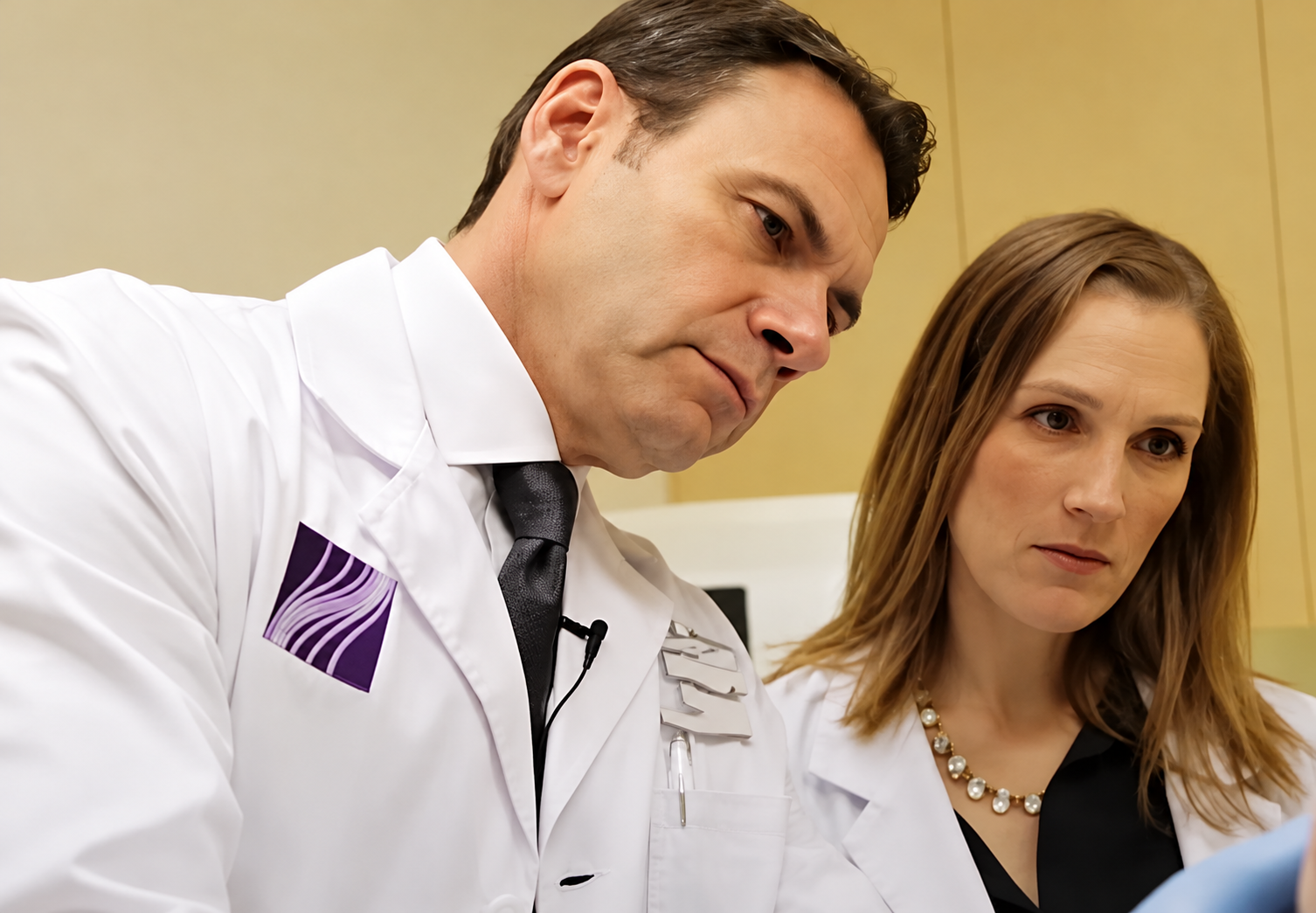
Firefighter Lost His Face While Saving a Life, Then 14 Years Later Doctors Performed a 26-Hour Surgery That Changed Everything
Patrick Hardison Survived a Devastating House Fire in 2001, but the Injuries Changed Almost Every Part of His Daily Life. After More Than 70 Operations, a Historic Face Transplant in 2015 Gave the Mississippi Father of Five a Remarkable Second Chance.
For 14 years, Patrick Hardison lived with the consequences of a split-second decision that changed his life forever.
He had been a volunteer firefighter in Mississippi, accustomed to responding when someone needed help.
But on September 5, 2001, a call about a burning house became the beginning of an extraordinary personal struggle.
Patrick entered the building believing someone might still be trapped inside.
Moments later, part of the structure collapsed.
He managed to escape, but the fire left him with devastating injuries to his face, head, neck, and upper body.
The man who had rushed into danger to help someone else was suddenly fighting for his own survival.
He survived the initial disaster, but recovery would be far more complicated than he could have imagined.
Over the following years, he underwent more than 70 reconstructive procedures.
He lost important facial structures and struggled with everyday activities that most people rarely think about.
He could no longer blink normally.
His vision became severely limited.
Eating, speaking, and appearing in public brought challenges that followed him for years.
Then, in August 2015, a team of more than 100 medical professionals at NYU Langone Medical Center carried out one of the most extraordinary operations in reconstructive surgery.
For approximately 26 hours, surgeons worked to transplant a donated face, scalp, and associated tissues onto Patrick.
The procedure became a medical milestone.
But the most remarkable part of the story was not simply what happened in the operating room.
It was what Patrick eventually regained afterward.
Patrick Hardison Had Built His Life Around Helping Others
Patrick Hardison came from Senatobia, Mississippi, a community where he had spent years serving as a volunteer firefighter.
Before his injury, firefighting had been an important part of his life.
He had volunteered for approximately seven years.
Responding to emergencies meant confronting situations that were often unpredictable.
House fires could become especially dangerous when people were believed to be trapped inside.
Firefighters sometimes had to make urgent decisions based on limited information.
Patrick understood those risks.
But he also believed in the responsibility that came with his role.
When the call arrived on September 5, 2001, he responded to help.
The House Fire That Changed His Life
Patrick was 27 years old when he entered a burning home in Senatobia.
Firefighters had received information suggesting that a woman might still be inside.
Patrick went into the building to search for her.
It was later established that the woman was not trapped there.
But before Patrick could complete his search, conditions inside the house deteriorated dramatically.
Part of the burning structure collapsed.
Patrick was exposed to intense heat and flames.
His protective equipment could no longer shield him from the conditions around him.
In an interview with CBS News, Patrick recalled that his mask was melting against his face and his hose had already melted.
He managed to escape through a window.
But he had suffered catastrophic burns.
His Fellow Firefighters Were Shocked That He Survived
The severity of Patrick’s injuries stunned those who helped him.
His friend and fellow first responder Jimmy Neal later spoke to CBS News about seeing him after the fire.
Neal explained that, despite his experience responding to emergencies, he had never encountered someone with burns so severe who was still alive.
The injuries affected Patrick’s face, scalp, neck, and upper torso.
He required emergency medical care and an extended period of hospitalization.
His survival was only the beginning of a long and difficult recovery.
Doctors faced the task of treating extensive burns while preserving as much function as possible.
The Fire Happened Just Days Before September 11
Patrick’s accident occurred on September 5, 2001.
Six days later, the terrorist attacks of September 11 changed the United States.
Patrick was still critically ill and receiving intensive medical care when those events occurred.
He remained in a medically induced coma during that period.
While the country was confronting a national tragedy, Patrick’s family was facing an emergency of its own.
He eventually survived and began the difficult process of recovery.
But the extent of the injuries meant that his former life could not simply resume.
The Burns Had Changed Nearly Every Part of His Face
The fire caused severe damage to Patrick’s facial features.
He lost his ears, lips, most of his nose, and much of his eyelid tissue.
His scalp and neck were also extensively affected.
The injuries created significant medical challenges.
Facial structures serve important functions beyond appearance.
Eyelids protect the eyes.
Lips are essential for eating, speaking, and facial expression.
The nose supports breathing and other functions.
When those structures are damaged, everyday activities can become difficult.
For Patrick, reconstructive surgery became an ongoing part of life.
He Underwent More Than 70 Operations
During the years after the fire, Patrick underwent approximately 71 reconstructive procedures.
Doctors worked to repair and protect the areas affected by the burns.
Skin grafts and other techniques were used to address the injuries.
But conventional reconstruction could not restore all the functions he had lost.
Patrick remained unable to close his eyes normally.
His facial expressions were restricted.
Eating and speaking could be uncomfortable.
Every operation represented another stage in a recovery that seemed to have no simple conclusion.
Despite the extraordinary medical efforts, Patrick continued living with serious limitations.
The Loss of His Eyelids Created a Dangerous Problem
One of Patrick’s most significant medical difficulties involved his eyes.
Because the fire had destroyed much of his eyelid tissue, he could not blink or close his eyes normally.
That placed his vision at risk.
Blinking helps spread tears across the surface of the eyes and protects them from damage.
Without functioning eyelids, the eyes can become vulnerable to dryness and injury.
Doctors used reconstructive techniques to help protect Patrick’s vision.
But those measures left him with only a very narrow field of sight.
He later described himself as almost completely blind.
Regaining the ability to blink would eventually become one of the central goals of his face transplant.
Even Ordinary Family Activities Became Difficult
Patrick was a father, and his family remained an important part of his life.
But his injuries affected the activities he could enjoy with his children.
Limited vision prevented him from driving.
He could no longer participate comfortably in some recreational activities.
Swimming also became difficult.
Public outings could attract attention from strangers.
Children sometimes reacted fearfully to his appearance.
These experiences added emotional strain to the physical challenges of recovery.
Patrick continued living his life, but many things he had previously taken for granted were no longer simple.
Strangers Often Stared at Him
In interviews, Patrick described the discomfort of attracting attention because of his injuries.
People sometimes stared when he appeared in public.
Young children could be startled by his appearance.
He occasionally responded with humor, telling curious children that he had been in a fight with a bear.
But the attention was not always easy to manage.
Over time, the reactions became another part of daily life.
Patrick wanted to move through ordinary surroundings without feeling that everyone was watching him.
His hope was not simply to look different.
He wanted greater independence and the ability to participate comfortably in family life.
A Friend Helped Connect Patrick With a Leading Surgeon
After years of reconstructive procedures, Patrick’s situation eventually came to the attention of Dr. Eduardo D. Rodriguez.
Rodriguez was a reconstructive surgeon who had experience performing complex face transplantation.
A friend from Patrick’s church and firefighting community contacted him about Patrick’s injuries.
The message explained the extraordinary difficulties Patrick had faced since the 2001 fire.
Rodriguez recognized that face transplantation might offer possibilities conventional reconstruction had not achieved.
But the operation was extremely complex.
It would involve major medical risks, extensive preparation, and a lifelong commitment to treatment afterward.
Face Transplantation Was Still a New Medical Field
When Patrick began considering the procedure, face transplantation was still relatively rare.
The world’s first partial face transplant had been performed in France in 2005.
The United States had also completed face transplants before Patrick’s operation.
His 2015 procedure was therefore not the first American face transplant.
What made his case historic was the extent of tissue transplanted and the fact that he was the first American first responder to receive the procedure for injuries suffered in the line of duty.
His operation became the first face transplant performed in New York State.
And at the time, it was the most extensive successful face transplant doctors had carried out.
Patrick Had to Understand the Risks
A face transplant is far more complicated than an ordinary cosmetic procedure.
It involves transplanting living tissue from a deceased donor.
Depending on the recipient’s injuries, the procedure may include skin, muscles, nerves, blood vessels, and portions of bone.
Surgeons must reconnect structures that allow the tissue to receive blood and eventually recover function.
Recipients also need medication to reduce the risk of immune rejection.
Those medications can carry significant long-term health risks.
Patrick knew the procedure was not a simple solution.
But he believed the potential improvements in his quality of life were worth considering.
The Search for a Suitable Donor Took About a Year
Patrick was placed on the transplant waiting list in August 2014.
Finding a donor was particularly complicated.
The medical team needed an appropriate biological match to reduce the likelihood of rejection.
They also had to consider features such as skin tone and facial proportions.
Unlike many other forms of transplantation, face donation involves uniquely visible and identifiable tissues.
That makes the decision deeply personal for donor families.
Months passed without a suitable match.
At times, Patrick and his medical team faced the possibility that the operation might never happen.
Then, in August 2015, an opportunity emerged.
A 26-Year-Old Man Became the Donor
The donor was David P. Rodebaugh, a 26-year-old man who had suffered fatal injuries in a bicycle accident in Brooklyn, New York.
David was an artist and cycling enthusiast.
He had registered as an organ donor.
His family agreed to the donation of his face as well as other organs.
His heart, kidneys, and liver were also donated to help other patients.
The decision made possible an extraordinary medical procedure at a time when Patrick had been waiting for a suitable match.
But it also came during a period of profound loss for David’s family.
Their generosity became a central part of Patrick’s story.
David Had Once Dreamed of Becoming a Firefighter
One detail of the donation made the connection especially poignant.
According to accounts shared by the organ donation organization LiveOnNY, David’s mother explained that her son had wanted to become a firefighter.
Patrick was a former volunteer firefighter who had suffered devastating injuries while responding to an emergency.
David had died in an unrelated cycling accident.
Yet his family’s decision to donate helped restore important functions to a man who had spent years serving his community.
The connection between their lives became one of the most memorable aspects of the transplant.
The Medical Team Prepared for an Unprecedented Operation
The transplant was conducted at NYU Langone Medical Center in New York City.
Dr. Eduardo Rodriguez led a team involving more than 100 medical professionals.
Surgeons, nurses, technicians, and other specialists participated in the planning and procedure.
The team used detailed imaging and advanced surgical techniques to prepare.
Three-dimensional planning helped guide the work involving facial bones and other structures.
The operation required coordinated activity in adjoining operating rooms.
One team prepared the donated tissues.
Another prepared Patrick to receive them.
Every step had to be managed carefully.
The Surgery Began on August 14, 2015
On the morning of August 14, the medical team began the complex procedure.
The goal was to replace the damaged facial and scalp tissues with donated tissue from David.
The transplanted area extended over the scalp and face and down toward the neck.
It also included both ears and important facial structures.
Surgeons worked to preserve and reconnect the blood vessels and nerves necessary for the transplanted tissues to function.
The scale of the operation was extraordinary.
It required exceptional coordination between the specialists working in separate operating rooms.
And it continued through the night.
The Operation Lasted Approximately 26 Hours
The surgery concluded on August 15, 2015.
It had lasted approximately 26 hours.
At the time, the procedure was described as the most extensive successful face transplant ever performed.
The amount of transplanted tissue exceeded that of earlier successful operations.
Doctors had undertaken a procedure that required not only surgical precision but extensive preparation and postoperative care.
Patrick survived the operation.
But completing the surgery was only the first major milestone.
The long process of recovery was just beginning.
The First Days After Surgery Were Difficult
In the immediate aftermath, Patrick required close medical monitoring.
His body needed time to recover from the lengthy operation.
Doctors watched for complications involving blood flow, breathing, infection, and rejection.
Swelling affected his new face.
He also needed rehabilitation to recover functions such as speaking and swallowing.
For patients undergoing complex transplantation, the postoperative period can be demanding.
The new tissues must remain healthy, and the recipient’s immune response must be carefully managed.
Patrick’s recovery required patience from both him and his medical team.
He Looked in a Mirror After the Transplant
One memorable moment occurred when Patrick was shown his appearance following the operation.
His face was still significantly swollen.
The tissues had not yet settled into their eventual appearance.
Doctors understood that rehabilitation and further adjustments would be necessary.
For Patrick, however, the moment marked an extraordinary transition.
He had lived for 14 years with severe facial injuries.
Now he was beginning to see the results of a procedure that had once seemed almost impossible.
The changes would become more apparent over the following months.
One of the Greatest Achievements Was His Ability to Blink
Restoring Patrick’s eyelid function was a particularly important goal.
Before the transplant, he had been unable to blink or close his eyes normally.
That limitation had threatened his vision.
Following the operation, he gradually regained the ability to blink and close his eyes.
The improvement helped protect his eyes and contributed to greater independence.
Dr. Rodriguez later described the restoration of eyelid function as a major achievement.
For Patrick, it represented the return of an ability most people rarely stop to appreciate.
He Could Eat and Speak More Comfortably
As his recovery progressed, Patrick regained other important functions.
He became able to eat solid food more comfortably.
His speech improved.
He developed greater freedom of facial expression.
The changes were significant because his earlier injuries had affected far more than outward appearance.
They had interfered with ordinary activities and social interactions.
Restoring those functions became central to the success of the procedure.
The medical team continued monitoring him as he adapted to the transplanted tissues.
His Children Saw Him After the Operation
Patrick was a father of five by the time of the transplant.
His relationship with his children was one of the strongest reasons he wanted greater independence.
Following the operation, he was able to spend time with them while recovering in New York.
Family visits became important milestones.
They marked the beginning of a new period in which Patrick could participate more comfortably in everyday activities.
One of his daughters later spoke about how much the surgery meant to him.
She recalled that Patrick wanted to be able to walk her down the aisle without feeling the need to hide his appearance.
For him, the hope of sharing ordinary family experiences was deeply meaningful.
He Walked Through a Department Store Without Being Stared At
During recovery, Patrick experienced something that had once seemed difficult to imagine.
He went shopping in New York City.
For years, appearing in public had often meant attracting uncomfortable attention.
But after the transplant, he found that strangers no longer reacted to him in the same way.
The experience was emotional.
It represented a return to an ordinary kind of anonymity.
Patrick could walk through a store without feeling that every person was watching him.
For someone who had spent 14 years living with visible injuries, that change meant a great deal.
His Mississippi Community Welcomed Him Home
In November 2015, Patrick returned to Senatobia.
His community celebrated his return.
A parade was held in his honor, with fire trucks participating in the welcome.
The gathering recognized the extraordinary journey he had experienced since the fire.
Patrick had entered a burning building in 2001 and suffered life-changing injuries.
Now, 14 years later, he was returning home after a historic operation.
The celebration brought together the story of his firefighting service, medical recovery, and the support he had received from those around him.
One Year Later, His Recovery Exceeded Expectations
In August 2016, NYU Langone published an update marking the first anniversary of Patrick’s transplant.
His medical team reported that he was making remarkable progress.
At that point, he had not experienced an episode of transplant rejection.
Doctors considered that an encouraging result, particularly given the complexity of the procedure.
Patrick had also regained important abilities that had been unavailable to him for years.
He could blink.
He could close his eyes.
He could eat and speak more comfortably.
And he was beginning to participate in activities he had once believed were out of reach.
Patrick Was Able to Drive Again
Among his most meaningful achievements was returning to driving.
After the fire, his severe vision limitations had prevented him from getting behind the wheel.
For a parent, that loss of independence affected ordinary family routines.
After the transplant, improved eyelid function and vision helped make driving possible again.
Patrick spoke about how much he appreciated being able to take his children to school.
The ability may seem ordinary to many people.
For him, it represented the return of independence he had missed for nearly 15 years.
He Even Went Swimming With His Family
Another important milestone came during a family vacation to Disney World.
Patrick was able to swim with his children.
Before the transplant, his injuries and medical limitations had made swimming difficult.
Now he could enjoy the activity again.
He described the experience as part of the freedom the operation had restored.
Such moments demonstrated the practical significance of the procedure.
Its success was not measured only through surgical photographs or medical records.
It could also be seen in the ordinary activities Patrick was able to share with his family.
The Surgery Changed More Than His Appearance
Face transplantation is sometimes discussed primarily in terms of visible transformation.
But Patrick’s case demonstrated that the medical goals extend much further.
Restoring eyelids helped protect his eyesight.
Reconstructing facial structures improved speaking and eating.
Greater facial movement allowed expressions to return.
These functional improvements helped Patrick regain independence.
His experience also showed how physical reconstruction and emotional well-being can be connected.
The ability to participate in ordinary activities without severe limitations can make a substantial difference in daily life.
Patrick Wanted Other Injured People to Have Hope
As he recovered, Patrick began speaking publicly about the operation.
He expressed gratitude to the doctors who had performed the transplant.
He also acknowledged the extraordinary generosity of David Rodebaugh’s family.
Patrick hoped that sharing his experience would encourage other people facing severe injuries.
He was particularly interested in helping firefighters and military service members who might benefit from reconstructive advances.
His story offered an example of what specialized medical treatment could make possible in selected cases.
But he also understood that the operation required significant commitment and carried lifelong responsibilities.
Face Transplant Recipients Need Lifelong Medical Care
A successful transplant does not eliminate every medical concern.
Recipients must continue following treatment plans designed to protect the transplanted tissue.
Because the immune system can recognize donated tissue as foreign, doctors prescribe medications to reduce the risk of rejection.
Those medications may increase susceptibility to infections and carry other long-term risks.
Patients require ongoing monitoring.
Some also need additional surgical adjustments and rehabilitation.
For these reasons, face transplantation remains a complex option generally reserved for carefully selected patients with severe injuries or other major facial conditions.
The Medical Team Continued Studying His Progress
Patrick’s case became an important source of information for reconstructive surgeons.
His medical team published findings about the procedure and recovery.
Researchers examined the methods used to reconnect facial structures and restore function.
The successful restoration of eyelid movement was especially significant.
It provided valuable insight into the possibilities of complex facial transplantation.
However, one patient’s successful outcome does not guarantee identical results for others.
Every candidate has different injuries, medical risks, and rehabilitation needs.
Continued research remains essential to improving safety and long-term outcomes.
The Donor Family’s Decision Made Everything Possible
At the center of Patrick’s recovery was the generosity of David Rodebaugh’s family.
David’s death in a cycling accident was an immense loss for his loved ones.
His decision to register as an organ donor, together with his family’s consent, enabled several people to receive donated organs and tissues.
Patrick’s face transplant was one part of that larger act of donation.
The operation depended on the donor’s tissues being medically suitable and on the family’s willingness to make an exceptionally personal decision.
Their contribution became inseparable from Patrick’s medical milestone.
Why This Was a Historic American Surgery
Some online retellings incorrectly describe Patrick as the first person in the United States to receive a face transplant.
That is not accurate.
Face transplant procedures had already been performed in the country before 2015.
Patrick’s surgery was historic for different reasons.
It was the first face transplant in New York State.
He was the first American first responder to receive a face transplant for injuries suffered while performing his duties.
And at the time, it was the most extensive successful face transplant performed anywhere in the world.
The operation involved the face, scalp, ears, and significant associated tissues.
Those achievements are remarkable without needing to misrepresent the medical history that preceded them.
Fourteen Years Separated the Fire From the Transplant
The timeline of Patrick’s story makes his recovery especially striking.
He was injured on September 5, 2001.
For years afterward, he underwent repeated reconstructive operations and adapted to serious limitations.
In August 2014, he joined the face transplant waiting list.
One year later, a suitable donor became available.
On August 14 and 15, 2015, surgeons performed the historic procedure.
In November 2015, Patrick returned to his Mississippi hometown.
And by August 2016, his medical team reported substantial progress, including restored eyelid function and renewed independence.
The recovery was not a single dramatic moment.
It was a long journey involving medical advances, family support, rehabilitation, and extraordinary persistence.
His Story Became a Symbol of Medical Possibility
Patrick’s transplant demonstrated how reconstructive medicine had advanced since his initial injury.
In 2001, the options available to repair extensive facial burns were limited.
Conventional surgery helped preserve his life and protect important functions.
But it could not fully restore his eyelids, facial movement, or appearance.
Fourteen years later, techniques involving tissue transplantation, surgical planning, and rehabilitation made a different approach possible.
The success did not mean face transplants had become routine.
They remained rare, complex, and medically demanding.
Nevertheless, Patrick’s case demonstrated what specialized teams could achieve for selected patients.
Why His Story Continues to Inspire People
There are several reasons Patrick Hardison’s life story continues attracting attention.
He suffered his injuries while responding to an emergency as a volunteer firefighter.
He survived an extraordinarily serious accident.
He endured years of reconstructive treatment.
And he eventually underwent a pioneering transplant that restored abilities he had lost for more than a decade.
His recovery also depended on the generosity of a donor family grieving its own loss.
The story brings together courage, medical science, family relationships, and the impact of organ and tissue donation.
But perhaps its most meaningful details involve ordinary life.
Driving his children to school.
Swimming with his family.
Walking through a store without attracting unwanted attention.
These were the kinds of experiences Patrick had hoped to regain.
The Firefighter Who Got a Second Chance at Life
Patrick Hardison’s life changed forever on September 5, 2001.
As a volunteer firefighter in Senatobia, Mississippi, he entered a burning home because someone was believed to be inside.
When part of the structure collapsed, he suffered devastating burns to his face, head, neck, and upper body.
He survived, but the injuries left him facing years of medical treatment and major limitations.
More than 70 reconstructive procedures could not fully restore the functions he had lost.
He could not blink normally.
His vision was severely restricted.
And many activities that had once been ordinary became difficult.
Then, in August 2015, doctors at NYU Langone performed a face transplant that set a new medical milestone.
The operation lasted approximately 26 hours and involved more than 100 medical professionals.
The donated tissues came from David Rodebaugh, a 26-year-old man who had died after a bicycle accident.
David’s family made a decision that allowed Patrick and other patients to receive life-changing donations.
Following the transplant, Patrick began regaining important abilities.
He could blink and close his eyes.
He could eat and speak more comfortably.
He eventually returned to driving and swimming.
And he was able to participate more fully in everyday family life.
His remarkable recovery became a milestone in reconstructive surgery.
But for Patrick, the significance went beyond medical history.
The operation gave him back pieces of his independence that he had feared were gone forever.
Fourteen years after entering a burning house to help someone else, he had been given a second chance through the dedication of medical professionals and the generosity of a donor family.
And the most powerful part of his transformation was not simply the face people could see.
It was the life he could live again.