
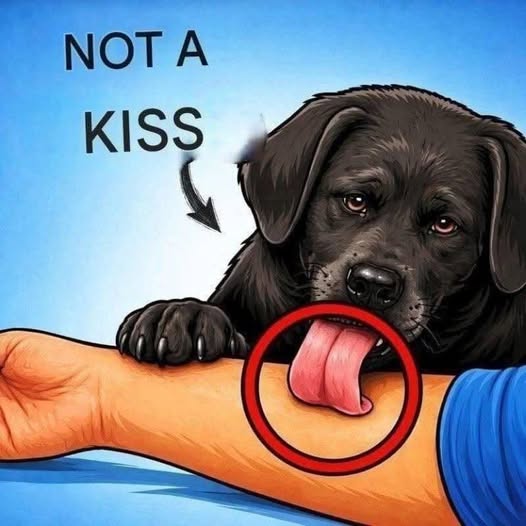
Why Dogs Lick Their Owners: The Surprising Reasons Behind This Common Behavior
From Affection and Social Bonding to Interesting Tastes, a Dog’s Licking Can Have Several Different Meanings
Have you ever wondered why your dog suddenly starts licking your hands, arms, or face? Many dog owners interpret these affectionate-looking gestures as kisses, but canine licking behavior can have several different explanations.
For dogs, licking is a natural behavior that begins early in life. It can be connected to affection, communication, curiosity, attention-seeking, and even emotional comfort.
Although a gentle lick may seem like a simple expression of love, understanding the circumstances surrounding the behavior can reveal more about what a dog is experiencing.
Dogs communicate through body movements, facial expressions, sounds, scents, and physical contact. Licking is one of the ways they interact with both other animals and the people around them.
The meaning can vary depending on the dog’s personality, previous experiences, and the situation in which the licking occurs.
1. Licking Is a Natural Behavior That Begins in Puppyhood
Dogs become familiar with licking long before they develop close relationships with humans.
As puppies, they use licking during interactions with their mother and littermates. These early experiences help establish social connections and form part of their developing communication patterns.
Physical contact is an important aspect of early canine life. Puppies learn to interact with one another through a variety of behaviors, including licking, sniffing, and remaining close together.
As dogs mature, some of these behaviors continue into adulthood.
When an adult dog licks a familiar person, the action may reflect a social behavior that has been present since its earliest experiences.
This does not mean every lick has exactly the same purpose. Rather, licking is a familiar and versatile form of interaction that dogs may use in different circumstances.
Recognizing its origins helps explain why the behavior is so common among dogs of different ages and personalities.
2. Your Dog May Be Showing Affection and Trust
One of the most familiar explanations for licking is affection.
Dogs often lick people with whom they have established positive relationships. A dog that approaches its owner calmly and offers gentle licks may be expressing comfort and familiarity.
This behavior can form part of the everyday interactions that strengthen the relationship between a dog and its human family.
Social bonding is important to dogs, and physical contact can contribute to their sense of connection with familiar individuals.
Licking may serve a social function similar to grooming behaviors observed among canines.
However, the dog’s overall body language is important when interpreting the gesture.
A relaxed posture, comfortable movements, and a willingness to remain nearby can suggest that the dog feels secure during the interaction.
In these circumstances, gentle licking may be one of several behaviors associated with a positive relationship.
Not every dog expresses affection in the same way. Some prefer staying close to their owners, while others frequently seek physical interaction.
A dog that rarely licks people can still have a strong and affectionate bond with its family.
3. Dogs May Lick Because They Like the Taste of Your Skin
Sometimes the explanation for licking is much simpler than an emotional message: human skin can have an interesting taste.
Throughout the day, skin collects different substances that dogs may notice when they come close.
Sweat leaves traces of salt, while everyday activities can leave small amounts of food residue or other scents on the hands and arms.
Lotions and personal care products may also change how the skin smells.
Dogs possess a highly developed sense of smell, allowing them to detect odors that people might barely notice.
When a dog begins licking someone’s hand after a meal or physical activity, it may be responding to these sensory details rather than expressing a particular emotion.
The behavior can be especially noticeable when a person has been handling food or has recently been sweating.
For the dog, licking may simply be another way to explore something that smells or tastes interesting.
This is why the same dog might lick one person’s hands frequently while showing much less interest in another person’s skin.
The difference does not necessarily reflect which person the dog loves more.
4. Licking Can Be a Way to Ask for Attention
Dogs quickly become familiar with the reactions their behavior produces.
If licking causes an owner to speak, smile, pet them, or otherwise respond, the dog may begin associating the action with receiving attention.
Over time, licking can become part of the dog’s usual approach to initiating interaction.
For example, a dog that approaches its owner and begins licking a hand may be looking for engagement rather than food or physical comfort.
The owner might respond by stroking the dog, talking to it, or inviting it to play.
These responses can make the interaction rewarding from the dog’s perspective.
Attention-seeking licking is not necessarily a problem. It can simply be one of the ways a dog communicates a desire for contact.
Understanding the pattern can help owners distinguish between a dog seeking affection and one responding to something else in its surroundings.
The timing of the behavior can offer useful clues, particularly when licking regularly occurs during moments when the dog wants interaction.
5. Some Dogs Lick to Feel More Comfortable
Licking is not always directed toward another individual for social reasons.
In some circumstances, it may be connected to a dog’s emotional state and its efforts to feel more comfortable.
Dogs can experience stress or uncertainty, and familiar repetitive behaviors may occur during these moments.
Licking can sometimes be associated with attempts to settle down or manage uncomfortable feelings.
However, it is important not to assume that every dog that licks frequently is anxious.
The meaning depends on what is happening around the animal and whether other changes in behavior are present.
A dog that gently licks its owner while resting comfortably may be engaging in ordinary social contact.
By contrast, licking that occurs alongside signs of tension may have a different explanation.
Observing the complete situation is more useful than judging the behavior in isolation.
Owners who understand their dog’s normal habits are often better positioned to notice when licking appears connected to an unfamiliar or stressful situation.
6. Licking Can Be Part of Canine Social Communication
Dogs use a variety of behaviors to communicate with other animals and humans.
Alongside body posture, movement, and facial expressions, licking can form part of these interactions.
In some social situations, licking may be associated with deferential or appeasing behavior.
This means the dog may be responding to another individual in a way that reduces tension or supports a peaceful interaction.
Such behavior should not automatically be interpreted as fear or as proof that a dog views a human as dominant.
Canine communication is more complex than a single gesture, and the same behavior can have different meanings in different settings.
A dog may lick a familiar person during a calm greeting, while another may use similar behavior in a situation involving uncertainty.
The surrounding body language and context are therefore essential.
Recognizing licking as a form of communication helps owners avoid assuming that every instance represents a human-style kiss.
7. The Meaning of Licking Depends on the Situation
One of the most important things to understand about canine licking is that there is no single explanation that applies to every dog.
A relaxed dog approaching its owner after a period apart may lick as part of a friendly greeting.
Another dog may lick someone’s hands because it detects food residue or salt from sweat.
A third may have learned that licking is an effective way to receive attention.
These motivations can also overlap. A dog might enjoy the taste of someone’s skin while simultaneously seeking social contact.
Rather than focusing exclusively on the licking itself, owners can pay attention to the dog’s posture, movements, surroundings, and previous behavior.
These details provide a more complete picture of the interaction.
It is also useful to remember that individual dogs differ considerably in how often they lick.
Some are naturally enthusiastic about physical contact, while others express their attachment through different behaviors.
8. Does Licking Always Mean Your Dog Loves You?
Many owners enjoy interpreting their dog’s licks as expressions of love, and affectionate bonding can certainly be one possible explanation.
However, licking alone cannot establish exactly what a dog is feeling.
The behavior may reflect trust and familiarity, but it can also result from curiosity, an interesting taste, a desire for attention, or a response to stress.
A dog’s relationship with its owner is better understood through its overall behavior rather than any single action.
Comfortable companionship, positive interactions, and relaxed social contact can all provide insight into the strength of that relationship.
A dog does not need to lick its owner to demonstrate attachment.
Likewise, frequent licking does not necessarily indicate a stronger bond than the quieter forms of affection shown by other dogs.
Each animal develops its own patterns of communication based on temperament, experience, and daily interactions.
9. Understanding Your Dog’s Licking Habits Can Strengthen Your Bond
Paying attention to a dog’s licking behavior can help owners become more familiar with how their pet communicates.
The behavior may appear during greetings, moments of relaxation, attempts to attract attention, or encounters with interesting scents.
By noticing when and why it happens, owners can respond in ways that support comfortable and positive interactions.
For example, gentle licking accompanied by relaxed body language may simply be part of an affectionate moment.
If the dog appears interested in a particular scent or taste, the licking may be primarily exploratory.
When the behavior occurs during a stressful situation, it may be helpful to consider what in the environment could be affecting the animal.
Understanding these differences encourages a more thoughtful approach to everyday canine behavior.
It also reinforces the importance of treating dogs as animals with their own communication systems rather than assuming their actions always have direct human equivalents.
What Your Dog May Really Be Telling You With a Lick
Dogs begin licking during puppyhood, and many continue using the behavior throughout their lives.
For some, licking is part of affectionate social interaction. For others, it may be motivated by taste, curiosity, attention-seeking, or emotional comfort.
It can also play a role in the subtle social communication dogs use with familiar people and other animals.
The most reliable way to interpret the behavior is to consider the entire situation rather than assigning a single meaning to every lick.
A gentle lick from a relaxed dog may be a welcome sign of familiarity and affection, while the same action in another setting may communicate something different.
Ultimately, understanding why dogs lick people is another way to appreciate the complex relationships they develop with their human companions.
And the next time your dog approaches and gives your hand a gentle lick, remember that the gesture may involve much more than a simple request for affection.