
Peach Tree Resin, the Quiet Traditional Ingredient That Changes Completely in Water
A Small Piece With an Unexpected Transformation
At first glance, peach tree resin does not stand out.
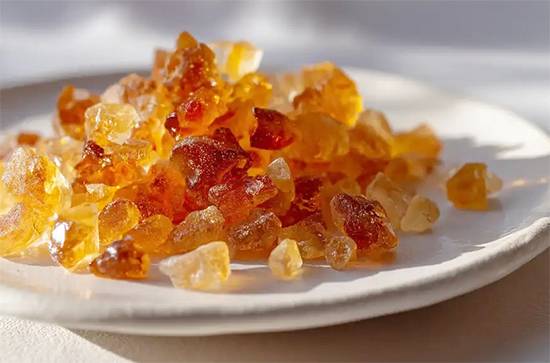
It often appears as a small, hardened piece with a golden or amber-like look, more like a crystal than something meant for the kitchen.
Its dry form can seem plain and unremarkable, especially to anyone seeing it for the first time.
That first impression changes the moment it is placed in water and left to soak.
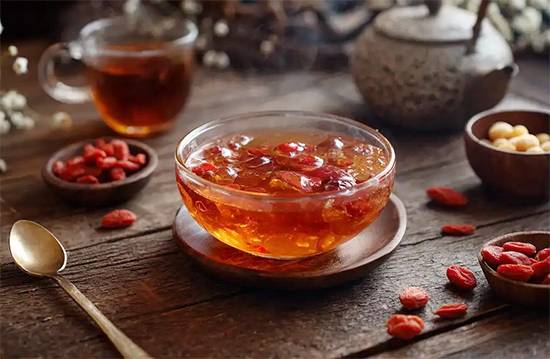
Over time, the resin begins to absorb moisture, expand in size, and lose its hard texture.
By the next stage of preparation, it has turned into something soft, smooth, and jelly-like, with a delicate texture that feels completely different from the dry pieces it started as.
This ingredient is known as peach tree resin, or Tao Jiao.
For generations, it has held a quiet place in traditional Chinese kitchens, valued less for bold flavor and more for the role it plays in simple, nourishing dishes.
It Comes From the Tree, Not the Fruit
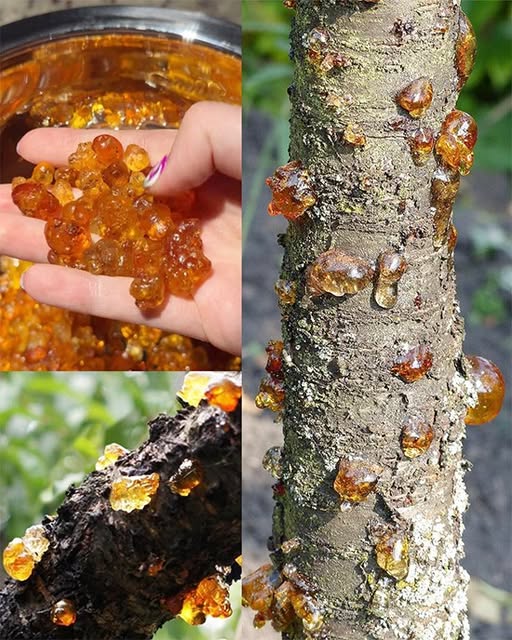
One of the most surprising things about Tao Jiao is that it does not come from peaches.
It comes from the peach tree itself.
When a peach tree is under stress or suffers a wound, it releases sap as part of its natural response.
That sap acts as a form of protection for the tree, helping it cover and seal the damaged area.
As time passes, the sap hardens into golden, resin-like pieces.
Those pieces can then be collected, dried, and stored for later use.
What begins as part of the tree’s own process of repair eventually becomes a traditional ingredient used in home cooking.
That origin has long shaped the way people think about it.
Because the resin comes from a natural process of protection and recovery, it has also come to be associated with comfort, restoration, and gentle support in everyday food traditions.
A Tradition Built Around Texture and Simplicity
Tao Jiao is not known for having a strong or memorable taste.
Its appeal comes from texture, preparation, and the feeling people associate with eating it.
Once soaked and cooked, it becomes soft and silky, making it a distinctive addition to sweet soups and light desserts.
In many kitchens, it is prepared during warmer times of the year, when people may want foods that feel lighter and more refreshing.
Its mild nature allows it to blend easily with other ingredients without overpowering them.
That is one reason it has remained relevant for so long.
Instead of demanding attention with a strong flavor, it works quietly in the background, contributing body, softness, and a sense of balance to the dish.
Its place in food culture has never depended on dramatic presentation.
It has lasted because it fits naturally into recipes that are calm, simple, and easy to return to again and again.
Why People Continue to Use It
People do not usually turn to peach tree resin for taste alone.
They are often drawn to it because of how it is traditionally regarded.
Many believe it helps the body feel hydrated from within.
Others associate it with supporting the skin and helping it appear softer or more refreshed over time.
It is sometimes described as a plant-based collagen alternative.
That comparison does not mean it contains actual collagen.
Instead, the connection comes from the way it has traditionally been linked to skin, softness, and elasticity in everyday conversation and food practice.
In many homes, it is also seen as a gentle ingredient.
People often think of it as light, easy on the stomach, and suitable for moments when the body feels slightly out of balance or simply in need of something uncomplicated.
That quiet reputation is part of what keeps it in use.
It is not treated as a dramatic solution or a fast-acting answer.
It is approached more as a steady, familiar ingredient that fits naturally into routines centered on care and moderation.
Its Place in Traditional Chinese Food Practices
In traditional Chinese food culture and related practices, ingredients are often understood as doing more than supplying basic nourishment.
They are also considered in terms of balance, season, and the body’s overall state.
Within that way of thinking, Tao Jiao is commonly regarded as a “cooling” ingredient.
That idea does not refer to physical temperature.
It refers to the effect people believe the ingredient has on the body.
It is often used when conditions feel hot, draining, or unsettling, especially during warmer weather.
The goal is not intensity.
It is steadiness, ease, and internal balance.
This is one reason Tao Jiao is frequently combined with other familiar ingredients that carry their own traditional roles.
Red dates, goji berries, and longan are common companions.
These combinations are not treated as random additions.
They are used with intention, with each ingredient contributing to a broader sense of harmony in the finished dish.
Together, they create something that feels both nourishing and measured, shaped by habit, season, and long-standing practice.
A Food That Reflects Patience
Peach tree resin is not an instant ingredient.
It asks for time from the very beginning.
It must be soaked, left to expand, and then prepared with care.
Its transformation is gradual rather than immediate.
That slow process is part of its identity.
It mirrors the kind of cooking that values preparation, patience, and attention over speed.
There is no dramatic flavor payoff and no bold visual effect once it is cooked.
Its appeal is quieter than that.
It offers softness, subtlety, and a sense of calm that suits foods meant to comfort rather than impress.
For many people, that slower rhythm is part of the attraction.
In a fast-moving food culture filled with instant products and strong flavors, Tao Jiao stands apart by asking almost nothing except time and care.
That difference is part of what makes it memorable.
Why It Still Fits Into Modern Life
Although Tao Jiao has deep roots in tradition, it has not been left behind by modern eating habits.
Instead, people are finding new ways to include it in contemporary routines.
Some use it in smoothies.
Others add it to plant-based desserts or work it into lighter recipes that reflect a growing preference for simple, less processed foods.
This renewed interest fits into a broader shift in the way many people think about wellness and nutrition.
More consumers are paying attention to ingredients that feel natural, straightforward, and closely tied to long-established practices.
They are also showing increased interest in plant-based supplements, collagen alternatives, herbal remedies, functional foods, and products associated with holistic well-being.
Within that movement, Tao Jiao feels especially relevant.
It is modest in flavor, traditional in origin, and connected to ideas of skin support, digestion, hydration, and balance that many people continue to value.
Its simplicity also matches the current preference for foods that do not feel overly engineered or heavily processed.
For people seeking ingredients with a story, a purpose, and a strong sense of continuity, peach tree resin offers all three.
A Lasting Ingredient With a Quiet Reputation
What makes Tao Jiao remarkable is not that it is loud or trendy.
It is that it has stayed useful without needing to be either.
It does not rely on strong flavor to make an impression.
It does not promise instant change.
It does not present itself as dramatic.
Instead, it remains valued for its texture, its traditional role, and the calm way it fits into nourishing dishes.
Its story begins with the tree protecting itself.
That detail alone gives the ingredient an unusual identity, one rooted in nature’s own response to stress and damage.
From there, the resin moves into the kitchen, where it becomes part of a very different kind of care.
It is soaked, softened, cooked, and shared.
What was once hard and dry becomes smooth and gentle.
That transformation is central to its appeal.
It reflects the larger reason this ingredient has endured for so long.
People continue to return to it not because it is flashy, but because it fits easily into a tradition of slow, subtle nourishment.
In an age that often rewards speed and intensity, Tao Jiao represents something quieter.
It belongs to a way of eating that values balance, patience, and ingredients with meaning beyond their appearance.
What looks insignificant at first can become something memorable once its story is understood.
Peach tree resin has carried that kind of quiet significance for centuries, and its place in both traditional and modern kitchens suggests that its appeal is far from fading.