
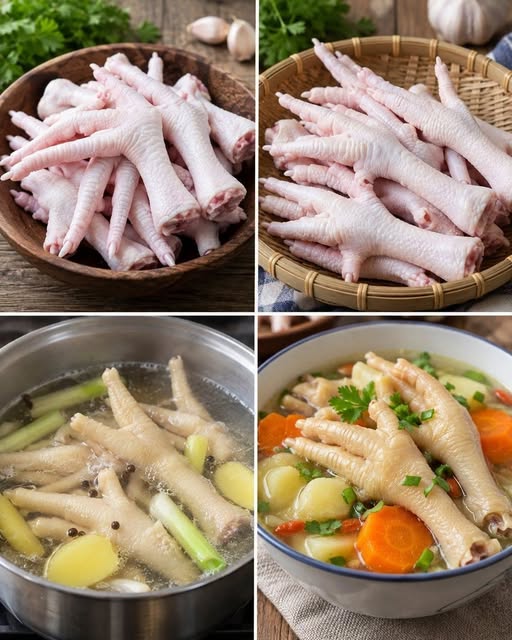
Why Chicken Feet Make Richer Broth and More Flavorful Soups
Slow Simmering Releases Gelatin From This Traditional Ingredient, Giving Homemade Stock a Fuller Texture
A pot of chicken stock can smell wonderful and still feel thin when you taste it. Chicken feet are one way to give that stock more body. They contain little meat, but their skin, tendons, and other connective tissues supply collagen. With enough time in hot water, some of that collagen breaks down into gelatin, giving the finished broth a silky texture.
Chicken feet are used in soups, stews, and braised dishes across several cooking traditions. For home cooks who are new to the ingredient, adding a few to a familiar stock recipe is an easy way to see what they contribute. The clearest difference may show up the next morning, when the chilled stock has set into a soft gel.
What Happens to Chicken Feet in a Pot of Stock
Connective tissue gives chicken feet their firm texture when raw. During a long simmer, the combination of heat, water, and time loosens that structure. Gelatin dissolves into the cooking liquid and gives it a fuller feel when served warm.
Once the stock cools in the refrigerator, the gelatin can form a soft network that holds water in place. A concentrated batch might wobble when you move the container. A more diluted one may stay pourable while still feeling richer than it did without the feet. Both loosen when reheated.
You may also find a pale layer on top of the chilled stock. That is usually fat, which rises as the broth sits and firms as it cools. The gelatin is in the liquid beneath it. If you want a lighter broth, lift off some of the chilled fat before reheating.
Pair Chicken Feet With a Carcass, Wings, or Backs
For a first batch, try adding several feet to a pot with a chicken carcass, wings, or backs. The other pieces help build a familiar chicken flavor, while the feet contribute body. Onion, carrot, and celery make a versatile base. Ginger and scallions work well if you plan to use the stock for noodle soup.
Look for cleaned, trimmed chicken feet sold for cooking. They may be available fresh or frozen from a butcher or grocery store. If you buy them frozen, thaw them in the refrigerator. Handle them as you would other raw poultry, keeping them separate from foods that are ready to eat. Washing raw poultry can spread bacteria through splashes, so start with feet that are already prepared for the pot.
Cover the chicken pieces with water, bring the pot to a boil, and reduce the heat to a gentle simmer. Let it cook for several hours, until the connective tissue softens and the liquid has developed the body you want. Poultry should reach at least 165°F (74°C). Strain the stock through a fine sieve to remove bones and other solids.
Hold back most of the salt if you expect to reduce the stock for a sauce or use it in several dishes. As water evaporates, the salt becomes more concentrated. You can season each portion once you know how you will use it.
How to Use the Finished Stock
Chicken noodle soup is a straightforward place to start. The gelatin gives a clear broth more body without changing it into a thick soup. The same stock can enrich a vegetable stew, serve as the cooking liquid for rice, or add depth to a pan sauce.
For a quick sauce, pour a little stock into the pan after cooking chicken and scrape up the browned bits. Let the liquid reduce until it lightly coats a spoon. The gelatin helps give the sauce a glossy texture, and the browned bits provide much of the flavor.
Chicken feet can also be served whole. In Cantonese dim sum, they are often braised in a savory sauce until the skin and connective tissue are tender. The appeal is in that soft texture and the seasoning it absorbs. Whole feet contain small bones, so serving them is a different experience from using them to make strained stock.
What Chicken Feet Contribute Nutritionally
The edible portion of boiled chicken feet provides about 19 grams of protein per 100 grams, along with fat and minerals such as calcium and phosphorus. Those figures describe the edible portion of the cooked feet themselves. The protein and mineral content of a cup of strained stock depends on the ingredients, the amount of water, and how concentrated the liquid becomes.
The strength of the gel gives you a clue about the stock’s texture. To compare two batches for cooking, taste them warm. A lighter stock may suit a delicate soup, while a more concentrated batch can be useful when you need a small amount of liquid to give a sauce more body.
Cool and Store Homemade Stock in Small Portions
After straining, divide the stock into clean, shallow containers so it cools quickly. Refrigerate it within two hours and use it within three to four days, or freeze it for longer storage. A large batch can be divided into soup-sized portions and smaller amounts for sauces.
If you already make stock from a roast chicken carcass, try adding a few feet to your next batch and chill a small container overnight. The next day, reheat enough for a bowl of soup. The stock may go into the pot by the spoonful and return to the bowl as a silky broth.