
A Cooper’s Hawk Keeps Visiting Your Bird Feeder. Here’s What You Can Do.
When Songbirds Gather in One Spot, a Hawk Can Learn Where to Find Them
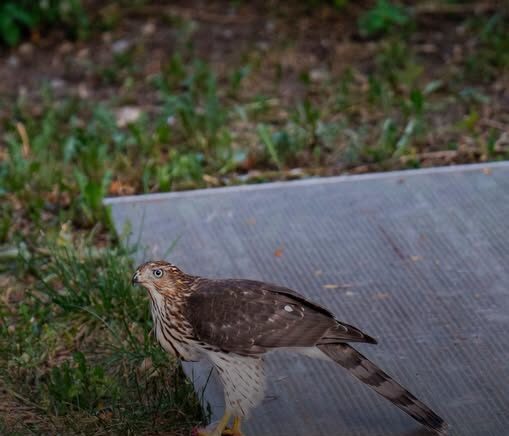
One moment, the feeder is busy. The next, the yard goes quiet. A Cooper’s hawk can scatter a group of feeding birds in seconds, and the smaller birds may stay under cover while it remains nearby. If the hawk returns, the same feeder that made it easy to watch songbirds can give the predator a predictable place to hunt.
Cooper’s hawks are agile woodland hunters. A suburban yard can offer some of the same features they use elsewhere, including trees for perching and smaller birds moving between open spaces and cover. A feeder adds a regular gathering point. When visits turn into repeated chases, changing how the yard is set up can help reduce the opportunities for an ambush.
A Quiet Feeder and Scattered Feathers Tell Different Parts of the Story
When a hawk appears, the first change you notice may be the lack of activity. Birds that were calling or taking turns at the feeder may suddenly disappear into nearby vegetation. If you missed the moment the hawk flew through, you might only see an empty feeder and a yard that is quieter than usual.
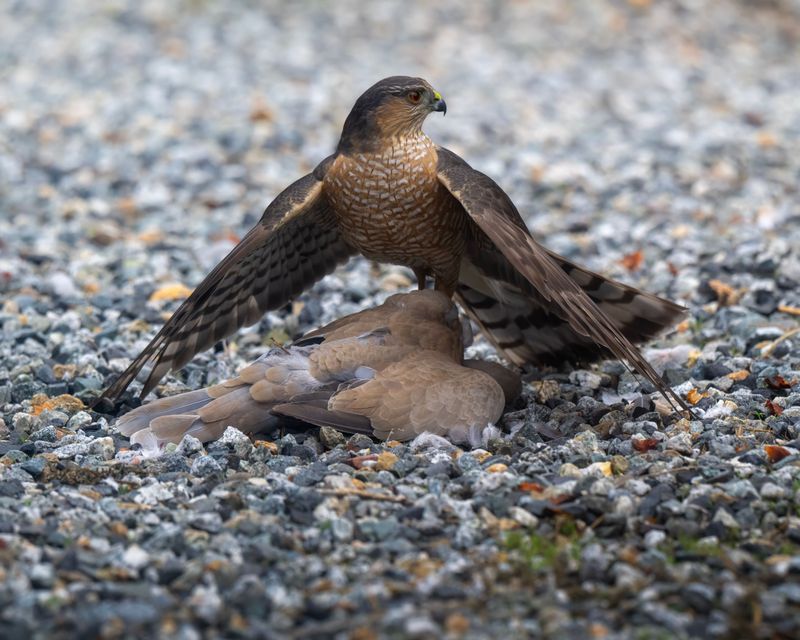
Scattered feathers beneath a branch can be a different clue. A hawk may use a perch to pluck a bird after a successful hunt, leaving feathers on the ground below. Finding those feathers can be unsettling, particularly if you regularly watch the birds that visit your feeder. It is also part of how a wild predator feeds.
The practical question is whether the hawk keeps returning to the same spot. A single flyby may be brief. A pattern of chases around the feeder suggests that the regular gathering of birds there is giving the hawk repeated opportunities. The feeder is one part of that pattern you can change immediately.
Take the Feeder Down for a Week or Two
If a Cooper’s hawk repeatedly hunts around a feeder, take it down for one or two weeks. The pause breaks up the routine that brings smaller birds to the same location. With fewer birds gathering around that spot, there is less reason for the hawk to keep checking it for a meal.
Look at what surrounds the feeder before putting it back. Dense native shrubs and other thick vegetation nearby can give songbirds somewhere to retreat when they scatter. An exposed feeding area leaves the birds crossing open ground to reach shelter. Cover gives them another place to go when the yard suddenly clears.
Taking a break from feeding and providing shelter address different parts of the problem. The break interrupts the gathering that draws the hawk’s attention. The vegetation gives the smaller birds somewhere to go when they are startled. You can make both changes while leaving the hawk free to move through the neighborhood.
Protect Chicks and Small Chickens With a Covered Run
For people who keep backyard chickens, chicks and smaller birds need particular attention when a hawk is hunting nearby. A feeder can be taken down temporarily. Poultry still need a place to spend time outside, so their protection depends more on the space they use each day.
A securely enclosed run with overhead protection gives the birds a physical barrier. The top matters because a fence around the sides still leaves an open approach from above. Scare devices may be visible in the yard, but a covered enclosure protects the birds even when no one is standing nearby to notice a hawk.
Very small pets are a separate concern. Attacks on cats and dogs by Cooper’s hawks are rare, and seeing a hawk near a bird feeder does not mean it is targeting a household pet. Close supervision outdoors is a reasonable precaution for very small animals while a hawk is actively hunting nearby.
Make Windows Easier for Birds to See During a Chase
A fast pursuit can bring birds close to windows. A bird trying to escape may head toward glass that reflects the surrounding yard, and a hawk following it can also collide with the pane. The risk comes from the glass looking like open space or a continuation of the trees and sky.
Closely spaced markers on the outside of the window can make the surface easier to see. Exterior placement helps the pattern remain visible against reflections, while close spacing gives birds a more consistent signal across the pane. The idea is to make the glass itself apparent before a bird reaches it.
If a collision leaves a bird injured, contact a licensed wildlife rehabilitator for guidance. That applies whether the injured bird is a feeder visitor or the hawk. A rehabilitator can tell you how to proceed based on the bird’s condition.
Give Nesting Hawks Space and Leave the Birds Alone
A hawk that is nesting may react to people approaching its tree. If you notice a bird repeatedly guarding the same area, give it plenty of room. Keeping your distance lets you use the rest of the yard without repeatedly bringing people or pets close to the nest.
In the United States, Cooper’s hawks are federally protected. Leave the bird alone and focus on changes you can make around the property. If you find an injured hawk, a licensed wildlife rehabilitator is the appropriate contact. If you have a question about a nesting bird or a recurring problem, a wildlife agency can help you understand your options.
Start with the part of the yard where you have seen the problem. Repeated chases at the feeder call for a feeding break and nearby cover. An open chicken run calls for overhead protection. A window near a flight path can be made more visible with exterior markings. Each change addresses a specific risk while allowing the hawk and the smaller birds to continue using the neighborhood.