
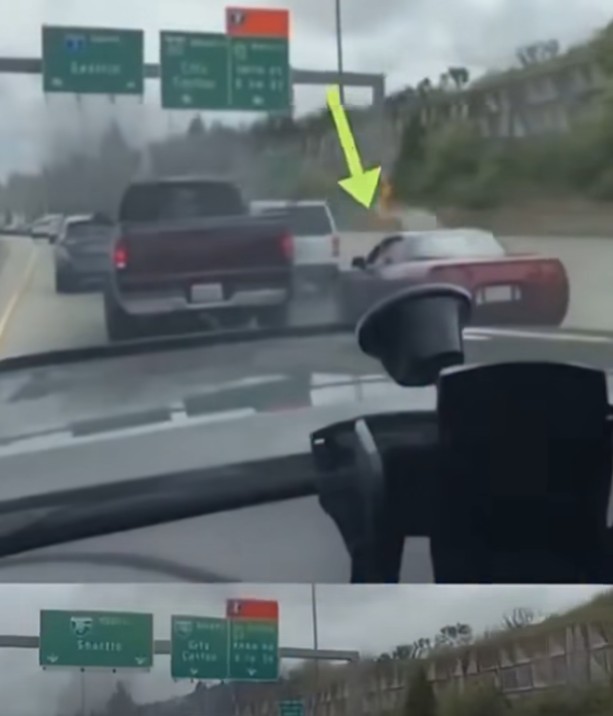
A Corvette Driver’s Rude Gesture Raises a Question About Road Rage
What Happened Between the Corvette and Pickup Drivers?
A Chevrolet Corvette driver reportedly made an offensive gesture toward someone driving a pickup truck. The account leaves several details unclear, including what prompted the gesture, how the pickup driver reacted and how the encounter ended. The incident raises a familiar question for anyone who has felt slighted in traffic. How much attention should an angry moment get when both people still have to drive?
An offensive gesture takes a second. Its effect can last longer, especially if the person on the receiving end sees it as an invitation to respond. A glance that would ordinarily end when the cars move apart can turn into a series of decisions about who gets ahead, who gives way and who has the final word.
How an Ordinary Delay Becomes Personal
Many encounters begin with something routine. A vehicle takes longer than expected to move through an intersection, another driver changes lanes with little warning, or traffic makes a short trip take longer than planned. The frustration may already be building by the time a particular motorist becomes its target.
From behind the wheel, people see only a small part of what is happening around another vehicle. A driver who stops unexpectedly may have seen a pedestrian or noticed a hazard farther ahead. A person in the next lane may have a different view of how much space is available. Each motorist can leave the same encounter with a different understanding of what happened.
A gesture can make that misunderstanding feel personal. The person making it may see it as a brief expression of irritation. The other driver may read it as a challenge and keep watching for whatever comes next. Once both drivers are paying attention to each other that way, the original delay or lane change can become secondary to the dispute.
When Anger Starts Changing the Way People Drive
Frustration is common in traffic. The risk grows when it begins to influence decisions about speed, following distance or where to position a vehicle. A driver who follows too closely, blocks someone from passing or speeds up to stay beside another car changes the conditions for everyone nearby.
Following too closely gives the driver behind less room to react when traffic slows. Deliberately holding a vehicle beside someone else can keep both drivers occupied with each other through a merge or an intersection. What started as displeasure with one person can involve passengers and road users who had no part in the original encounter.
Attention matters as much as position. A driver watching another motorist for a reaction still needs to see brake lights, signs, pedestrians, cyclists and changes in traffic. A glance held for too long can take attention away from a hazard developing directly ahead, even if the vehicles involved in the disagreement never touch.
What the Corvette and the Pickup Tell Us About the Encounter
The descriptions of the vehicles make the story easy to picture. A Chevrolet Corvette is a sports car associated with performance and distinctive styling. A pickup truck is often chosen for the equipment or cargo it can carry. Those details identify the vehicles involved, while the account leaves the drivers’ motives and the sequence of events unclear.
It can be tempting to interpret a maneuver through assumptions about the person behind the wheel. A quick lane change may look like showing off to someone who already expects that behavior from a sports-car driver. A pickup moving up behind a smaller vehicle may feel intimidating, especially after an exchange of gestures. The useful details are what the vehicles actually do and how much space remains around them.
Both drivers share the same responsibility to account for others on the road. In the Corvette encounter, the reported gesture gives a starting point for discussion. It leaves open who had been ahead, whether one driver had tried to pass and whether the two went their separate ways immediately afterward.
Why the Urge to Respond Can Keep an Encounter Going
An insult can create the feeling that an answer is owed. In traffic, a response might be another gesture, a prolonged stare or an attempt to pull alongside the other vehicle. Each of those actions can keep the drivers close enough for another exchange at a point when the encounter might otherwise have ended.
Trying to have the last word can also change what a driver sees as the next priority. A vehicle moving ahead becomes something to catch. A gap that would normally be left open becomes a space to defend. These decisions can unfold quickly, and traffic around the two vehicles can change before either person has had time to reconsider.
Letting another vehicle move away can bring the interaction to an end. Once there is distance, the other driver’s reaction becomes less relevant to the trip. The driver who had been watching for it can return attention to the traffic ahead and the decisions the route actually requires.
What Drivers Can Control During an Aggressive Encounter
When another driver makes an offensive gesture, keeping both hands available for driving and looking ahead helps preserve attention. If the other vehicle is already passing, allowing it to continue can reduce the time the vehicles spend close together. If it is following closely, steady, predictable driving leaves more room to manage whatever happens ahead.
Space is especially valuable when another motorist is behaving unpredictably. When traffic permits, a driver can give the other vehicle room to pass and avoid competing for position. Sudden braking, deliberately slowing to make a point or trying to block a maneuver can make the situation harder for nearby drivers to read.
A threatening encounter calls for a different response from an ordinary exchange of gestures. If a driver appears to be following or threatening someone, the situation may warrant help from local authorities. Moving toward a populated place when safe can give the person a better option than pulling over somewhere isolated or getting out to confront the other driver.
Patience Leaves Room to Notice What Is Happening
Driving skills include making decisions while annoyed, tired or pressed for time. A slow merge can feel particularly aggravating when a driver is already late, but it still calls for the same attention to speed and spacing as any other merge. A short pause gives the driver time to see whether the inconvenience is passing or whether traffic ahead requires a change in speed.
Passengers experience those decisions too. A shout or an abrupt change in speed can make them anxious, especially if they missed the moment that prompted it. Children and newer drivers may also notice how the person behind the wheel reacts to mistakes, delays and disrespect. They see what it looks like to give someone space and continue the trip.
The account of the Corvette and pickup leaves the next moment unknown. That moment is where the driver who receives a gesture still has choices. A gap can stay open, a passing vehicle can go ahead, and both motorists can be on their way before an unpleasant exchange becomes something more serious.