
High School Student Wins Nevada Science Fair With Traditional Chokecherry Pudding Experiment
Destany “Sky” Pete Compared Four Chokecherry Preparations in a Lab
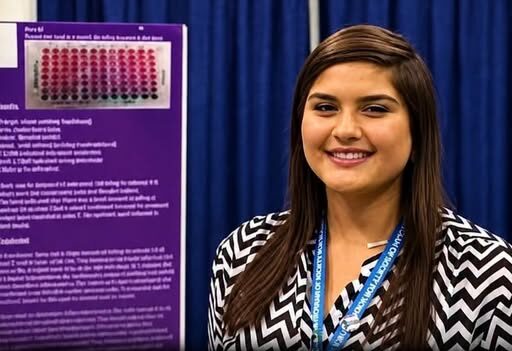
Destany “Sky” Pete won the 2017 Elko County Science Fair in Nevada with a project inspired by toishabui, a traditional chokecherry pudding. The high school student examined how four chokecherry preparations affected uterine sarcoma cells in a laboratory. Only the pudding prepared with crushed seeds showed an inhibitory effect on the cells under the conditions tested.
Pete, a member of the Shoshone and Paiute Tribes from the Duck Valley Indian Reservation in Idaho and Nevada, began with a question about a food her community already knew well. The project focused on a step in the traditional recipe that some people skip: crushing the seeds and including them in the pudding.
A Conversation With an Elder Inspired the Project
The idea took shape after Pete spoke with an elder in her community. The conversation prompted her to wonder whether eating fewer traditional foods might be connected to health concerns in the community. Toishabui became the focus of her research because its preparation gave her a specific difference she could investigate.
Chokecherries were familiar to Pete through the people in her community who continued to plant and harvest them. She was interested in what happened to the fruit after harvest, especially the decision to keep or remove the seeds. It was a practical difference that people making the pudding would recognize, and it gave her a way to turn a broad question about traditional food into a manageable science fair project.
The question about community health was the starting point for her curiosity. The experiment itself had a narrower scope. It examined how cells responded to selected chokecherry preparations over 24 hours. It did not examine people’s diets or establish a connection between changes in traditional eating habits and illness in the community.
A Teacher Connected Pete With a Cancer Cell Researcher
One of Pete’s high school teachers helped put her in touch with Dr. Ken Cornell, a biochemistry professor at Boise State University who specialized in cancer cell research. With Cornell’s involvement, Pete could examine her question using uterine sarcoma cells in a laboratory.
By that point, the project had moved from asking broadly about the properties of chokecherries to asking whether the way they were prepared made a difference. That shift shaped the experiment. Testing a single sample could show how the cells responded to that preparation, while testing several gave Pete a basis for comparing their effects.
The key comparison was between two versions of the pudding. One contained crushed seeds and the other was prepared without them. Chokecherry juice and chokecherry extract rounded out the four samples, giving the project a way to compare the two puddings with two other preparations made from the fruit.
What Happened During the 24-Hour Test
Pete and Cornell tested the four preparations on uterine sarcoma cells and allowed a 24-hour incubation period. After that period, the traditional pudding containing crushed seeds was the only preparation that showed an inhibitory effect. The seedless pudding, juice and extract did not show the same effect in this experiment.
The comparison between the puddings was especially relevant to Pete’s original question. Both were forms of the same dish, but only one included the step she had singled out for study. The result made the crushed seeds a feature worth examining more closely. The experiment did not identify which substance in the preparation was responsible for the response or explain how it affected the cells.
Pete described the difference between the recipes in her own words. “The traditional (Shoshone and Paiute) method of preparing chokecherry pudding includes the seed of the chokecherry, crushed up,” she said. “Nowadays, some people just kind of juice the berry and take out the seed completely. But maybe the seed has medicine that can help us to stay well.”
Her remarks captured the question that led to the project. A preparation step that might seem incidental when making food turned out to be important to the design of the experiment. With the two versions of the pudding tested side by side, Pete could see that they produced different results under the same set of laboratory conditions.
The Finding Was Limited to Cells in the Laboratory
The experiment was conducted in vitro, meaning the researchers exposed cells to the preparations outside the human body. That setting allowed them to observe a response in the cells they tested. It provides a starting point for investigating what happened in the sample over the incubation period.
Eating a food is a different kind of exposure from applying a preparation directly to cells in a laboratory. Pete’s project did not test what would happen if someone ate the pudding, how any of its components would behave in the body or whether a person with cancer would benefit. The finding therefore does not establish that chokecherry pudding or crushed seeds can prevent or treat cancer.
The kind of cells used also defines the scope of the finding. The project examined uterine sarcoma cells under a specific set of conditions and within a single 24-hour period. It gives no basis for assuming that other kinds of cancer cells would respond in the same way. Within those limits, the comparison still answered the central question of the science fair project: the four samples did not all produce the same response.
Pete Took Pride in Bringing Her Heritage Into the Science Fair
Winning the Elko County Science Fair was a personal achievement for Pete, who said she was proud to represent her Native American heritage. She saw science and culture as closely connected. In her project, that connection was concrete. The conversation with an elder led her to consider a detail of a traditional dish, and that detail determined which samples she brought into the experiment.
The project also shows what each person contributed to its development. The elder helped spark Pete’s interest in a community food tradition. Her teacher put her in touch with someone who worked with cancer cells. Cornell brought experience with laboratory research, while Pete chose the preparation she wanted to investigate and kept the traditional version at the center of the comparison.
The outcome gave the community knowledge behind the recipe a visible place in Pete’s science fair work. The difference she wanted to investigate was already familiar to people who prepared toishabui. What Pete added was a controlled comparison in which that difference could be observed under laboratory conditions. Her award recognized a project that began with a question from her own community and followed it far enough to find a result she could describe precisely.