
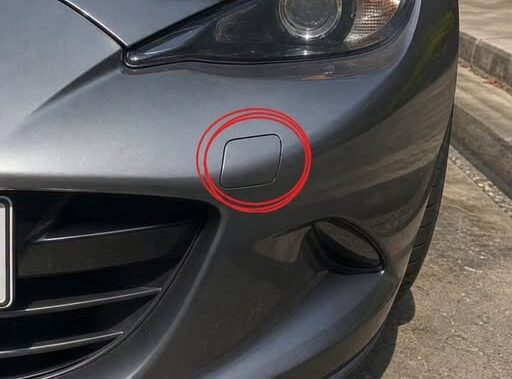
What Is the Small Square Cover on Your Car’s Bumper? The Hidden Tow Hook Connection Explained
A Small Panel With a Practical Purpose
A small plastic cover on a vehicle’s bumper can be easy to overlook. It often blends into the surrounding surface, appearing to be little more than a detail in the bodywork.
On vehicles equipped with this feature, the panel conceals a threaded socket for a screw-in tow hook. The opening provides access to a designated attachment point that may be needed during a roadside emergency or a recovery situation.
The distinction between the cover and the connection behind it is important. The plastic panel is not intended to carry a pulling load; it simply hides the access point until it is needed.
Knowing what the panel covers can help explain why attaching recovery equipment to a bumper or another convenient-looking exterior part is not an appropriate substitute. The visible bodywork and the designated attachment point serve different purposes.
The Threaded Socket Behind the Cover
Removing the access cover exposes a socket designed to accept a compatible screw-in tow hook, sometimes called a towing eye. The hook is a separate component that attaches to the vehicle through the threaded connection.
The threads allow the correct component to be secured at the intended location. Once installed as specified for that vehicle, the towing eye provides an attachment point for the uses permitted by the manufacturer.
That last distinction matters: the presence of a threaded socket does not mean every towing or recovery technique is suitable. The connection must be used within the instructions and limitations established for the particular vehicle.
The general purpose of the feature is straightforward, but its proper use depends on more than identifying the opening. Compatibility, installation, and the type of assistance being attempted all matter.
A panel that looks similar on two cars should not be treated as proof that their towing equipment or procedures are interchangeable. The relevant instructions belong to the specific vehicle.
Why the Bumper Itself Is Not the Attachment Point
During a roadside problem, an exposed section of bumper may appear to offer a quick place to attach equipment. However, the exterior surface should not be confused with the connection concealed behind the access panel.
The tow hook socket exists to provide a designated location for an attachment. Using a body panel instead can damage the vehicle rather than move it as intended.
That is the practical value of recognizing the small cover before an emergency. It directs attention toward the purpose-built connection instead of an improvised attachment to visible bodywork.
It is also important not to overstate what the feature guarantees. A designated connection can help avoid damage associated with attaching equipment to the wrong place, but it cannot make an unsuitable recovery method safe or damage-free.
The hook, socket, and procedure must all be appropriate for the situation. Finding the cover is the beginning of identifying the correct arrangement, rather than confirmation that the vehicle is ready to be pulled.
Front and Rear Access Panels
These access covers may be found on front or rear bumpers, depending on the vehicle’s design. Their appearance can make them seem like decorative inserts, even though they provide access to a functional component.
The location of a cover helps identify where a connection may be available. It does not, by itself, explain which direction a vehicle may be moved or what equipment should be attached.
For that reason, the front and rear panels should not be interpreted as a complete set of towing instructions. They identify access locations, while the vehicle’s instructions establish the permitted use.
Drivers also should not assume that every small bumper panel has the same purpose. This explanation applies to covers that conceal a threaded towing-eye socket.
Confirming the feature through the owner’s manual avoids relying solely on its shape. A square plastic insert is a visual clue, but the vehicle documentation provides the necessary identification.
The Cover Is Only One Part of the System
The panel attracts attention because it is visible, but the useful connection depends on the components behind and beyond it. The socket accepts the towing eye, and the eye provides the point to which appropriate equipment can be connected.
Understanding those separate roles prevents a common misunderstanding. Opening the panel does not expose something that should automatically be used with any hook, rope, or recovery device at hand.
A screw-in towing eye must be the correct component for the vehicle and must be installed in the specified manner. An uncertain fit should not be treated as an acceptable connection.
Likewise, the term tow hook can suggest a broader range of uses than a particular component actually permits. The name alone does not establish whether a recovery technique, pulling force, or towing arrangement is allowed.
The useful question is therefore not simply whether a hook can be screwed into the opening. It is whether the complete arrangement matches the vehicle’s requirements and the assistance being provided.
What to Establish Before the Connection Is Used
A roadside emergency can create pressure to act quickly. Familiarity with the access panel helps, but decisions about moving the vehicle still need to account for the manufacturer’s instructions.
The owner’s manual should establish whether the panel covers a towing-eye socket, identify the appropriate component, and explain its intended use. Those details are more reliable than assumptions based on another vehicle’s arrangement.
Where the permitted procedure is unclear, the socket’s presence should not be taken as authorization to improvise. A roadside assistance or recovery professional can assess the situation and determine an appropriate method.
This is particularly relevant to the difference between a controlled movement and an attempt to free a vehicle that cannot move readily. The fact that both involve pulling does not establish that the same attachment and procedure are suitable.
Identifying the connection correctly supports a better-informed response. It gives the person providing assistance a designated feature to evaluate alongside the vehicle’s instructions and condition.
A Useful Feature to Recognize Before an Emergency
The small bumper cover has a modest appearance, but it can provide access to an important attachment point. Its purpose becomes clearer once the plastic panel is understood as an access cover rather than a structural part.
For the driver, the benefit is familiarity. Recognizing the panel makes it easier to understand what a roadside professional is looking for and why an attachment should not simply be placed around the bumper.
It also provides a reason to become familiar with the vehicle’s towing instructions before they are needed. Knowing the purpose of the cover is useful; knowing the limits of the connection is equally important.
The threaded socket is designed to work with an appropriate screw-in towing eye for specified uses. Correct identification and use can help prevent the costly damage that may result from attaching equipment to unsuitable exterior parts.
What looks like a minor styling detail is therefore an access point with a specific job. Its value lies in providing the correct connection when needed—and in being used only as the vehicle’s instructions permit.