
My Mother Said I Was Making a Fuss While My Wife Needed an Ambulance
Fiction: A Medical Emergency Forced Me to Put My Family First
I dialed emergency services and concentrated on keeping my voice steady. Clara lay unresponsive beside me, and our newborn son was distressed.
There was no room left for hesitation. Whatever disagreements existed around us, my wife needed help.
“Emergency services, how can I help you?”
“I need an ambulance,” I said, my voice firm. “My wife is unconscious, and we have a newborn in distress.”
I gave our address and explained what I could. Clara’s hand seemed to tighten slightly around mine, but she did not wake or speak.
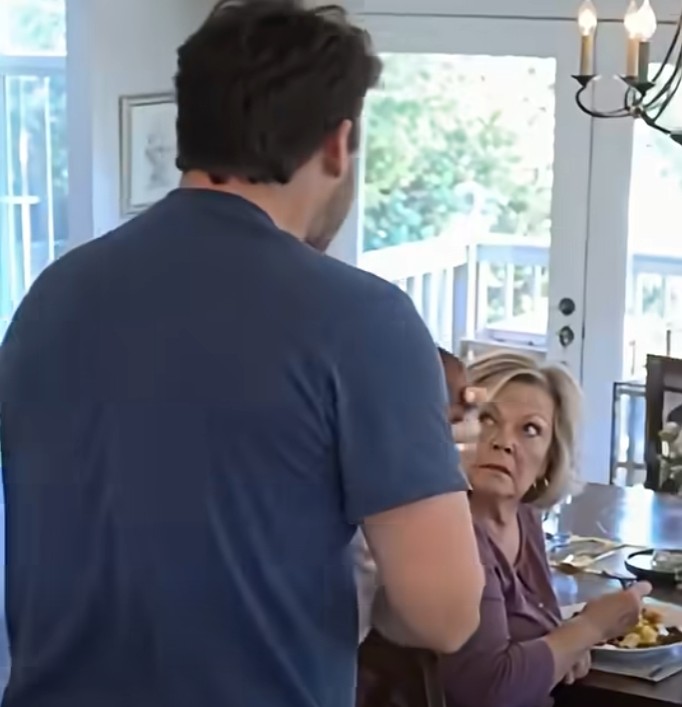
Across from us, my mother remained seated with her fork suspended. I could see her disbelief, but I could not spend another moment trying to make her understand.
The person answering my call was listening. That was where my attention needed to be.
There Was No Time to Argue About the Emergency
After the call, I turned back toward Clara. I wanted her to hear something familiar, even though I could not know how much she understood.
“Help is on the way, sweetheart, just hold on a little longer.”
Our son had quieted somewhat against my shoulder, although he remained unsettled. I held him carefully, aware of how small he felt amid everything happening around us.
My mother finally lowered her fork.
“I don’t see why you’re making such a fuss,” she insisted.
The words registered, but I did not answer. An argument would not help Clara, and I had already given too much attention to someone who refused to recognize what was in front of her.
I watched my wife and listened for the ambulance. My mother’s opinion could wait; Clara’s condition could not.
There was fear in that waiting, but also a clarity I had not felt before. I did not need agreement from everyone in the room to seek help for my family.
The Paramedics Brought a Different Kind of Calm
When sirens broke the evening quiet, I felt the first release of tension. Flashing lights approached, and soon the paramedics were inside.
I explained what had happened as they assessed Clara. Their attention stayed on her condition, bringing order to a room where I had felt increasingly alone.
They prepared to take her to the hospital and carefully moved her onto a stretcher. Watching them work was reassuring, but seeing her carried away made the seriousness of the situation harder to keep at a distance.
“Will she be okay?” I asked one of the paramedics, my voice barely a whisper.
“She’s stable for now, but we need to get her to the hospital to be sure,” he replied.
I held onto the first part of his answer without forgetting the second. Stable was welcome news, but she still needed further care.
Another paramedic offered to hold our son while I followed Clara. My immediate response came from fear and the need to keep him close.
“He stays with me.”
Everything familiar seemed to be moving at once. Holding him gave me one point of connection as the paramedics prepared to leave.
My Mother Tried to Stop Me From Leaving
As Clara was wheeled toward the door, I looked back at my mother. Disbelief had given way to an expression I recognized as anger.
“You can’t just leave,” she said.
The statement would once have drawn me into an explanation. I might have tried to soften her reaction or persuade her that I was not being unreasonable.
This time, the stretcher was already moving toward the ambulance. My wife and child needed my attention more than my mother needed reassurance.
“I’m doing what’s best for my family,” I replied. “We won’t be back until you understand what that truly means.”
I did not wait to see whether she accepted it. I followed the paramedics outside.
The evening air felt cool after the tension of the house. Clara was carefully loaded into the ambulance while our son rested against me.
I was frightened about what might happen next. But I was certain that leaving was the right decision.
The Journey Left Little Space for Anything but Worry
The trip to the hospital passed in fragments. I remember watching Clara, speaking softly, and trying to comfort our baby.
I could not tell whether she heard my words. Still, talking to her felt better than surrendering to the silence.
My thoughts kept moving between immediate fears and the exchange we had just left behind. I was angry with my mother, but anger could not be my priority while Clara needed care.
The question of what would happen between us belonged to another conversation. For now, the most important thing was reaching the hospital and letting the medical team assess my wife.
Our son remained close throughout the journey. Caring for him gave me something concrete to do while so much else was outside my control.
I wanted to reassure him, reassure Clara, and reassure myself. None of those things came easily, but I kept trying.
Waiting Meant Accepting Help
At the hospital, Clara was taken away for further assessment. I was left in the waiting area with our child and the knowledge that I could not follow her into every part of her care.
Doctors and nurses moved around us. Their work continued with a purpose that contrasted with how helpless I felt.
Once the immediate activity settled, a nurse approached and looked at the baby in my arms.
“Can I hold him while you take a moment?” she asked gently.
I hesitated. Earlier, I had refused an offer to let someone else hold him, as though keeping him against me was the only way to remain useful.
But I was exhausted, and the nurse was offering help. I nodded and let her take him.
Then I sat down. Without the task of holding him, I became more aware of how much strain I had been carrying.
Accepting that brief support did not change my responsibility to my family. It gave me a moment to breathe while I waited for news I could not make arrive faster.
The Doctor Finally Brought Reassurance
The waiting felt much longer than the passing hours. Every movement nearby drew my attention, and every delay gave my worry somewhere new to go.
Eventually, a doctor approached. I searched his expression before he had time to speak.
“She’s going to be okay. We’ll keep her for observation, but she’s stable.”
Relief arrived so suddenly that I could barely answer. I thanked him, trying to absorb the difference between fearing the worst and hearing that Clara would be all right.
She still needed observation. There was no detailed explanation of her condition yet, and I did not need to invent one to understand that the immediate news was better.
I wanted to see her and let her know our son was nearby. After everything that had happened, being together felt more important than finding the perfect words.
The hospital had not resolved every problem in our lives. It had given Clara care and given me a reason to stop imagining that every unanswered question meant disaster.
The Family Conflict Would Have to Wait
My mother’s behavior remained unresolved. Her dismissal of the emergency and her demand that I stay had changed something I could not simply put back as it had been.
But Clara’s hospital room was not the place to settle that conflict. She needed rest, and our child needed care.
There would be time to consider the boundary I had set and what it would mean after we left the hospital. I did not yet know how my mother would respond.
What I knew was that I had acted when my wife needed help. I had called, explained the situation, and gone with her rather than allowing someone else’s disapproval to hold me in place.
When I finally prepared to return to Clara’s side, my attention narrowed to what mattered that evening: she was stable, our son was with us, and we could begin facing the next steps together.
The future still contained difficult conversations. For the moment, I could let them wait and be present with my wife and child.