
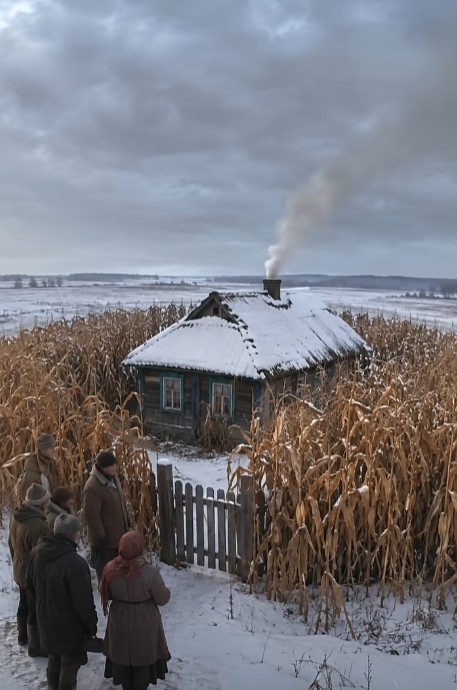
They Mocked Her for Leaving Corn Around Her House—Then a Snowstorm Changed Their Minds
A Garden Nobody Understood
By the time the first frost reached the village, Margaret’s neighbors had spent months questioning her garden. They understood why someone would grow corn, but they could not understand why she had planted it around her house—or why she refused to clear away the dried stalks.
Margaret was 72 and lived alone in a small wooden home beyond the other houses. Her husband had died several years earlier, and her children had moved to the city.
She spent much of her time outdoors, tending vegetables and maintaining the property. In summer, the open field around her home offered peace and a wide view of the countryside.
Winter was different. With little shelter around the house, the wind swept across the field and pressed against its aging windows.
In this fictional story, Margaret had spent the warmer months preparing for that familiar problem. Her neighbors saw only an untidy garden until a December storm gave them reason to look again.
Several Rows Around a Small House
Margaret began planting in early May. Instead of keeping the corn within her usual vegetable beds, she worked her way around the house, placing seeds in several close rows.
She left a narrow route toward the gate. Beyond it, the planting gradually formed a border between her home and the open ground.
Her neighbor Robert noticed the work and stopped at the fence.
“Margaret, why do you need so much corn? You live alone. What are you going to do with such a huge harvest?”
She continued working as she answered.
“I’ll harvest the ears, but I’ll leave the stalks standing. They’ll come in handy during the winter.”
Robert looked from the emerging rows to her chimney.
“In winter? Don’t tell me you’re planning to burn corn in your stove!”
“No, Robert. I need it for something else.”
He laughed, shook his head and continued on his way. He had asked about the harvest, but he left without asking what she intended the stalks to do.
Summer Work Became Village Gossip
As the plants grew, Margaret’s unusual arrangement attracted more attention. Neighbors discussed it over fences and along the road.
Some thought the work was simply a way to occupy lonely days. Others made unfair assumptions about her memory because she was older and unwilling to change her plans.
Margaret continued watering, weeding and checking the plants. When the stems became tall enough to catch the wind, she secured them to supports.
By August, green leaves obscured much of the little house. From some angles, only parts of its walls and roof remained visible beyond the corn.
“Soon you won’t even be able to see your own house behind all that corn!” the neighbors joked.
“At least I’ll feel safer in winter,” Margaret replied.
Her answer did little to stop the teasing. Most people still assumed the plants would disappear once she had collected the ears.
The Harvest Was Only Part of Her Plan
When autumn arrived, Margaret harvested the corn and dried the kernels. She kept some and shared part of the crop with people she knew.
Then, instead of pulling up the stalks, she brought out wooden stakes and strong rope. She worked between the rows, adding support and tying sections together.
The dried leaves remained attached. Around the house, the summer planting became a brown, rustling border.
Her neighbors were clearing their own gardens, and the contrast prompted another round of comments.
“Margaret, have you completely lost your mind? Everyone else is clearing their gardens, and you’re leaving dry weeds all around your house!”
Others warned that snow would soon arrive and offered opinions about the mess she would face in spring. Margaret listened without abandoning the work.
She had lived through enough winters in that house to know what worried her. The appearance of the yard was not her immediate concern.
A December Storm Reaches the Village
Late November brought frost. By the middle of December, weather forecasts were warning of a severe cold spell and an approaching snowstorm.
The village was accustomed to winter weather, and many residents initially expected another difficult but familiar snowfall. During the night, however, the wind became much stronger.
Branches broke along the streets. Snow swept almost horizontally across open ground, gathering wherever the gusts slowed.
By morning, roads were blocked and deep drifts surrounded several houses. Electricity failed across the village, leaving residents dependent on whatever other arrangements they had available.
Robert kept his wood-burning stove going through much of the night. Even with the fire maintained, drafts around the old frames made his rooms difficult to keep comfortable.
When he went outside to clear a path, he looked across the field toward Margaret’s home. The brown rows he had mocked were still standing.
The Pattern in the Snow
Snow had collected heavily around the outer side of Margaret’s corn. Some stalks bent beneath the wind, but the stakes and ropes had helped keep much of the planting upright.
Closer to the house, the accumulation was noticeably lighter. Robert stood still, studying the difference between the exposed field and the space behind the rows.
He called two neighbors over. Together, they approached the gate, finding that the gusts felt weaker near the house than they had on the open ground.
Margaret stepped onto the porch to collect firewood. Her stove was lit, and she appeared unsurprised to see them examining the yard.
“Margaret, is this why you left all that corn standing?” Robert asked.
“Of course. Did you really think I’d spent the entire summer working on it for no reason?”
He glanced back at the snow gathered around the plants.
“But how did you know it would help?”
Something Her Husband Had Taught Her
Margaret set down her basket. Her explanation began with the man who had once shared the house with her.
“My late husband worked in agriculture for many years. He told me that tall plants can protect a property from the wind and trap snow. We used to have trees on this side of our house, but they were cut down several years ago. After that, the house became much colder during winter.”
She pointed toward the rows she had tended since May.
“I couldn’t grow new trees in a single summer, so I decided to plant corn instead. I planted several rows, and in the fall, I reinforced them so they wouldn’t fall over during winter.”
Robert looked at the supports more closely. The stakes he had dismissed as unnecessary had been part of the preparation all along.
“So we spent the entire summer laughing at you while you were preparing for winter,” he said quietly.
“I told you several times that the corn would come in handy. You just never asked how.”
Tea Beside the Stove
Margaret invited the neighbors inside to warm themselves. They sat near the wood-burning stove while she prepared tea.
Robert noticed how different the room felt from his own house during the night. The windows were still old, but the drafts seemed less intrusive than he had expected.
The visit did not repair the damage elsewhere in the village. Broken fencing remained to be fixed, entrances needed digging out and the roads required several days of work.
Still, the conversation around Margaret’s table had changed. Nobody was asking whether she had forgotten to clear her garden.
Robert left with a clearer understanding of what he had overlooked. Margaret had offered an explanation months earlier, but he had been more interested in making a joke than hearing it.
A Different Conversation in Spring
When the weather softened, neighbors returned to help remove the old stalks. This time, they came with offers of work rather than criticism.
Robert joined them, a little embarrassed by how often he had questioned Margaret’s judgment.
“This year, I want to plant something along the edge of my property too. But this time, Margaret, you’ll have to explain how to do it properly.”
She smiled.
“First, pay attention to which direction the wind blows from during winter. Then we’ll decide where you should plant.”
Later, Robert helped her plant young spruce trees along the northern side of the property. In Margaret’s plan, they would eventually provide more lasting shelter.
The village had not discovered that one person could control the weather. It had discovered that a neighbor’s unfamiliar choices might deserve a question before they became a joke.
When someone asked why Margaret needed the young trees, Robert answered before she could.
“Don’t laugh. Last winter, we already learned that Margaret knows better than any of us how to protect her home.”