
An Old Wooden Chair Finds New Life Through Careful Restoration
A Simple Object Filled With Meaning
Sometimes the most ordinary items in a home carry the deepest meaning. A simple wooden chair can become part of daily life, quietly witnessing years of shared moments and memories.
This particular chair had been part of a family for nearly three decades. Around it, countless conversations took place, meals were shared, and special occasions were celebrated.
Over time, it became more than just furniture. It became a silent presence in everyday life, holding memories that could not easily be replaced.
When Time Begins to Show
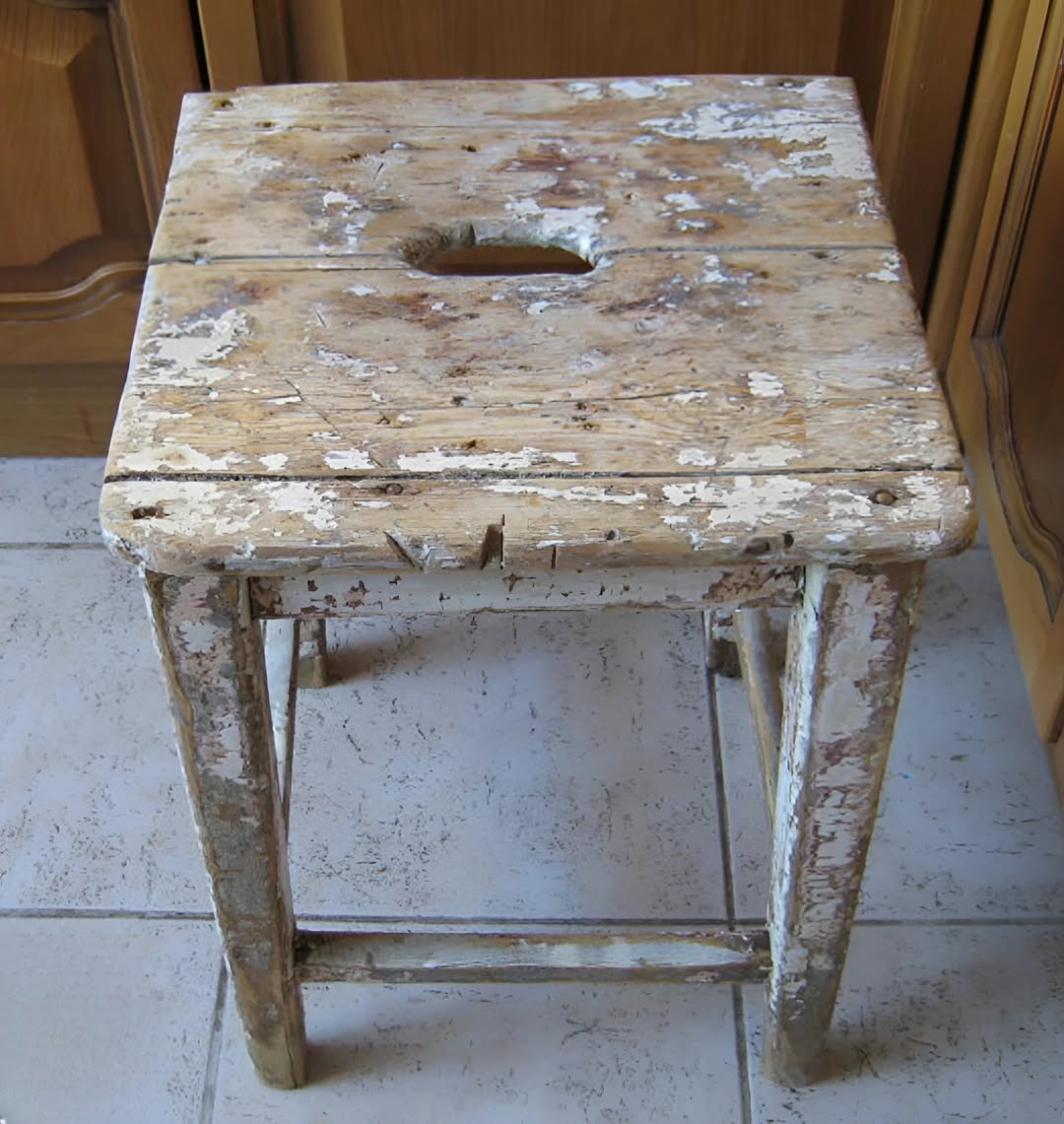
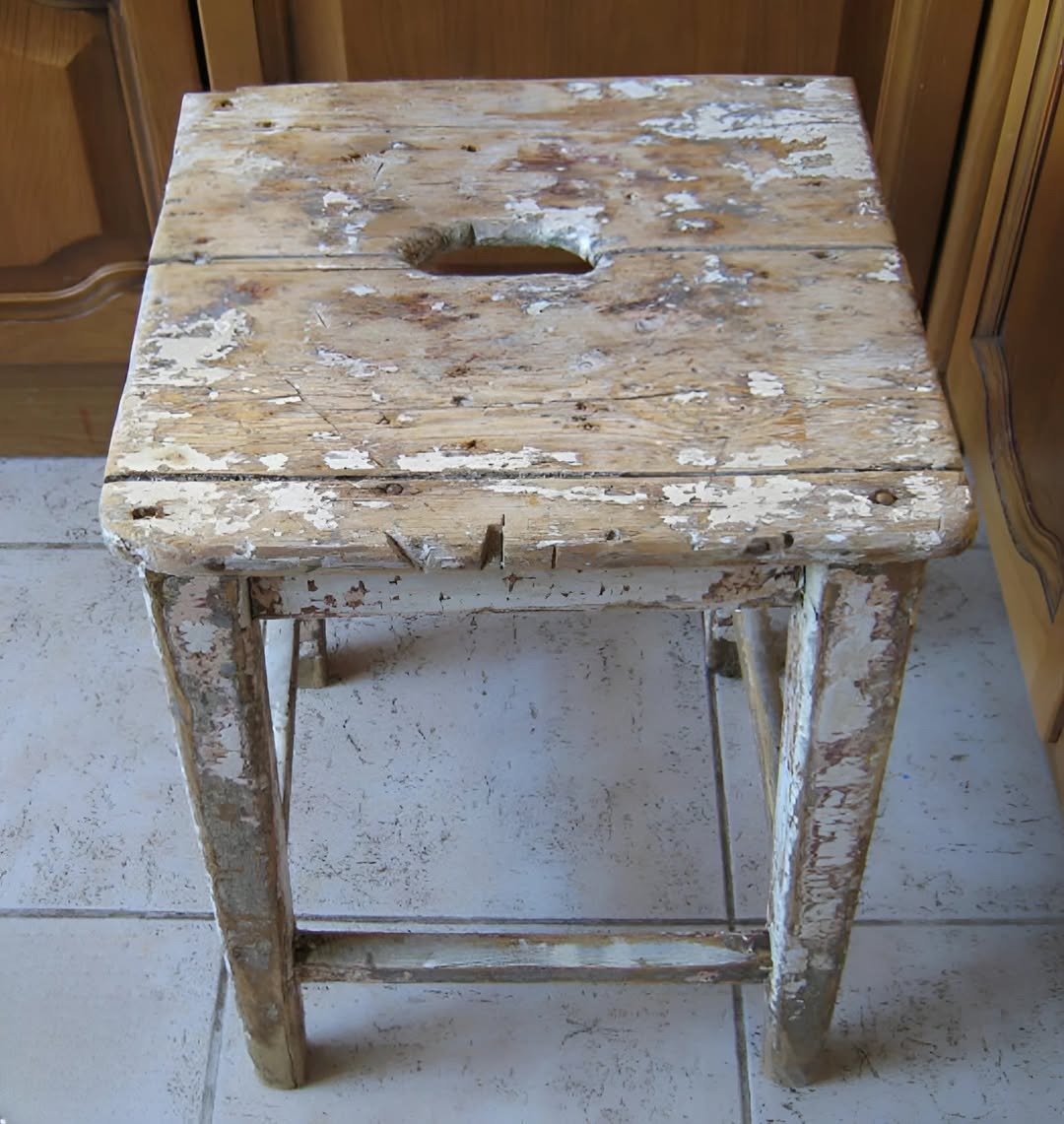
As the years passed, the condition of the chair began to change. The once smooth paint started to peel away, revealing the aged wood beneath.
The legs became less stable, and small signs of wear appeared throughout the structure. Eventually, even a hole formed in the seat, making it clear that the chair had endured many years of use.
At first, it seemed like the only option was to discard it. The damage suggested that its time had come to an end.
But letting it go was not easy. The memories connected to the chair made it feel irreplaceable.
Choosing Restoration Over Replacement
Instead of throwing the chair away, the decision was made to restore it. The goal was not only to repair the damage but also to preserve the history it carried.
This choice reflected a desire to keep something meaningful rather than replace it with something new.
Restoration offered the opportunity to give the chair a second life while maintaining its connection to the past.
Step One: Preparing the Structure
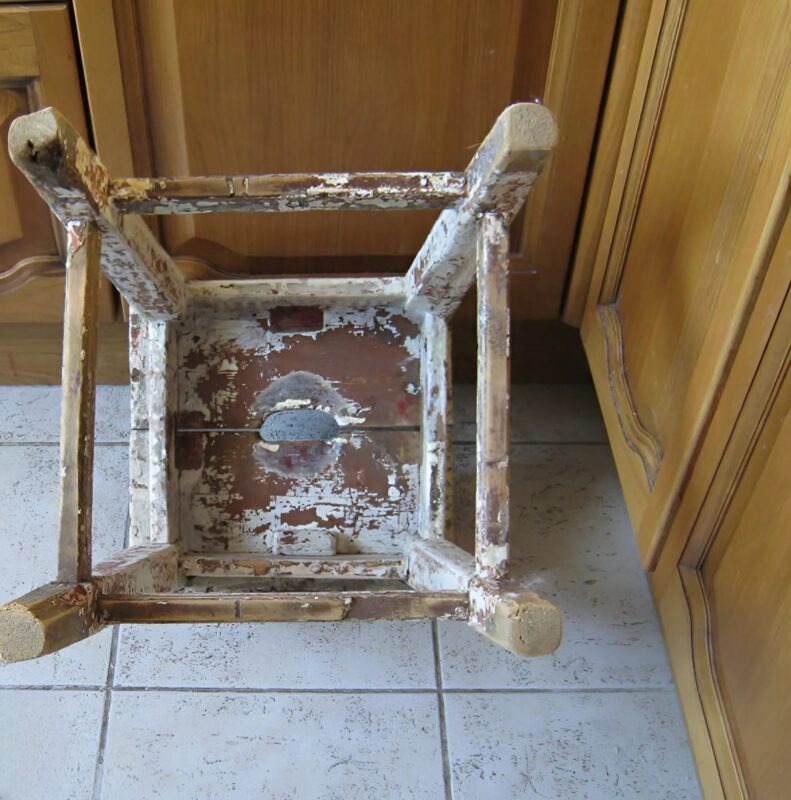
The first stage of the process focused on rebuilding the foundation of the chair. This involved removing all of the old paint, which had become worn and uneven over time.
The process required patience and effort, as layers of paint had to be carefully stripped away to reveal the original wood beneath.
Once the paint was removed, the entire surface was sanded. This step smoothed out rough areas and eliminated visible signs of aging, preparing the chair for its transformation.
Loose joints were tightened, and the structure was reinforced to ensure stability. The goal was to make the chair strong enough to last for years to come.
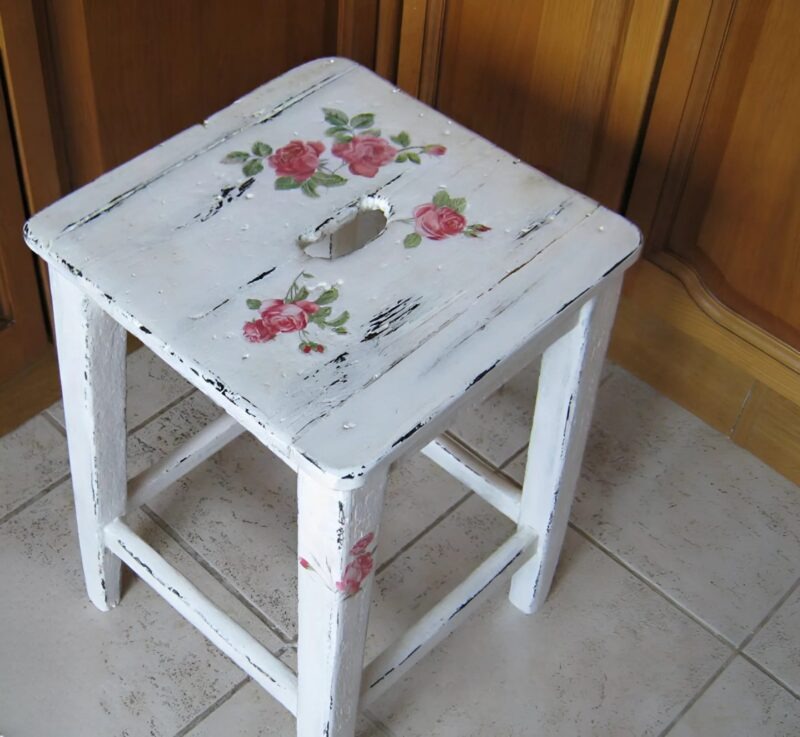
Interestingly, one detail was intentionally left unchanged. The hole in the seat was not repaired, serving as a subtle reminder of the chair’s long history.
Step Two: Creating a New Look
With the structure restored, attention turned to the appearance of the chair. This stage allowed for creativity and personal expression.
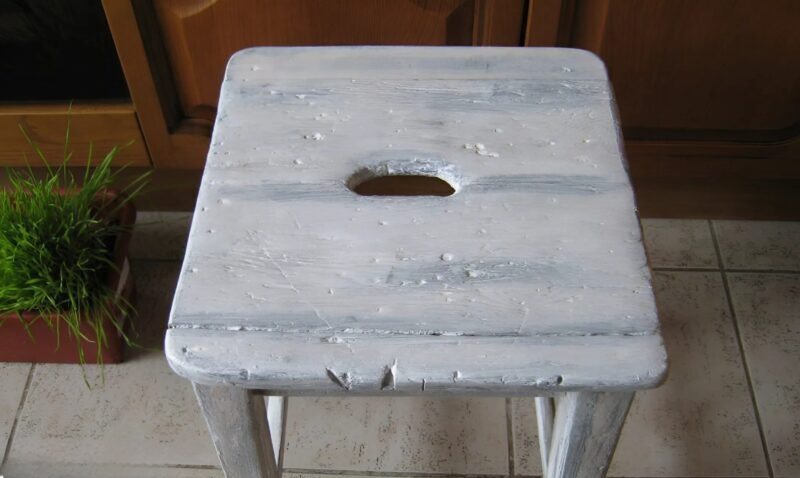
A fresh coat of white paint was chosen to give the chair a clean and bright look. The color transformed its appearance, making it feel lighter and more elegant.
Even with the new paint, something still felt incomplete. To add character, decorative elements were introduced.
Rose-themed designs were carefully applied to different parts of the chair. These details were placed thoughtfully, enhancing the overall look without overwhelming the simplicity of the piece.
The edges of the decorations were blended by hand to create a seamless finish. This made the design appear as though it had always been part of the chair.
Finally, a protective layer of clear varnish was added. This step sealed the design and gave the surface a gentle shine, while also protecting it from future wear.
Step Three: The Final Result
The completed chair no longer resembled the worn piece it once was. It had been transformed into something both functional and decorative.
Its new appearance carried a soft, vintage charm that complemented its surroundings. At the same time, it retained the familiar qualities that made it meaningful.
The restored chair became more than just an object in the home. It became a reflection of care, effort, and appreciation for the past.
The Value of Preserving Memories
Restoring old furniture offers more than practical benefits. It allows people to preserve items that hold emotional significance.
Each mark and detail tells a story, representing moments that cannot be replaced. By choosing restoration, those stories are kept alive.
In this case, every scratch and line on the chair serves as a reminder of time that has passed and experiences that remain important.
The Benefits of Restoration
Giving old furniture a second life can have several advantages. It helps preserve meaningful connections while also adding character to a living space.
Restored items often stand out because they carry a sense of uniqueness that newer pieces may lack.
The process is also environmentally conscious, as it reduces waste and encourages reuse instead of disposal.
Most importantly, restored objects carry a sense of history and personality that cannot be recreated.
A New Chapter for an Old Chair
The chair now holds a new place in the home. It serves both as a functional piece and as a decorative element that reflects its transformation.
While its appearance has changed, the memories connected to it remain intact. The restoration process has simply added another chapter to its story.
This balance between old and new creates a sense of continuity, allowing the chair to remain part of daily life.
A Reminder of Lasting Value
Sometimes, the most meaningful objects are those that have been part of life for many years. Instead of replacing them, restoring them can bring renewed appreciation.
This chair is no longer just a piece of furniture. It represents time, care, and the importance of holding on to what matters.
Through restoration, it has become a lasting reminder that even worn and aging items can find new purpose while keeping their original meaning.