
Freddie Mercury’s Early Hardships, Rise to Fame, and Enduring Legacy
A Childhood Shaped by Distance and Discipline
At the time of his death, Freddie Mercury was widely seen as one of the greatest performers in music history. His fame, talent, and stage presence made him a global icon, while his estimated fortune of $50 million reflected the extraordinary success he achieved through decades of work.
Yet his life was never defined only by wealth or celebrity. His story was also one of resilience, shaped by early loneliness, personal struggle, and a determination that carried him from childhood insecurity to worldwide admiration.
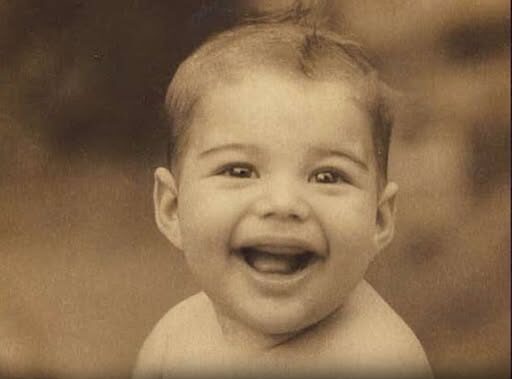
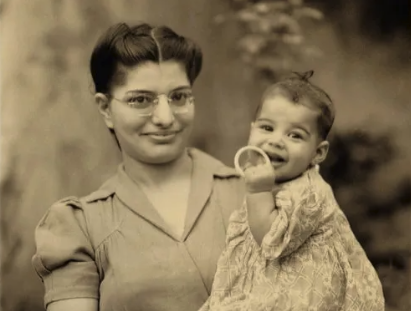
Mercury was born in Africa in 1946 into a family that was stable but far from wealthy by Western standards. In his early years, the course of his life was strongly influenced by broader political events that would later disrupt his family’s world.
As a child, he was known to be highly insecure. That emotional vulnerability became part of the inner drive that would later help shape one of the most recognizable frontmen in rock history.
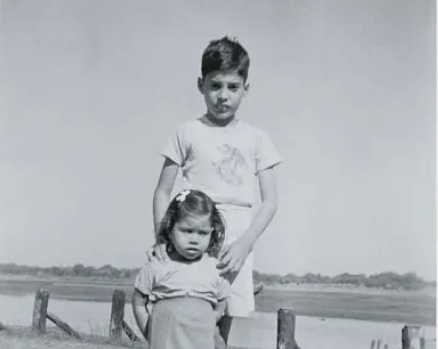
He was born with four extra incisors, a feature he later believed contributed to his vocal ability. While his father worked for the British Colonial Office, much of Mercury’s childhood unfolded far from home after he was sent at the age of eight to a British-style boarding school for boys in Bombay.
What may have appeared from the outside to be a structured upbringing felt very different to him as a child. The separation from his family left a deep mark.
“Of course there were feelings of being sent away from my parents and my sister who I missed very much – feelings of loneliness, feelings of being rejected – but you had to do what you were told so the sensible thing was to make the most of it,” he later said in an interview.
Learning Independence the Hard Way
Life at boarding school in the 1950s was demanding and often harsh. Mercury later reflected on that period as one that forced him to become self-reliant much earlier than most children.
“All the things they say about boarding schools are more or less true, about the bullying… One thing board school teaches you is how to be independent and not rely on anyone else.”
He also said, “I was put into an environment where I had to fend for myself, so I got a good grasp of how to be responsible at an early age and I think that’s what made me such a fiend.”
Former classmates described him as somewhat of a loner. He was often happiest at the piano or in art class, where he could focus on creative expression away from the pressures of school life.
At the same time, he developed a strong competitive streak in certain sports. He enjoyed hockey, athletics, and boxing, even if other activities held no appeal for him.
”I loathed cricket and long-distance running; I was completely useless at both. But I could sprint, I was good at hockey, and I was just brilliant in the boxing ring,” the singer once said.
That determination was visible even in adolescence. A former classmate, Bruce Murray, remembered seeing him in a boxing match where he absorbed repeated punishment while others wanted the fight stopped.
Mercury refused to quit. He continued until the end, despite blood streaming down his face.
”He could be very tenacious,” Murray said.
New Claims About His School Years
Interest in Mercury’s early life grew again in 2025 with the publication of a controversial new book by author Lesley-Ann Jones. The book drew attention because it claimed to reveal deeply personal details from material said to have been shared with the author shortly before Mercury’s death by a woman identified only as “B.”
Jones wrote that she was given access to the artist’s personal diaries and notebooks. In her account, those writings allegedly described traumatic experiences during his time at boarding school.
The book further claimed that Mercury’s behavior and academic performance changed noticeably when he was around 14 years old. That shift, it was suggested, reflected painful experiences that had affected him during that period.
Jones alleged that the diaries described abuse by one of the schoolmasters. The book also stated that the alleged misconduct began after the schoolmaster caught the teenager during a collective self-pleasuring session with a group of other boys.
These claims brought renewed scrutiny to a part of Mercury’s life that had long been viewed mainly through the lens of loneliness, separation, and strict school discipline. They also added a darker dimension to the story of a boy who had already been forced to grow up quickly.
Return to Africa and a Second Upheaval
In 1963, Mercury returned to Africa. That homecoming, however, was brief.
Only a year later, a violent revolution forced the family to leave and relocate to England. The move brought another sudden rupture in his life, but it also placed him in an environment that would soon open the door to his future career.
The family eventually settled in London. There, Mercury entered a city alive with cultural change, artistic experimentation, and the energy of the Swinging Sixties.
He studied graphic art and design at Ealing Art College and graduated with a diploma in 1969. By that time, it was already clear that his creative talents stretched far beyond visual design.
He had begun developing his singing and piano abilities when he was just seven years old. Those early skills would soon become the foundation of a career unlike any other.
The Quiet Young Man with Big Ambitions
Before success arrived, Mercury took on ordinary jobs while trying to build a place for himself in the music world. He sold second-hand Edwardian clothes and also worked as a baggage handler at Heathrow Airport.
Friends from that period described him as shy and quiet, with a strong devotion to music. His admiration for Jimi Hendrix was so great that pictures of the guitarist covered his room.
At home, his decision to pursue music was not immediately welcomed. The direction he wanted for his life clashed sharply with what his parents had imagined for him.
“My parents were outraged when I told them what I was up to,” he later said.
He added, “I used to go home periodically and turn up in these outrageous clothes and with my fingernails painted black and at that time my mother used to freak out. They used to say, ‘My God! Don’t let the neighbours see you. Come in here quick. Use the back door.’”
Even so, Mercury did not retreat. He continued singing with several local bands and kept pushing toward something bigger.
Joining the Band That Became Queen
Among the groups he watched closely was Smile, a trio featuring guitarist Brian May and drummer Roger Taylor. Mercury was so convinced of his own ideas that he regularly offered suggestions, even from the audience.
During performances, he reportedly shouted, “If I was your singer, I’d show you how it was done!” That confidence eventually met opportunity.
When Smile’s vocalist left in 1970, Mercury stepped in. With bassist John Deacon joining the lineup the following year, the band took on a new identity and a new name: Queen.
The name reflected Mercury’s instinct for drama, symbolism, and provocation. It was his idea, and it captured the theatrical boldness he believed the band should embody.
As he explained to PEOPLE in 1977, “The whole point was to be pompous and provocative, to prompt speculation and controversy,”.
He also reinvented himself personally, adopting a new surname. From then on, he would be known to the world as Freddie Mercury.
The Transformation on Stage
Those who knew him understood that there was a striking contrast between the private Mercury and the performer who took the stage. Offstage, he could be shy and guarded.
Onstage, he became magnetic. The hesitation vanished, replaced by command, swagger, and a kind of theatrical fearlessness that turned concerts into unforgettable events.
His work with Queen became one of the most celebrated bodies of music in rock history. He wrote or helped create songs that became lasting anthems, including “Killer Queen,” “Bohemian Rhapsody,” “Somebody to Love,” “We Are the Champions,” “Don’t Stop Me Now,” and “Crazy Little Thing Called Love.”
Mercury’s ability to connect directly with crowds became central to his reputation. That gift was on full display at the 1985 Live Aid concert, where he performed before 70,000 people in one of the most famous live appearances in modern music.
Beyond Queen, he also built a solo career and worked as a producer and guest musician for other artists. His range, imagination, and showmanship made him one of the defining performers of his era.

Illness, Final Work, and Lasting Impact
In 1987, Mercury was diagnosed with AIDS. Despite the seriousness of the illness, he continued to record and create with Queen for as long as he could.
He remained active almost until the end of his life. His artistic commitment never disappeared, even as his health declined.
After his death, he was featured posthumously on Queen’s final studio album, Made in Heaven. The record served as one more reminder of the creative force he remained, even in his final chapter.
In 1991, one day after publicly confirming his diagnosis, Mercury died from complications related to the illness. He was 45 years old.
His death sent shock waves through the music world. It also brought renewed public attention to the AIDS crisis at a time when stigma and fear still shaped much of the conversation around the disease.
In 1992, a major tribute concert was held at Wembley Stadium in his honor. The event helped raise awareness and support for AIDS research while celebrating the life and work of a performer whose voice and presence had touched millions.
The Estate and the Legacy He Left Behind
At the time of his death, Mercury’s net worth was estimated at around $30–50 million. His estate reportedly included a London home, valuable artwork, and continuing Queen royalties.
Much of that estate was left to his close friend and former fiancée, Mary Austin, while the remainder went to his family. The decision reflected the importance of the personal bonds that remained central to his life, even amid global fame.
Freddie Mercury’s story remains remarkable not simply because of the success he achieved, but because of the force of will behind it. He emerged from loneliness, instability, and deeply difficult experiences to become one of the most influential performers of the modern era.
His life was marked by reinvention, discipline, vulnerability, and extraordinary talent. Long after his death, he remains not only a legendary singer, but a symbol of artistic courage and lasting cultural impact.
What endures most is not the fortune attached to his name, but the scale of what he built from a troubled beginning. He turned private pain into public power, and in doing so, left behind a legacy that continues to resonate across generations.