
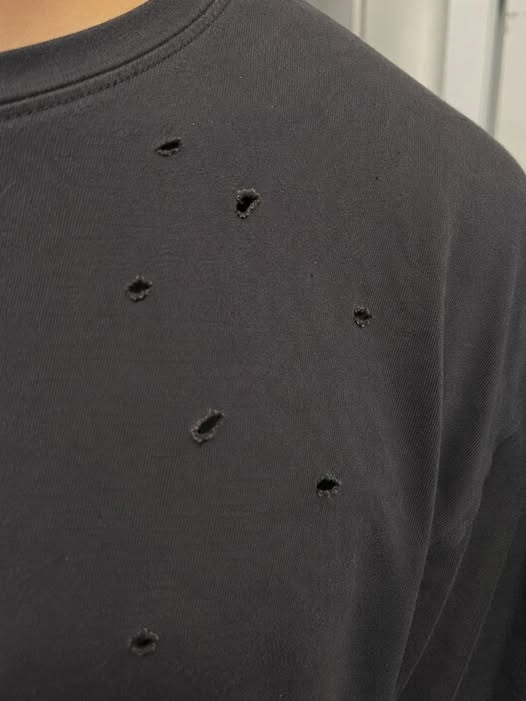
Why Your T-Shirts Keep Developing Holes After Washing
A Frustrating Mystery in the Laundry Room
What begins as a tiny hole near the bottom of a favorite T-shirt can quickly turn into a recurring problem that ruins clothing over time.
Many people assume the damage is caused by poor-quality fabric, harsh detergents, moths, or a malfunctioning washing machine. As more garments develop tears and worn spots, frustration often grows alongside the laundry pile.
The pattern can seem random at first. One shirt develops a small hole. Then another follows. Before long, several favorite pieces of clothing show signs of damage that appear impossible to explain.
Yet the cause is often much closer than most people realize.
The Surprising Source of Clothing Damage
After repeated wash cycles and growing frustration, many people begin searching for answers. Appliance inspections frequently reveal that the washing machine is functioning normally.
When the machine itself appears to be in good condition, attention must turn to the washing process and everyday laundry habits.
The discovery can be surprising. In many cases, the damage is not the result of a defective appliance or poor manufacturing. Instead, it comes from repeated physical stress placed on fabrics during normal washing and drying cycles.
Small actions that seem harmless can gradually weaken fibers until visible holes begin to appear.
The Role of the Agitator
One of the most common causes of unexplained holes involves the agitator found in many top-loading washing machines.
This central post is designed to move clothing through water and detergent, helping remove dirt and stains. While effective for cleaning, it can also create significant stress on delicate fabrics.
During the wash and spin cycles, garments may become caught in narrow spaces between the agitator and the drum.
As the machine rotates, the trapped fabric experiences pulling, twisting, and stretching forces. Over time, these repeated movements weaken the material.
Eventually, the fibers can break, creating small round holes that often appear near the lower portion of shirts.
Because the damage occurs gradually, it may not be obvious that the washing machine is contributing to the problem.
Why Holes Often Appear Near the Waistline
Many people notice that holes frequently develop in similar locations on multiple shirts.
The lower front area near the waistline is one of the most common places for this type of wear.
This pattern is often connected to friction caused by everyday clothing accessories.
Belt buckles, metal buttons, and exposed zippers can repeatedly rub against softer fabrics during washing.
As shirts move through the machine, cotton fabric presses against these hard surfaces again and again.
The repeated contact acts like a slow abrasive force. Although each individual wash may cause only minimal wear, the cumulative effect becomes significant over time.
After dozens of wash cycles, weakened fibers begin to separate, leading to visible holes and thinning fabric.
The Impact of Continuous Friction
Friction is one of the most overlooked factors in garment damage.
When clothing tumbles through a wash cycle, fabrics constantly move against one another. Soft materials are especially vulnerable when they encounter rough or metallic surfaces.
The combination of water, detergent, agitation, and repeated rubbing creates conditions that gradually break down textile fibers.
Because the process happens slowly, many people fail to connect the damage with their laundry routine.
Instead, they often blame the clothing manufacturer or assume the fabric was defective from the beginning.
In reality, even well-made garments can experience accelerated wear when exposed to repeated friction over long periods.
A Simple Way to Reduce Damage
Fortunately, preventing these holes does not usually require replacing appliances or purchasing entirely new wardrobes.
One of the easiest solutions is turning garments inside out before washing.
This small adjustment helps protect the visible outer surface of the fabric.
When friction occurs during the wash cycle, it affects the inside of the garment rather than the side that is normally seen and worn.
Over time, this simple habit can significantly reduce visible wear and extend the life of clothing.
It requires only a few extra seconds before starting a load but can provide lasting benefits.
The Benefits of Mesh Laundry Bags
Mesh laundry bags offer another practical layer of protection.
These bags create a barrier between garments and potentially damaging surfaces inside the washing machine.
Delicate clothing can remain contained while still allowing water and detergent to circulate effectively.
The protective barrier reduces opportunities for fabrics to snag on machine components or become entangled with zippers, buttons, and other abrasive items.
For garments that frequently develop holes or show signs of wear, mesh bags can help preserve fabric integrity through repeated wash cycles.
This approach is especially useful for lightweight cotton items and clothing made from softer materials.
The Problem With Overloading the Machine
Another common contributor to fabric damage is overloading the washing machine.
When too many garments are packed into a single load, clothing has less room to move freely.
The increased pressure forces fabrics against each other and against the drum walls.
This creates additional friction and stress throughout the wash cycle.
Instead of being gently circulated through water and detergent, garments become compressed and subjected to greater mechanical strain.
The result can be accelerated wear, stretched fibers, and an increased likelihood of developing holes.
Allowing adequate space inside the drum helps reduce unnecessary stress while improving overall cleaning performance.
Understanding the Real Cause
One reason this issue remains so frustrating is that the damage often appears without any obvious warning signs.
The holes seem to emerge suddenly, even though the weakening process may have been occurring for months.
Because the wear develops gradually, it is easy to overlook the factors responsible.
Only after examining washing habits and looking closely at recurring patterns does the underlying cause become clear.
The realization often shifts attention away from defective products and toward everyday practices that can be adjusted with minimal effort.
Small Changes That Make a Big Difference
Protecting clothing does not require complicated solutions.
Simple adjustments such as turning garments inside out, using mesh laundry bags, and avoiding overloaded wash cycles can significantly reduce fabric stress.
These small changes work together to minimize friction, prevent snagging, and reduce unnecessary strain on delicate fibers.
As a result, clothing remains in better condition for longer periods.
Favorite shirts retain their appearance, and the recurring mystery of unexplained holes often disappears entirely.
A More Effective Laundry Routine
Understanding how everyday washing habits affect fabric is the key to preventing future damage.
Rather than viewing holes as random defects or unavoidable wear, they can be recognized as the result of specific mechanical forces occurring during the laundry process.
Once those forces are identified and addressed, clothing can be protected far more effectively.
The solution is not necessarily found in replacing appliances or changing detergents. In many cases, it comes from making a few deliberate adjustments to how garments are washed and cared for.
With a more thoughtful approach, the cycle of damaged shirts can come to an end, allowing favorite pieces to last longer and remain part of the wardrobe for years to come.