
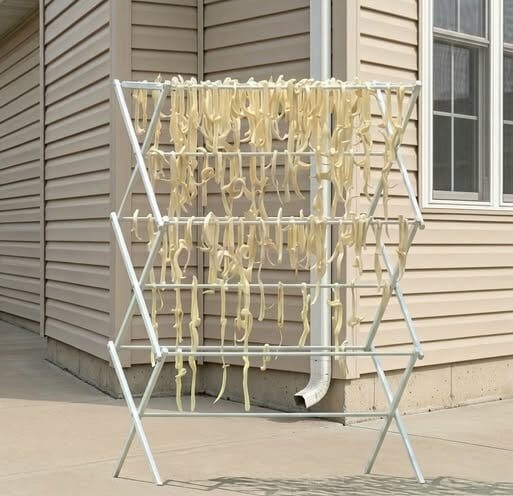
Why Fresh Pasta Is Hung Up to Dry After It Is Made
Fresh Pasta Contains a Significant Amount of Moisture
Fresh pasta is one of the oldest and most widely enjoyed foods in the world. Made from simple ingredients such as flour, water, and often eggs, it has a soft texture and a much higher moisture content than the dried pasta commonly found on store shelves.
Because fresh pasta contains so much moisture immediately after it is made, it requires special handling. One of the most traditional and effective methods is hanging the pasta on racks, rods, or poles to dry.
While the sight may seem unusual to some people, the practice serves several important purposes that improve the quality and usability of the pasta.
Drying Prevents the Pasta From Sticking Together
After fresh pasta is cut into strands such as spaghetti, linguine, fettuccine, or tagliatelle, the dough remains soft and slightly damp.
If these strands are placed in a bowl or left in a pile, the moisture on their surfaces can cause them to stick together quickly. Within a short time, separate strands may become a tangled mass that is difficult to separate.
Hanging the pasta allows each strand to remain apart from the others. Air can circulate around the pasta and gradually remove excess surface moisture, reducing stickiness and making the strands easier to handle.
Hanging Helps Preserve the Shape
Freshly cut pasta is delicate and can easily lose its intended shape if it is left lying flat or piled together.
Moisture and gravity may cause the strands to flatten, twist, or clump. Hanging the pasta allows each strand to remain straight and separated while it dries.
This helps preserve the appearance of the pasta and ensures a more consistent result when it is cooked.
Airflow Improves the Drying Process
One of the biggest advantages of hanging pasta is the airflow it creates around every strand.
As air moves around the pasta, moisture evaporates more evenly from the surface. This process helps create a texture that is easier to work with and reduces the chance of sticking during cooking.
The simple act of allowing air to reach all sides of the pasta has been an important part of traditional pasta-making for generations.
Drying Can Improve Cooking Performance
Pasta that is extremely moist on the surface may clump together when added to boiling water.
Allowing the strands to dry slightly before cooking often helps them remain separate. This can lead to more even cooking and a better final texture.
Many pasta makers intentionally leave fresh pasta hanging for a period before cooking because it improves both handling and performance in the kitchen.
Drying Times Depend on the Intended Use
The amount of time pasta remains on a drying rack depends on whether it will be cooked immediately or stored for later use.
If the pasta will be eaten the same day, it may only need to hang for a short period, ranging from several minutes to a few hours. This removes excess surface moisture while keeping the interior soft.
For long-term storage, the drying process continues much longer. As additional moisture leaves the dough, the pasta gradually becomes firm and brittle, similar to packaged dried pasta.
Drying Was Traditionally Used for Food Preservation
Before refrigeration became common, drying was an essential method of preserving food.
Fresh pasta naturally contains moisture, and moisture can encourage spoilage. By removing water through drying, people could store pasta safely for much longer periods.
This preservation technique became especially important in regions where pasta production was a major part of daily life and local food traditions.
Large quantities of pasta could be produced, dried, and stored for future use without requiring refrigeration.
Traditional and Modern Drying Methods Share the Same Goal
In the past, pasta was often dried outdoors where sun, wind, and favorable weather conditions helped remove moisture naturally.
Today, many producers use controlled environments that regulate temperature, humidity, and airflow.
Although the equipment has changed, the purpose remains the same: reducing moisture to improve stability, texture, and shelf life.
The basic principles behind drying pasta have remained remarkably consistent over time.
The Role of the Pasta Drying Rack
A pasta drying rack is specifically designed to hold long strands while they dry.
Multiple horizontal bars provide enough space for the pasta to hang freely without touching other strands or nearby surfaces.
This arrangement maximizes airflow and minimizes the risk of sticking.
Many home cooks use dedicated drying racks, while others improvise with household items such as wooden spoons, rods, coat hangers, or broom handles.
Regardless of the equipment used, the objective remains the same: keeping the strands separated during the drying process.
Fresh and Dried Pasta Offer Different Textures
Fresh pasta and dried pasta are similar products, but they do not provide the same eating experience.
Fresh pasta is generally softer, more delicate, and cooks quickly. Dried pasta typically develops a firmer texture and greater resistance when bitten.
The drying process influences the structure of the dough and affects how it behaves during cooking.
Because of these differences, both fresh and dried pasta remain popular for different types of dishes and personal preferences.
Homemade Pasta Reflects Traditional Craftsmanship
Pasta made by hand often displays slight variations in thickness, shape, and strand length.
These small differences are considered a natural part of homemade production and are often viewed as signs of traditional craftsmanship.
Many people continue making pasta at home because they enjoy both the process and the final result.
Recipes and techniques are frequently passed down through generations, making pasta-making an important cultural and family tradition.
Why Pasta Hanging on a Rack Is Perfectly Normal
To someone unfamiliar with pasta-making, long strands hanging from a rack may look unusual or even confusing.
In reality, the pasta is simply undergoing a practical drying process that has been used successfully for centuries.
Hanging allows moisture to evaporate, prevents sticking, preserves shape, improves cooking performance, and can extend storage life.
What appears unusual at first glance is actually a time-tested technique that remains an important part of making fresh pasta around the world.