
Can Natural Charcoal Turn Gray Hair Black? A Clear Reality Check on the Viral Trend
The Viral Beauty Claim Getting Attention
A simple beauty clip can spread fast when it promises something people deeply want. That is exactly what happened with the idea of using natural charcoal to make gray hair appear black again.
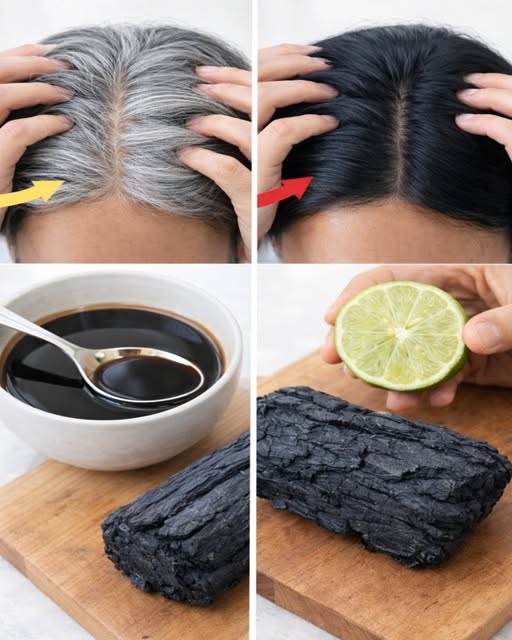
The trend often appears in a dramatic format. Someone with visible gray strands mixes a dark powder into a bowl, applies it to the hair, rinses it out, styles the result, and then reveals darker-looking, shinier hair.
For many viewers, the transformation looks convincing. The method seems inexpensive, easy to repeat at home, and more natural than permanent dye or regular salon appointments.
That emotional appeal is a major reason the charcoal hair trend became so popular. It offers the feeling of control over gray hair without requiring a complicated beauty routine.
But the question is not whether the videos look impressive. The real question is whether charcoal can actually restore gray hair to black from the inside out.
What Gray Hair Really Means
Gray hair begins with changes in pigment. Hair color comes mainly from melanin, which is connected to specialized cells associated with the hair follicle.
When pigment production slows down or becomes less consistent, new strands may grow in with less color. That is when hair begins to appear gray, silver, or white.
This change does not start on the surface of the hair. It begins deeper in the place where the strand forms before it emerges from the scalp.
That matters because charcoal is applied to hair that already exists. A dark substance placed on the outside of a strand does not automatically change what is happening inside the follicle.
Surface darkness and natural pigment are two different things. A temporary coating can change appearance, but it is not the same as restoring biological color.
Why the Charcoal Idea Feels So Believable
Charcoal has already become familiar in beauty routines. It appears in face masks, soaps, cleansers, shampoos, scalp scrubs, and even toothpaste-style products.
Its deep black color makes it visually powerful. When people see a black powder applied to gray hair, it is easy to imagine that it could make the hair darker.
That idea feels even more believable because charcoal is often associated with cleansing, freshness, and impurity removal. In beauty marketing, it has become linked with visible transformation.
From there, the leap is simple. If charcoal can clean the skin or scalp and it is naturally black, some people assume it may also darken hair.
The problem is that looking dark and functioning as a dependable hair dye are not the same thing.
Can Charcoal Permanently Turn Gray Hair Black?
No, charcoal does not permanently turn gray hair black.
Charcoal does not restart melanin production. It does not reverse the graying process inside the follicle. It does not transform a strand that grew without pigment into naturally black hair.
At most, charcoal may create a temporary dark cast on the surface of some hair types. That effect depends on the formula, the amount used, the texture of the hair, hair porosity, lighting, styling, and how thoroughly it is rinsed.
This temporary effect may look impressive in a short video, especially when the hair is freshly styled afterward. But it is closer to cosmetic camouflage than true color restoration.
A strand that appears darker for a short time has not necessarily changed at a biological level. It may simply have a dark residue sitting on the outside.
Why Before-and-After Clips Can Be Misleading
Before-and-after beauty clips can make results appear stronger than they are in everyday life. Lighting, camera angle, wetness, styling products, and editing can all change how hair looks.
Gray strands often look brighter under harsh light. Dark hair can look richer under softer, warmer lighting.
Hair also looks different after smoothing, brushing, blow-drying, or applying oil or shine products. A polished finish can make gray strands less obvious even if the actual color has not changed.
When charcoal is added to the routine, the viewer expects a darker result. That expectation can make the transformation feel more dramatic.
Some people who say the method worked may be seeing reduced contrast, smoother texture, less frizz, darker-looking damp roots, or a mild surface tint. Those effects may be real, but they do not prove that charcoal reversed gray hair.
What Charcoal May Actually Do for Hair
Charcoal may still have a place in some hair routines, but not as a true gray-to-black solution.
Some people like charcoal-based shampoos or scalp products because they create a clarifying feeling. For those who use dry shampoo, styling creams, oils, or heavy products, charcoal formulas may help the scalp and roots feel cleaner.
A cleaner scalp and lighter-feeling hair can improve the overall look of a hairstyle. Hair may appear fresher, smoother, and easier to manage.
That improved appearance can make gray strands stand out less. However, that is not the same as changing the hair’s natural pigment.
Charcoal may also leave a faint surface tint on certain strands, especially if the hair is porous or light enough to catch residue. But this result is usually temporary, uneven, and unreliable.
Temporary Coating Is Not True Hair Color
The biggest misunderstanding around this trend is the difference between coating and coloring.
A coating sits on the outside of the hair. It may wash away, transfer, look patchy, or fade quickly.
True hair color products are designed to deposit color with more control. They are made to manage tone, coverage, adherence, and lasting effect.
Charcoal is not primarily designed for those goals. It is better known as a cleansing or absorbing ingredient, not as a dependable gray-coverage dye.
That is why the trend can disappoint people who expect salon-like results from a spoonful of black powder.
Why Gray Hair Needs Realistic Expectations
Gray hair can behave differently from pigmented hair. Some gray strands may feel wirier, drier, more resistant, or more noticeable because of their texture.
That means a single home remedy may not create an even result across the whole head. Some areas may appear slightly darker, while others may remain unchanged.
Uneven application can also make the hair look dull rather than naturally black. A dusty or patchy finish is possible when a powder is not formulated as a proper color product.
This does not mean people should feel discouraged about managing gray hair. It means the goal should be clear.
Trying to reverse gray hair is different from trying to make gray hair look softer, shinier, healthier, and less visible.
Natural Hair-Darkening Traditions That Make More Sense
Long before viral beauty hacks, many cultures used plant-based approaches to deepen hair tone or blend gray more subtly.
Henna and indigo are among the better-known examples. Henna is often associated with warm reddish or copper tones, while indigo has been used with henna to move the result closer to brown or black.
These methods do not biologically reverse gray hair either. Their purpose is different. They are used to deposit color onto the hair in a more intentional way.
That distinction is important. A plant dye is meant to color hair. Charcoal is not traditionally known as a reliable hair-darkening dye.
Other beauty routines have used black tea, coffee, or botanical rinses to subtly deepen tone or enhance richness. These effects are usually gradual, gentle, and temporary, but they are still more logically connected to tinting than charcoal-based pigment reversal claims.
Better Hair Care Can Change the Appearance
Sometimes people think they need to change their hair color when what they really want is better visual balance.
Dryness, frizz, buildup, and rough texture can make gray strands look sharper against darker hair. When the hair is smoother and more conditioned, the contrast can appear softer.
Gentle cleansing, scalp care, oiling, smoothing, protective styling, and consistent maintenance can all improve the way gray-prone hair looks.
Healthy-looking hair often reflects light better. That shine can make the overall color appear richer, even when no true pigment change has happened.
This is one reason some people believe a viral hack changed their hair color. In reality, the routine may have improved texture, shine, or styling instead.
The Main Reality Checks About the Charcoal Hack
The first reality check is that charcoal results often look more dramatic on camera than in person. Videos are built around contrast, lighting, and transformation.
The second reality check is that temporary staining is not the same as reversing gray hair. A darker appearance after one wash does not mean natural pigment has returned.
The third reality check is that results can be uneven. Gray hair texture and hair porosity vary, so one section may react differently from another.
The fourth reality check is that shine can be mistaken for color change. Smooth, styled hair frequently looks darker because it reflects light differently.
The fifth reality check is that “natural” does not always mean effective. Natural ingredients can be useful, neutral, messy, drying, or unreliable depending on how they are used.
The sixth reality check is that charcoal is not designed as a permanent hair dye. It may cleanse, absorb, or temporarily tint, but it does not replace a true color strategy.
What Readers Should Take Away
The gray-to-black charcoal trend became popular because it speaks to a real desire. Many people want a simple, affordable, natural-looking way to manage gray hair without harsh routines.
That desire is understandable. Hair is connected to confidence, identity, aging, presentation, and personal comfort.
But the honest answer remains clear. Charcoal does not permanently turn gray hair black, and it does not restore melanin inside the follicle.
It may create a short-term darker cast on some hair, support a cleaner scalp feeling, or improve the appearance of hair when used in a broader routine. Those effects should not be confused with true repigmentation.
For anyone interested in a natural-looking approach, the better path is realistic care: gentle cleansing, scalp support, smoother styling, and color options that are actually designed to deposit tone.
The charcoal hack may be visually exciting, but the most useful advice is simpler. Gray hair cannot be permanently reversed by a surface powder, and a temporary darkened look is not the same as bringing natural black pigment back.