
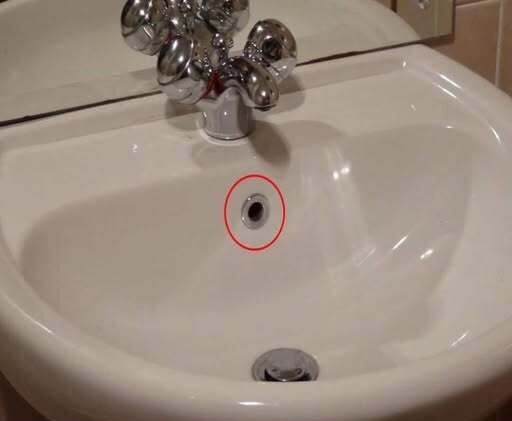
The Small Hole Near Your Bathroom Sink Faucet Has an Important Purpose
A Simple Feature That Often Goes Unnoticed
Many bathroom sinks include a small opening positioned near the upper part of the basin, usually close to the faucet. Because it is easy to overlook, some people assume that the hole is decorative, unnecessary, or simply part of the manufacturing process.
In reality, this opening is a practical part of the sink’s design. It is commonly known as an overflow hole, and its main purpose is to provide rising water with an additional route into the drainage system.
The feature may appear small, but it can become extremely useful when a faucet is accidentally left running. By redirecting some of the water before it reaches the rim, the opening can reduce the likelihood of water spilling onto the counter and bathroom floor.
How the Overflow Opening Works
The small hole is connected to a hidden passage inside the sink. That passage leads toward the drainage system beneath the basin, allowing water entering the opening to move toward the same general outlet used by the main drain.
Under normal conditions, water leaves the sink through the drain at the bottom. The overflow opening remains unused because the water level does not rise high enough to reach it.
However, when the bottom drain is closed or blocked and the faucet continues running, the basin begins to fill. Once the water reaches the level of the overflow opening, it starts flowing through the hidden channel instead of immediately spilling over the edge.
This secondary drainage route gives the sink an extra layer of protection. It reflects a thoughtful design intended to account for moments when the user becomes distracted, forgets that the faucet is running, or does not notice that the main drain is unable to remove water quickly enough.
Why Bathroom Sinks Need Overflow Protection
People often fill bathroom sinks while washing delicate items, shaving, cleaning personal belongings, or preparing warm water. During these activities, the drain may be closed with a stopper so that water remains inside the basin.
A person may then step away briefly to answer a phone call, collect a towel, find a cleaning product, or respond to someone in another room. Even a short distraction can allow the water level to rise significantly when the faucet remains open.
Without an overflow route, the water would continue rising until it crossed the rim of the sink. It could then spread across the countertop, enter cabinets, soak items stored below, and reach the bathroom floor.
The overflow opening helps redirect some of that water before it reaches the top. This can prevent a minor mistake from immediately becoming a larger cleaning problem.
The opening may also help when water is draining slowly. If the main outlet cannot keep pace with the incoming flow, the overflow passage can provide another route for water once the basin reaches the appropriate level.
The Feature Has Practical Limits
Although the overflow hole can help protect the bathroom, it should not be treated as a guarantee against flooding. The opening is relatively small and may not always remove water as quickly as a fully opened faucet supplies it.
If the faucet is running at a high rate, the water may continue rising even after it begins entering the overflow passage. The hidden channel may slow the increase, but the basin can still overflow if the situation continues for long enough.
The protection may also be reduced when the overflow channel contains dirt, soap residue, mold, or other buildup. A partially blocked passage cannot redirect water as efficiently as a clean one.
For this reason, the feature should be viewed as a useful backup rather than a replacement for turning off the faucet. Paying attention while filling the sink remains the most reliable way to prevent accidental water damage.
Why the Small Opening Can Develop an Odor
The overflow hole is helpful, but its location can make it difficult to clean. Unlike the visible basin, which is regularly wiped and rinsed, the narrow passage behind the opening is mostly hidden from view.
Small amounts of water, soap, toothpaste, skin oils, and other residue can enter the opening over time. Because air circulation inside the passage may be limited, moisture and buildup can remain there longer than they do on the open surface of the sink.
This damp environment can allow bacteria and mold to collect. As the material accumulates, an unpleasant smell may begin to emerge from the opening.
The odor may seem as though it is coming from the main drain, even when the overflow channel is the actual source. Smells can be particularly noticeable when someone leans over the sink or when warm water increases the movement of air through the drainage areas.
A dirty overflow passage may also leave dark marks around the opening. These stains can make an otherwise clean sink appear neglected, even when the basin and faucet are cleaned regularly.
Cleaning the Overflow Hole With Vinegar and Baking Soda
A simple cleaning method involves using vinegar and baking soda. These common household materials create a bubbling reaction that can help loosen residue inside the narrow overflow passage.
Begin by making sure the visible area around the opening is free from loose debris. Wiping the surrounding surface first prevents additional dirt from being pushed into the hidden channel during cleaning.
Carefully place baking soda into or near the overflow opening. Because the hole is small and may be positioned at an angle, the baking soda should be added slowly to reduce mess.
Next, pour vinegar into the opening. When the vinegar comes into contact with the baking soda, the mixture will begin to fizz.
The bubbling action can move through parts of the passage and help loosen grime clinging to the interior surfaces. Allow the mixture to remain in the channel for approximately five to ten minutes.
During this time, the reaction works on residue that may be contributing to the odor. The process is particularly useful for areas that cannot easily be reached with a cloth or sponge.
Rinsing the Passage After Cleaning
After the mixture has had time to work, rinse the overflow opening with warm water. The water helps carry away the loosened material and any remaining vinegar or baking soda.
The rinse should be directed carefully into the opening so that it travels through the hidden passage. A controlled stream is usually easier to manage than pouring a large amount of water at once.
Warm water can help wash away softened soap residue and other buildup. It also completes the cleaning process by moving the loosened grime toward the drainage pipe below.
Once the passage has been rinsed, wipe the area around the opening and dry the visible surface of the sink. Removing moisture from the surrounding area can help maintain a cleaner appearance.
If the odor has been caused by residue inside the overflow channel, the sink should smell fresher after cleaning. Heavier buildup may require the process to be repeated.
Keeping the Hidden Channel Cleaner
The overflow opening is easy to forget because it is rarely used during ordinary handwashing. Including it in routine bathroom cleaning can prevent residue from remaining undisturbed for long periods.
When wiping the sink, clean around the edges of the opening as well as the basin. This helps remove soap, toothpaste, and moisture before they travel deeper into the channel.
Occasionally flushing the opening with warm water can also help. Regular rinsing may prevent smaller deposits from developing into thicker grime that produces noticeable odors.
Keeping the sink area dry after use is another useful habit. Although water will naturally enter the basin, wiping away standing moisture can make the surrounding environment less favorable for mold and bacteria.
Attention should also be given to the main drain. Because the overflow passage connects with the drainage system, odors from nearby buildup may sometimes travel through both openings.
A Small Detail With a Valuable Function
The small hole near the faucet is not an unnecessary defect or decorative addition. It is a carefully placed overflow feature designed to redirect rising water into the sink’s drainage system.
Its purpose becomes most important when the drain is closed, the water is flowing, and the user becomes distracted. By giving the water a secondary escape route, the opening can reduce the risk of an immediate spill.
At the same time, the hidden passage requires occasional attention. Moisture, soap, and grime can collect inside it, leading to bacteria, mold, staining, and unpleasant smells.
Cleaning the opening with vinegar and baking soda, allowing the mixture to react for five to ten minutes, and rinsing it with warm water can help remove buildup from the difficult-to-reach channel.
Understanding this small feature makes it easier to appreciate the practical planning behind an ordinary bathroom sink. With basic maintenance, the overflow opening can continue performing its protective role while helping the bathroom remain clean and fresh.