
Kai Trump Video Sparks Debate After NBA Finals Courtside Moment
A Family Clip Becomes a Public Controversy
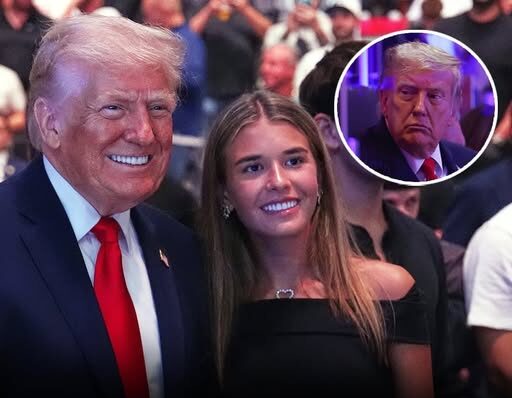
A short video showing Donald Trump standing beside his 19-year-old granddaughter Kai at the NBA Finals has become the center of a growing online dispute.
At first glance, the footage appeared to capture a simple courtside family moment. Trump stood with his hand over his heart as the arena crowd filled the background with noise and attention.
Kai shared the clip publicly, presenting what seemed to be a polished memory from a high-profile night. Soon after, however, viewers began comparing her version with the live broadcast of the same moment.
That comparison quickly shifted the conversation from a family appearance to a wider argument about edited media, public image, and trust.
What Viewers Noticed
The central concern focused on the sound in Kai’s posted clip. Viewers claimed that key audio from the live moment appeared to be missing or softened.
The live broadcast included a louder, more complicated arena atmosphere. Some viewers said the crowd reaction contained boos, while Kai’s version appeared much cleaner and calmer.
Another point of debate involved the anthem. Critics argued that the anthem audio present in the original setting did not carry through in the shared clip in the way they expected.
For those questioning the video, the differences were enough to suggest that the moment had been altered to appear more respectful, controlled, and favorable.
Accusations of Edited Reality
The controversy intensified as people online began accusing the Trump family of presenting a sanitized version of the event.
In that interpretation, the posted clip was not just a personal video. It was seen as an attempt to reshape the public memory of a divided crowd reaction.
Critics argued that removing or reducing negative sound changed the meaning of the scene. Instead of showing a mixed response inside the arena, the clip appeared to highlight a solemn, almost reverent moment.
That difference mattered to viewers because Trump remains a deeply polarizing public figure. Any public appearance involving him is likely to be examined closely, especially when the atmosphere around him appears contested.
Supporters Push Back
Supporters rejected the idea that the clip proved intentional manipulation. They argued that several ordinary explanations could account for the audio difference.
Some suggested that Kai may have used a fan-shot version of the moment rather than the live broadcast audio. Others pointed to the possibility of alternate angles or different microphones capturing different sound.
Another explanation raised by supporters involved licensing or platform restrictions. In that view, the audio may have been changed or reduced for practical reasons rather than political ones.
Those defending Kai also emphasized that she may not have edited the footage herself. She may have simply shared the version that was given to her as a personal memory from the event.
Why the Moment Spread So Quickly
The clip gained attention because it touched several sensitive issues at once. It involved Trump, a major sports event, a family member, and a public crowd reaction that people interpreted in sharply different ways.
For critics, the missing sound became a symbol of image management. For supporters, the backlash became another example of people assuming bad intent before knowing how the clip was produced.
The debate also reflects a larger tension around short videos shared on social media. A few seconds of footage can quickly become evidence for competing narratives, even when the full context remains unclear.
In this case, the question was not only what happened inside the arena. It was also who controlled the version of the moment that millions of people would later see.
Kai Trump’s Role in the Debate
Kai’s age and role in the family have added another layer to the discussion. At 19, she is old enough to have her own social media presence, but she is also part of one of the most scrutinized families in public life.
That position makes even a simple post more complicated. A personal clip can quickly become political content once viewers attach broader meaning to it.
Some people questioned whether Kai knowingly shared a version that softened the crowd response. Others argued that it was unfair to assume she was responsible for any audio changes.
The lack of a clear explanation has allowed both interpretations to spread. Without a response from Kai, the unanswered questions have continued to drive the controversy.
The Silence Adds Pressure
Neither Kai nor the White House has responded to the debate surrounding the clip. That silence has left viewers to fill in the gaps themselves.
For critics, the absence of a response has made the situation feel more suspicious. They argue that a simple explanation could calm the conversation if the audio difference had an innocent cause.
For supporters, the silence may simply reflect a decision not to give more attention to an online dispute. They see the controversy as exaggerated and fueled by existing opinions about Trump.
Because no direct explanation has been offered, the clip remains open to interpretation. The result is a public argument shaped more by perception than confirmed intent.
A Dispute Over Sound Becomes a Dispute Over Trust
The reaction to the video shows how much meaning can be attached to audio. What viewers hear, or do not hear, can change how they understand an entire scene.
A crowd reaction is rarely simple, especially in a large arena. Cheers, boos, music, announcements, and background noise can overlap in ways that different recordings capture differently.
Still, the specific claim that boos and anthem audio were missing made the clip feel significant to many viewers. It suggested that the emotional tone of the event may have been changed.
That is why the debate has continued. The question is not only whether the clip was edited, but whether the edit changed the public meaning of the moment.
Public Image in a Divided Culture
The controversy also highlights how carefully public figures are watched in modern media. A courtside appearance that might once have passed as a brief broadcast moment can now be replayed, clipped, compared, and challenged within hours.
For Trump’s critics, the video fit into a broader concern about controlling appearances. They viewed the cleaner audio as part of an effort to present public admiration while muting signs of opposition.
For Trump’s supporters, the backlash reflected the opposite problem. They saw critics searching for deception in a family post that may have had no larger strategy behind it.
Both sides treated the same clip as proof of very different realities. That divide is what turned a short video into a much larger argument.
The Power of a Few Missing Seconds
Much of the reaction centered on what was absent rather than what was visible. Trump was still shown standing beside Kai. The setting still appeared to be the NBA Finals. The crowd was still present in the background.
But the perceived absence of certain sounds changed how many people read the scene. A public moment can feel very different when negative crowd noise is reduced or removed.
That is especially true when the person at the center of the clip already inspires strong reactions. For some viewers, every missing sound became meaningful.
For others, the debate showed how quickly audiences assume manipulation when a clip does not match another version of the same event.
No Clear Answer Yet
At this stage, the dispute remains unresolved. The available details show that Kai shared a clip, viewers compared it with the live broadcast, and questions grew over the audio differences.
What remains unclear is how the version she posted was produced. It is not known whether the audio was deliberately changed, automatically altered, replaced for technical reasons, or simply captured from a different source.
That uncertainty is the reason the debate has not faded quickly. Without a clear explanation, people continue to choose the version of events that best fits their existing view of the Trump family.
The clip has therefore become more than a courtside memory. It has become another example of how public moments are filtered, questioned, and fought over once they reach social media.
A Small Clip With a Larger Meaning
The NBA Finals video began as a proud family moment, but it now sits at the center of a broader conversation about edited media and public trust.
Kai’s post may have been intended as a personal highlight from a major event. Instead, it became a test of how viewers respond when polished social media content appears to conflict with a live broadcast.
For critics, the missing boos and anthem audio suggest an effort to reshape the moment. For supporters, the accusations go too far without proof of intent.
Until Kai or the White House addresses the matter, the question will remain unanswered. The debate now depends less on the footage itself and more on whose version of reality people are willing to believe.