
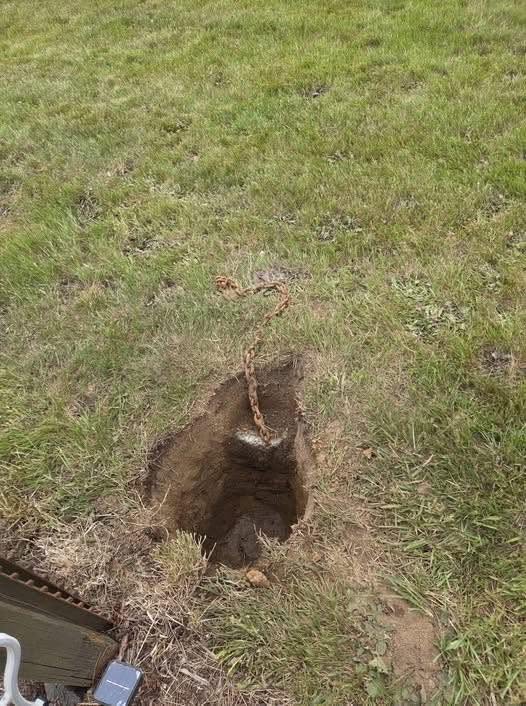
Hidden Chain Beneath Old Mailbox Reveals a Rural Trick From the Past
A Hidden Mailbox Anchor Reveals an Old Rural Solution to Roadside Vandalism
Replacing an old mailbox can seem like one of the simplest home projects. The post comes out, a new one goes in, and the job is usually finished before long.
But one routine replacement took an unexpected turn when digging around a battered rural mailbox post uncovered something unusual beneath the soil.
About eight inches below the surface, there was a rusted chain buried in the ground. At first glance, it looked mysterious enough to raise questions. It could have been a forgotten piece of hardware, an old farm remnant, or even something intentionally hidden.
The first thought was simple curiosity. The second was more practical: what was the chain attached to?
A Strange Discovery Under an Old Post
The mailbox had stood in a rural setting, where weather, time, and roadside wear had clearly taken their toll. The post was old, battered, and ready to be replaced.
While scraping around the base, the buried chain appeared unexpectedly. It was rusty, fixed in place, and not sitting loosely in the soil.
Pulling on it did not free it. The chain held firm, suggesting that it was attached to something solid below ground.
That detail changed the discovery from a simple piece of junk into evidence of a deliberate installation. Someone had not merely dropped a chain near the mailbox. Someone had buried it there with a purpose.

What a Rural Mailbox Anchor Is
The buried chain was connected to what is commonly known as a rural mailbox anchor. It is a simple but forceful form of reinforcement used to keep a mailbox post from being easily knocked over.
The idea is straightforward. A chain is connected to a metal anchor, which is set below the ground and often surrounded by cement. The other end is secured to the bottom of the mailbox post.
Once buried, the system is mostly invisible. From above, the mailbox may look like any other roadside post. Below the surface, however, it is tied to something much harder to move.
That hidden reinforcement was designed to stop the mailbox from being easily destroyed by impact, pulling, or casual vandalism.
Why Homeowners Used Them
Rural mailboxes have often been easy targets for damage. Because they sit along open roads, far from houses and sometimes far from streetlights, they can be vulnerable to people passing by in vehicles.
Some people treated mailbox damage as a joke. Drivers would strike them, knock them down, or plow into them for amusement.
For homeowners, the result was not funny. A damaged mailbox meant repair work, replacement costs, inconvenience, and sometimes repeated frustration.
In places where this happened more than once, people began looking for ways to make their mailboxes harder to destroy.
A Quiet Form of Rural Problem Solving
The rural mailbox anchor was a practical response to a familiar problem. Instead of relying only on complaints or repairs, some homeowners quietly reinforced the post itself.
The purpose was not to make the mailbox look different. In many cases, the strength was hidden underground.
A person driving into the mailbox might assume it would collapse like any other wooden post. Instead, the buried anchor could hold it in place with far more resistance than expected.
That resistance could leave a vehicle with a dented bumper or other damage. For the homeowner, the mailbox might still be standing.

When Mailbox Damage Became Common
The discovery brought back memories of mailboxes being flattened in rural areas. Entire rows could be knocked down overnight.
For people who depended on those roadside boxes, the damage was more than a minor nuisance. Mail delivery could be interrupted, replacement parts cost money, and repeated vandalism created ongoing aggravation.
Over time, some residents became more inventive. They looked for materials that could survive what ordinary wooden posts could not.
Concrete, steel, chains, and hidden anchors became part of that rural vocabulary of repair and prevention.
Different Ways People Reinforced Mailboxes
Some homeowners used concrete-filled posts. Others replaced wood with steel pipe.
In some cases, large beams or heavily buried supports were used to make the mailbox harder to move. These methods were not subtle, but they could be effective.
One example involved rebar spikes welded around a post. When someone attempted to back into it, the mailbox structure did not give way as expected.
These solutions reflected a particular kind of rural frustration. People had seen enough damage and decided the next hit would not be easy.
The Chain That Refused to Move
After finding the rusted chain beneath the old mailbox, the natural reaction was to test it. A loose chain would have come free with a firm pull.
This one did not.
It remained fixed in place, suggesting that the anchor below was still solid. The cement around it may have held for years, possibly long after the original installer had moved away.
There was no clear sign of how deep the system went. What was obvious was that it had been installed with serious intent.
A Mailbox Built to Resist
The hidden anchor showed that a previous homeowner had prepared for trouble. The mailbox was not just placed in the ground. It was secured against being knocked over easily.
That kind of setup says something about the history of the property. It suggests that mailbox damage may have been common enough in the area to justify extra work.
It also suggests that the person who installed it wanted a solution that would last. The buried chain was not decorative, temporary, or accidental.
It was a quiet warning built into the ground.
Rural Justice and Practical Limits
The phrase “rural justice” often captures the humor people attach to these kinds of discoveries. A mailbox anchor can feel like a small act of defiance against repeated vandalism.
At the same time, there is an important distinction between reinforcement and creating something dangerous. Strengthening a mailbox post is one thing. Designing it to cause serious harm is another.
A reinforced post can protect property, but it should not be treated as a trap. The safer and more reasonable purpose is to make the mailbox durable, stable, and less vulnerable to repeated damage.
That balance matters because a mailbox sits near a road. Anything installed there affects not only the owner but also drivers, delivery workers, and anyone else using the area.
Are Mailbox Anchors Still Useful?
Modern property owners have more tools than earlier generations did. Cameras, motion sensors, and other devices can help monitor activity around a mailbox.
But rural areas often come with practical limits. Some places have weak signal, long driveways, low visibility, or little nearby activity at night.
In those conditions, a physical reinforcement can still feel useful. A rural mailbox anchor does not need electricity, a network connection, or regular attention.
Once installed, it simply remains in the ground, doing its job quietly.
Simple, Cheap, and Hard to Ignore
The appeal of a rural mailbox anchor is its simplicity. It does not depend on advanced technology or complicated construction.
A chain, a metal anchor, cement, and a secure connection to the post can create a strong underground hold.
That simplicity is part of why these systems became memorable. They reflect a direct response to a direct problem.
Someone knocks down a mailbox. The homeowner builds the next one so it will not fall so easily.
Why the Old Anchor May Stay Where It Is
After discovering the chain and realizing it was fixed in cement, removing it became less appealing. Digging it out could require far more work than the mailbox replacement itself.
If the anchor is still solid and not interfering with the new post, leaving it in place can seem like the easiest choice.
It also preserves a small piece of the property’s history. The chain is evidence of a past problem and a past solution.
It may be rusty and buried, but it still tells a story.
A Reminder of an Older Rural Mindset
The buried chain revealed more than a hidden object. It pointed to a way of thinking shaped by distance, independence, and repeated inconvenience.
In rural areas, people often solved problems with whatever materials they had available. Steel, dirt, cement, and stubbornness could become a system of protection.
There was no need for a visible warning or elaborate design. The strength was underground, waiting only if someone tested it.
That is part of what made the discovery so striking. It was both ordinary and dramatic, practical and slightly humorous.
The Story Beneath the Soil
What began as a mailbox replacement became a reminder that even small household projects can uncover forgotten choices made years earlier.
The rusted chain was not treasure in the usual sense, but it carried a different kind of value. It showed how one homeowner had responded to a familiar rural problem with a tough, hidden solution.
The old mailbox may have been battered, but the system beneath it was still holding firm.
For now, the anchor remains in the ground. It stands as a quiet piece of roadside history, built from steel, cement, and a little rural spite.