
Why Snakes Enter Homes and What to Do If You Find One Inside
When a Familiar Room Suddenly Feels Unsafe
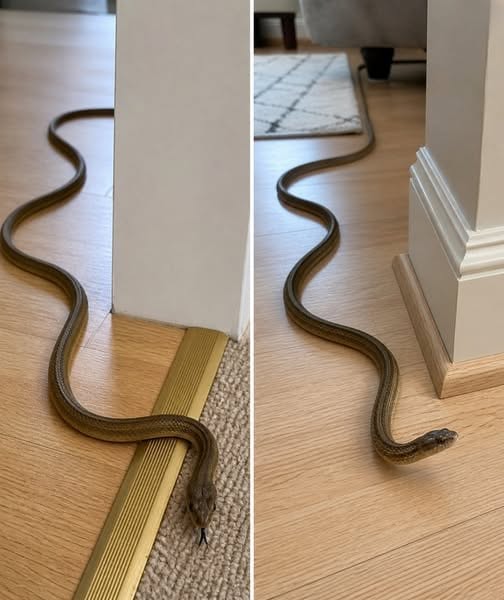
The first moment can feel unreal. A shape on the floor looks like an ordinary shadow, a cable, or a forgotten piece of fabric, and then it moves.
In an instant, a safe and familiar home can feel completely different. The hallway, basement, laundry room, or storage area that seemed harmless suddenly becomes a place of fear and confusion.
Seeing a snake indoors can trigger panic immediately. The heart races, the body freezes, and every nearby corner may suddenly feel suspicious.
For many people, the fear is not only about the snake itself. It is also the shock of finding a wild animal in a place that is supposed to feel controlled, private, and protected.
Yet the snake is not entering the home to frighten anyone. It is not there to haunt the space, threaten the family, or turn the house into a horror scene.
For the snake, the situation is much simpler. It has entered because it is trying to survive.
A Search for Food, Water, and Shelter
Snakes often move into human spaces for basic survival needs. Food, water, shelter, warmth, and protection can all draw them toward houses, garages, basements, and other enclosed areas.
What feels terrifying to a homeowner may be a routine search for resources from the snake’s perspective. It may be following the scent or movement of rodents, insects, or other small prey.
In some cases, the snake may be trying to escape difficult outdoor conditions. Brutal heat, cold weather, dryness, or exposed surroundings can push it toward a structure that offers shade, moisture, or cover.
A home can accidentally provide exactly what the animal is looking for. Small openings, quiet rooms, stored items, and hidden corners can turn an ordinary property into a temporary refuge.
This does not make the discovery less alarming. A live snake in a hallway, basement, or laundry area is still a serious situation that requires calm action.
However, understanding why the animal came inside can help replace pure panic with a clearer response. The goal is not to confront the snake, but to keep everyone safe and prevent the problem from happening again.
How Snakes Find Their Way Indoors
Snakes do not need a large entrance to get inside. They may slip beneath doors, move through cracks, follow gaps, or travel along pipes and hidden spaces around a building.
A small weakness in the structure can become an entry point. Openings around foundations, utility areas, vents, door frames, or storage spaces can create access routes.
Because snakes are low to the ground and able to move through narrow spaces, homeowners may not notice the places they use to enter. A gap that appears minor to a person may be large enough for a snake.
Once inside, the animal may not be visible right away. It may move into a basement, laundry room, storage room, or other quiet area where it can remain hidden.
Clutter makes this easier. Boxes, tools, fabric, furniture, and unused household items can create perfect cover.
Dark and undisturbed areas are especially attractive because they allow the snake to stay out of sight while searching for food or shelter.
Why Basements and Storage Areas Are Common Hiding Places
Basements can be especially appealing to snakes because they often provide coolness, darkness, and quiet. They may also have small entry points that are easy to miss.
Laundry rooms can also become hiding places. These areas may include pipes, gaps, warmth from appliances, and corners that are not checked often.
Storage areas present another problem. The more cluttered a space becomes, the easier it is for a snake to hide without being noticed.
Boxes stacked on the floor, unused items pushed against walls, and dark corners can all create cover. A snake that enters such an area may remain concealed until someone unexpectedly disturbs it.
This is one reason a snake sighting can feel so sudden. The animal may have been inside for some time before it was seen.
By the time someone notices movement, the encounter can feel shocking because the home had appeared normal only moments earlier.
The Hidden Pest Problem That Can Attract Snakes
One of the most important reasons snakes enter homes is the presence of food. If rodents, insects, or other small prey are already present, the home may become attractive to snakes.
A secondary pest problem can quietly turn a property into a feeding area. The homeowner may first notice the snake, but the snake may only be a sign of a deeper issue.
Rodents and insects can move through walls, basements, crawl spaces, and storage areas. If they have already found food, water, or shelter inside the home, a snake may follow.
This is why dealing only with the snake may not solve the full problem. Removal may address the immediate fear, but prevention requires changing the conditions that drew the snake inside.
A house that offers prey, water, and hiding places can seem like ideal habitat. A house that removes those conditions becomes far less inviting.
Understanding that connection is important because it shifts the focus from fear alone to prevention. The snake may be the most visible problem, but it may not be the first problem.
What to Do Immediately After Seeing a Snake
The safest first response is distance. Step back and avoid approaching the snake.
Sudden movement, attempts to grab it, or efforts to scare it away can increase risk. Staying calm and still is the safer choice.
Children and pets should be kept away immediately. They may be curious, frightened, or unpredictable, and that can make the situation more dangerous.
If it can be done without risk, the room should be contained. Closing a door or blocking access from a safe distance can help keep the snake in one area until help arrives.
No one should put themselves in danger to contain the animal. If closing off the area requires getting too close, it is better to retreat and wait for professional assistance.
The key is to reduce movement around the snake and give it space. A calm response protects both the people in the home and the animal.
Why Identification and Removal Should Be Left to Professionals
Identifying a snake is not something that should be done in panic. Many people may not know what type of snake they are seeing, especially during a stressful encounter.
Trying to identify it up close can place a person too near the animal. A frightened person may also make mistakes, and a frightened animal may react defensively.
Removal should be handled by animal control or wildlife professionals. They are better equipped to manage the situation safely and remove the snake without unnecessary risk.
This is especially important inside a home, where furniture, tight spaces, and clutter can make movement unpredictable. A snake may retreat into a hidden area if someone tries to chase or corner it.
Professional removal also helps avoid unnecessary harm. The goal is not to create more panic, but to resolve the situation safely.
Once the immediate danger is handled, the homeowner can focus on prevention and reducing the chance of another encounter.
How to Make a Home Less Inviting to Snakes
After a snake has been removed, the next step is to look at why it entered. Prevention starts by making the home less attractive as shelter and less useful as a hunting area.
Sealing gaps is one of the most important steps. Openings around doors, cracks, pipes, and structural spaces can all give snakes a way inside.
Clutter should also be reduced, especially in basements, laundry rooms, garages, and storage areas. The fewer hiding places available, the less inviting the space becomes.
Outdoor maintenance matters as well. Mowing grass, trimming vegetation, and keeping the area around the home clear can reduce cover near the building.
Dense growth, tall grass, and messy areas close to the house may give snakes places to travel and hide before they reach an entrance point.
Keeping the property clear does not guarantee that a snake will never appear, but it lowers the chances by removing the conditions that make the area appealing.
Addressing Rodents and Other Pests
Snake prevention is closely tied to pest control. If rodents or insects are present, snakes may continue to be drawn toward the home.
That means homeowners should pay attention to signs of other pest activity. Food sources, nesting areas, and hidden access points can all support a chain of problems.
When prey animals are present, the snake has a reason to stay nearby. Removing that food source helps turn the home from a feeding ground into an unappealing space.
This step is especially important because a snake may not be the only visitor. A home that supports one kind of pest may attract others as well.
Prevention works best when the entire environment is considered. Sealing openings, cleaning clutter, maintaining the yard, and addressing rodents together create a stronger defense.
The goal is to make the house difficult to enter and unrewarding to explore.
Turning Panic Into Prevention
A snake inside the home can feel like a nightmare because it breaks the sense of safety people expect indoors. The fear is immediate and understandable.
Still, the situation can be managed with calm steps. Distance, stillness, keeping children and pets away, and calling trained help are the safest priorities.
After that, prevention becomes the most important task. A snake enters because it finds access, cover, food, water, or shelter.
Removing those attractions changes the message your home sends to wildlife. Instead of being a place to hide or hunt, it becomes difficult, exposed, and unrewarding.
You cannot stop snakes from existing, and you cannot control every movement of wildlife outside. But you can reduce the reasons one might enter your home.
The most effective response is not panic or confrontation. It is creating a home that no longer offers what the snake came searching for in the first place.