
How to Reduce the Appearance of a Bleach Stain on Clothing Safely
Understanding What a Bleach Stain Really Means
A bleach stain on clothing can feel like a small laundry disaster, especially when it appears on a favorite garment. Unlike many ordinary marks, a bleach stain is not simply something sitting on top of the fabric.
Bleach changes the color of the textile itself. That is why the affected area often looks lighter, orange, yellowish, faded, or uneven compared with the rest of the garment.
Because of this, the goal is not to remove the stain in the usual sense. The aim is to reduce the visible contrast, soften the discoloration, or find a practical way to disguise the damaged area.
With careful handling, a bleach mark does not always mean the garment must be thrown away. In some cases, the appearance can be improved enough to make the clothing wearable again.
Why Caution Is Essential Before Trying Any Method
Any attempt to treat a bleach stain should be done with patience and care. The fabric has already been affected, so aggressive rubbing or repeated treatment can make the problem worse.
The method involving alcohol must be approached as a controlled, limited application. The alcohol should never be poured directly onto the garment or used in excessive amounts.
The cotton ball or makeup remover pad should be damp, not dripping. Too much liquid can spread the discoloration, affect a larger area, or create an uneven result.
This method is especially intended to lighten or soften the appearance of the discolored area. It is not a true stain-removal process, because the original color has already been changed by bleach.
Materials Needed for the Alcohol Method
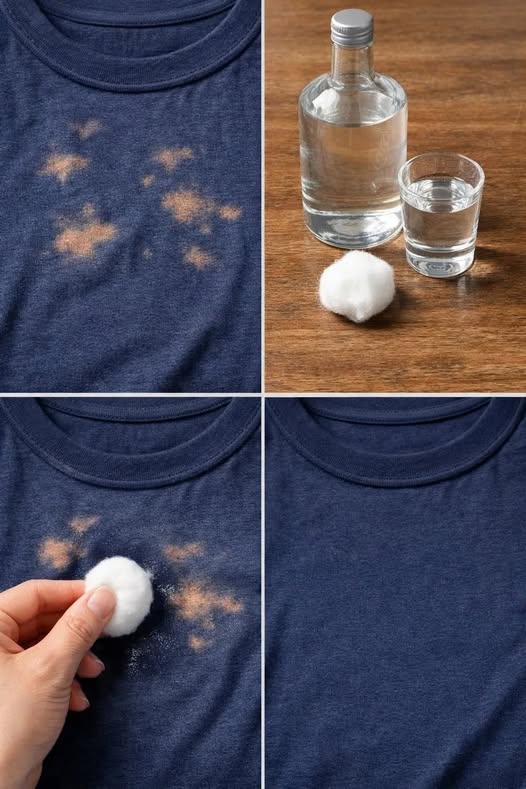
The application should be done with a makeup remover pad or a clean cotton ball. These tools allow for gentle, targeted contact with the affected area.
The amount of alcohol used should remain very limited. For one application, the cotton ball should be soaked with no more than 2 to 3 ml of alcohol.
The cotton ball should feel damp enough to transfer the alcohol to the fabric, but it should not release drops when pressed. A dripping pad may apply too much product and increase the risk of spreading the mark.
Across the entire garment, the total amount of alcohol should not exceed 10 ml. This limit helps reduce the risk of overprocessing the fabric or creating additional discoloration.
How to Apply Alcohol to the Discolored Area
Begin by taking a makeup remover pad or cotton ball and moistening it with a maximum of 2 to 3 ml of alcohol. The pad should be damp, controlled, and easy to handle.
Gently dab the discolored area for 30 to 60 seconds. The movement should be light and precise, with no rubbing or scrubbing.
Rubbing can damage the fibers or push the discoloration beyond the original area. Dabbing gives more control and lowers the chance of creating a larger visible patch.
The goal is to work only on the affected area. Keeping the application localized is important, especially when the garment is dark and any color shift may be more noticeable.
Time of Action and Immediate Rinsing
After gently dabbing the area, leave the alcohol on the fabric for 2 minutes. This short waiting period allows the method to act without leaving the product on the garment for too long.
Once the 2 minutes have passed, rinse the area immediately with clean water for 1 minute. This rinse is an important part of the process and should not be skipped.
The rinse helps remove the alcohol from the fabric and stops the action from continuing. It also prepares the garment for the final wash that should follow.
The timing matters. Leaving the alcohol on longer than directed may not improve the result and can create a higher risk of damaging or altering the fabric further.
When and How to Repeat the Process
The operation can be repeated only once. A second application should be considered only if the discoloration has visibly reduced but remains too noticeable.
If a second attempt is made, use another 2 to 3 ml of alcohol on a fresh cotton ball or makeup remover pad. The same gentle dabbing method should be followed.
Again, the area should be dabbed for 30 to 60 seconds without rubbing. The alcohol should then be left on for 2 minutes and rinsed immediately with clean water for 1 minute.
Repeating beyond this limit is not recommended. Too many applications may weaken the appearance of the fabric or create a larger uneven area.
The Final Wash Is Not Optional
After the treatment and rinse, the garment should be washed immediately. Use the temperature indicated on the garment label and wash it with the usual detergent.
This final wash helps remove remaining product from the textile. It also allows the garment to return as closely as possible to its normal feel and finish.
Following the care label is important because each garment has its own limits. Washing at the wrong temperature can cause shrinking, fading, or additional damage.
The final wash should happen right away after the treatment. Delaying this step may leave product residues on the fabric longer than necessary.
Important Safety Rule: Never Mix Bleach and Alcohol
One of the most important precautions is to never mix bleach with alcohol. This combination is dangerous and must always be avoided.
Before attempting the alcohol method, the fabric must be thoroughly rinsed. This is especially important if the bleach contact happened recently or if any bleach may still remain in the garment.
The fabric should be rinsed well before alcohol touches the affected area. The warning is simple: bleach and alcohol must never be combined.
This rule applies even when only a small amount of product is involved. Thorough rinsing is a necessary safety step before any alcohol-based attempt is made.
Fabrics That Should Not Be Treated This Way
This method should never be applied to wool, silk, viscose, or delicate fabrics. These textiles are more vulnerable and may react poorly to alcohol or repeated handling.
Delicate fabrics require extra caution because they can lose texture, shape, or finish more easily. A treatment that seems mild on one fabric may be too harsh on another.
If the garment is made from one of these materials, the alcohol method should be avoided. Trying to lighten the mark may create a worse result than the original stain.
The fabric type matters as much as the stain itself. A safe approach begins with respecting the material and its limitations.
What This Method Can and Cannot Do
The alcohol method does not remove a bleach stain. A bleach stain is a discoloration, and the original color has already been affected.
What the method may do is reduce the contrast between the damaged area and the surrounding fabric. This can be especially helpful when the mark is small or not too intense.
On dark fabrics, the effect may be to lighten or blend the area slightly. The result depends on how pronounced the discoloration is and how the fabric responds.
Expecting a complete restoration can lead to disappointment. The more realistic goal is improvement, not perfection.
When the Stain Persists
If the discoloration remains too visible after careful treatment, the garment may still be saved in another way. A persistent bleach mark does not automatically mean the clothing is ruined.
Several practical solutions can help transform or cover the affected area. These options work by making the mark less noticeable or turning it into part of the garment’s design.
The right choice depends on the size of the stain, the color of the garment, the fabric, and where the mark is located. A small spot may only need a discreet touch-up, while a larger area may require a more creative solution.
The key is to stop treating the mark once the safe limit has been reached and move toward a smarter repair or disguise.
Textile Dyeing for Plain Garments
Textile dyeing can be a strong option for plain garments. It can help create a more uniform color when the bleach stain is too visible to ignore.
This approach is especially useful when the garment has one solid color. A more even shade can make the clothing look intentional again rather than accidentally damaged.
Dyeing is not the same as spot treatment. Instead of focusing only on the mark, it works on the overall look of the garment.
For clothing with a simple design, this can be one of the most effective ways to give the piece a second life.
Textile Felt for Small Localized Marks
For a small stain in a limited area, textile felt can offer a discreet touch-up. It is best suited for localized marks that do not cover too much fabric.
This solution allows the damaged area to be adjusted without changing the whole garment. When carefully applied, it can make the discoloration less obvious.
Textile felt is most useful when the bleach mark is small enough to be managed precisely. Larger stains may need a different approach.
The purpose is not to erase the accident completely, but to make it blend better with the surrounding fabric.
Turning the Accident Into a Design Detail
A bleach stain can also become the starting point for a deliberate design. Embroidery, a patch, or flocking can transform the damaged area into a stylish detail.
This approach is useful when the stain sits in a visible place and cannot be blended easily. Instead of hiding the mark, the design covers or incorporates it.
A patch can work well for a defined area, while embroidery can add a more decorative effect. Flocking can also help create a purposeful finish over the affected spot.
When the repair looks intentional, the garment no longer appears damaged. The stain becomes part of a new design choice.
Tie-Dye as a Creative Solution
Tie-dye can be another way to turn a bleach stain into a new look. Instead of fighting the discoloration, the entire garment can be transformed into a patterned style.
This option can be especially useful when the bleach stain is large, irregular, or difficult to hide. A wider design can make the original mark disappear into the overall effect.
The stain becomes the beginning of a new visual direction. What first looked like damage can become part of a trendy and intentional garment.
For some clothing, this approach may be more successful than trying to restore the original appearance.
How to Avoid Bleach Disasters in the Future
The simplest way to avoid bleach stains is to remove clothing before using bleach. This reduces the risk of accidental splashes on sleeves, shirts, pants, or other garments.
Bleach should always be diluted well and handled carefully. Even a small splash can leave a visible mark, especially on dark fabrics.
For everyday laundry, gentler alternatives may be a better choice. Using a softer approach can reduce the chance of damaging clothing during routine washing.
Careful handling is the best protection. Once bleach changes the color of fabric, the result can be difficult to reverse.
A Bleach Stain Does Not Always Mean the End
A bleach stain may seem irreversible at first, but it does not always mean a garment is completely lost. With the right precautions, the appearance can sometimes be minimized.
The alcohol method must be used carefully, in very small amounts, and only on suitable fabrics. It should be followed by thorough rinsing and an immediate wash according to the garment label.
When the mark remains visible, other solutions such as textile dyeing, textile felt, embroidery, patches, flocking, or tie-dye can help recover the garment in a different way.
The most important point is to work slowly, avoid dangerous mixtures, and accept that the method is meant to lighten the discoloration rather than fully remove it.
With patience and care, a bleach accident can often be reduced, disguised, or turned into a new design feature. In laundry, a bleach stain does not always have to mean a ruined garment.