
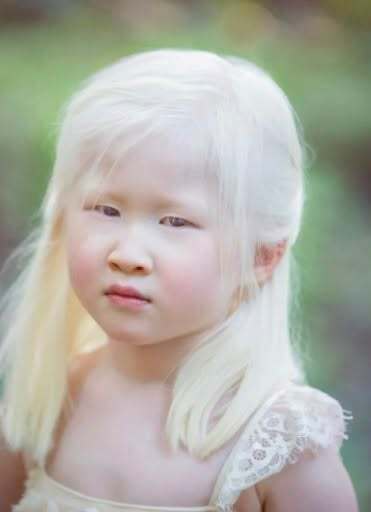
Xueli Abbing’s Journey From Abandoned Baby to Global Fashion Symbol
A Life That Began With Rejection
She was left behind before she was old enough to understand the meaning of abandonment.
As a newborn in China, Xueli Abbing was placed at the door of an orphanage, beginning life not with the protection and certainty every child deserves, but with rejection shaped by fear and prejudice.
She had albinism, a genetic condition that affects pigmentation and gave her pale skin and snow-white hair. In the place where her life began, that difference was not always met with understanding.
To some, her appearance made her seem unusual. To others, it carried unfair and damaging beliefs. The child who would later stand confidently before cameras and fashion audiences first entered the world as someone others tried to hide away.
Her beginning was painful, but it did not define the rest of her life.
A Name With Meaning
At the orphanage, the workers gave her the name “Xueli” – “snow” and “beautiful” – a name that reflected the striking features others had misunderstood.
That name carried more than description. It was a quiet recognition of her worth at a time when the world around her had already judged her by appearance.
Instead of allowing prejudice to reduce her to a condition, the name connected her difference with beauty. It was a small but powerful act of dignity.
For a child who had been left behind, even that name became part of a larger story. It showed that someone had looked at her and seen not a burden, but a human being deserving tenderness.
Still, an orphanage could not replace the security of a permanent home. Xueli needed more than a name. She needed family, safety, and the chance to grow without being treated as a mistake.
Adoption and a New Beginning
Xueli’s life changed when she was adopted by a Dutch family.
That adoption gave her something she had been denied at birth: a place where she could be cared for, protected, and loved as a child first.
Her move into a family environment did not erase the reality of prejudice. The world beyond the home could still be harsh, especially toward people who look different from what others expect.
People stared. Some whispered. Others turned away. Those reactions revealed how quickly society can treat visible difference as something strange rather than simply human.
But in her new family, Xueli had the stability to grow. She was no longer only the baby left at an orphanage door. She was a daughter with a future.
That foundation mattered. It gave her space to become more than a story of abandonment. It allowed her to develop confidence, identity, and eventually a voice strong enough to challenge the same ignorance that once surrounded her.
Growing Up Under Unwanted Attention
Living with albinism meant Xueli was often noticed before she was known.
Her pale skin and white hair drew attention, but not all attention was kind. Some people viewed her through curiosity. Others treated her as though her appearance made her less ordinary, less complete, or less deserving of privacy.
That kind of attention can be heavy for a child. It forces someone to deal with other people’s assumptions long before they are old enough to answer them.
For Xueli, being seen was complicated. Visibility could bring opportunity, but it could also bring objectification. The same features that made photographers interested in her could also become the focus of misunderstanding.
Over time, she would learn to take control of that visibility. Instead of allowing the world to stare without understanding, she would use the spotlight to speak back.
The Unexpected Door Into Fashion
Xueli’s connection to modeling began with a chance invitation when she was 11 years old.
She was invited to take part in a photo shoot in Hong Kong, an opportunity that opened a door she had never expected to enter.
At that age, the fashion world was not yet a defined path. It was simply a moment that allowed others to see her differently.
The camera did not erase her albinism. It did not hide her pale skin or snow-white hair. Instead, it placed those features in a new context, one where difference could be presented with strength rather than shame.
That first opportunity became the beginning of something much larger. What started as a photo shoot eventually led Xueli toward high fashion, where her image would carry meaning far beyond clothing or beauty.
Finding Her Place in High Fashion
After the Hong Kong photo shoot, Xueli’s path continued when a London photographer helped her step further into the fashion world.
This next stage was important because it allowed her to enter modeling on her own terms. She was not simply being used as a symbol of difference. She was beginning to shape how that difference was presented.
High fashion often celebrates striking images, but Xueli’s presence offered something deeper. Her work challenged narrow ideas about who belongs in beauty, who deserves visibility, and whose face can represent strength.
Her journey eventually included a striking spread in Vogue Italia, placing her in one of fashion’s most recognized spaces.
For someone once abandoned because of how she looked, that moment carried powerful contrast. The features that had once contributed to rejection were now part of an image seen by people across the world.
But Xueli’s story was not only about being accepted by fashion. It was about changing the terms of acceptance.
Turning Visibility Into Purpose
As her profile grew, Xueli used attention not simply to build a modeling career, but to challenge how people with albinism are treated.
She has spoken against the fetishizing and dehumanizing of people with albinism, pushing back against the idea that they should be reduced to their appearance.
That message is central to her public identity. She does not want to be viewed as a condition before she is viewed as a person.
Her work reminds people that fascination can still be harmful when it ignores humanity. Admiring someone’s appearance is not the same as respecting their dignity.
For people with visible differences, this distinction matters. They are often forced into roles they did not choose: symbols, curiosities, inspirations, or stereotypes. Xueli’s voice challenges that pattern.
She insists that people with albinism deserve to be seen fully, not as objects of pity or fantasy, but as individuals with their own thoughts, ambitions, and boundaries.
Beauty Beyond a Diagnosis
Xueli’s message is simple, but powerful: difference is not a flaw to hide.
Her life shows how damaging it can be when society treats physical difference as something frightening or shameful. It also shows what can happen when that same difference is protected, respected, and allowed to shine.
Her albinism is part of who she is, but it is not all she is. That distinction is at the heart of her advocacy.
In fashion, appearance is often the first thing people notice. Xueli has used that reality to start a larger conversation about identity, prejudice, and dignity.
Her presence on runways and in editorials does not only expand ideas of beauty. It confronts ignorance directly.
Every image becomes more than a photograph. It becomes a refusal to accept the belief that people who look different should remain hidden.
From Abandonment to Defiance
The contrast in Xueli Abbing’s story is striking.
She began life as a newborn left at an orphanage door, treated by others as though her difference made her unwanted. Years later, that same difference became part of the reason the world looked again.
But this time, the gaze was different. She was no longer a helpless infant being judged by prejudice. She was a young woman standing with purpose, using her visibility to challenge the very ideas that once surrounded her birth.
Her pale skin and snow-white hair were never a curse. They were part of her identity, misunderstood by people who lacked compassion and knowledge.
Through adoption, opportunity, and determination, Xueli transformed a painful beginning into a platform for change.
Her journey is not just a story about fashion. It is a story about how society learns, slowly and often imperfectly, to see beauty where it once saw difference.
A Symbol of Strength and Change
Today, Xueli Abbing stands as more than a model.
She represents defiance against prejudice, especially for people with albinism who have too often been misunderstood, objectified, or pushed aside.
Her story carries emotional power because it begins with rejection and grows into visibility. It shows how a child once abandoned because of ignorance can become a global reminder of dignity.
The world that once might have whispered now has to listen.
Xueli’s rise does not erase the pain of her beginning, but it gives that beginning a new meaning. What was once treated as a reason to discard her became part of the reason she now stands out with strength.
Her journey continues to challenge the idea that beauty must fit one standard. It asks people to look again, think deeper, and recognize the person behind the appearance.
For Xueli, difference is not something to survive quietly. It is a light to protect, honor, and amplify.