
Connecticut Property Dispute Emerges After Luxury Home Is Built on Land Owner Claims Was Never Sold
Family’s Long-Held Ownership Comes Into Question
A high-profile property dispute in Connecticut has attracted national attention after a luxury home valued at nearly $1.5 million was constructed on land that its longtime owner insists was never legally sold.
The dispute involves Dr. Daniel Kenigsberg, who maintains that his family has owned the Fairfield property for more than seven decades. The land traces back to a purchase made by his parents, Nathaniel and Esther Kenigsberg, in 1953.
The original acquisition included approximately one acre of land. While the family developed one section of the property by building a residence, another portion remained largely wooded and undeveloped for decades.
That wooded parcel would later become the center of a complex legal battle involving allegations of forged documents, identity impersonation, and unauthorized property transfers.
A Property With Deep Personal Significance
For Daniel Kenigsberg, the Fairfield land represented much more than a financial asset.
He spent much of his childhood on the property, exploring the wooded areas and spending time outdoors with neighborhood friends. The land became closely connected to family memories and personal milestones.
As he grew older, Kenigsberg moved away from Connecticut to pursue higher education and eventually entered the medical profession.
His career later took him to New York and Maryland before he ultimately settled in Setauket, New York, with his family.
Although he no longer lived in Fairfield, he continued to maintain ties to the property.
He regularly paid taxes associated with the undeveloped parcel and viewed it as an important part of his family’s future.
Following the death of his mother in 2007, ownership of the remaining land passed to him. Despite receiving offers from interested buyers over the years, he chose not to sell.
Kenigsberg believed the property should remain within the family and potentially be passed down to future generations.
An Unexpected Discovery
The situation changed dramatically when a childhood acquaintance informed Kenigsberg that construction activity had begun on the wooded parcel.
The news came as a shock.
Kenigsberg believed he remained the lawful owner of the property and had never authorized any development, sale, or transfer involving the land.
Concerned by the report, he traveled to Fairfield to inspect the site personally.
What he discovered was startling.
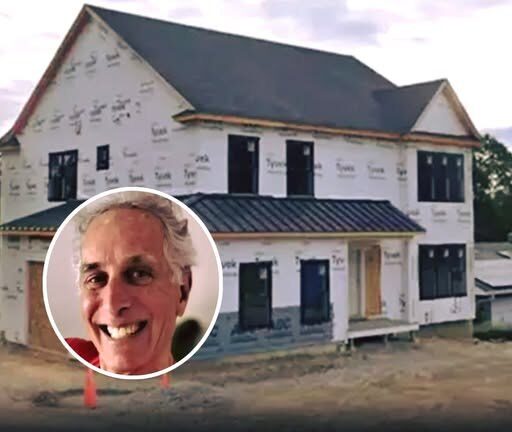
A substantial residential structure was already under construction on the property. The home reportedly measured roughly 4,000 square feet and was later associated with a listing price of approximately $1.475 million.
The sight raised immediate questions about how such a project could be underway on land he believed he still owned.
Investigation Into the Property Transfer
After discovering the construction project, Kenigsberg began examining the property’s recent history.
His investigation led to allegations that the land had been transferred without his authorization.
Legal filings claim that the property was sold in October 2022 to Sky Top Partners LLC for approximately $350,000.
Kenigsberg contends that he never approved the transaction and was unaware that any sale had occurred.
The lawsuit alleges that individuals posed as him and used fraudulent documentation to complete the transfer.
According to the allegations, falsified records were created and submitted to make it appear that Kenigsberg had willingly sold the property.
The complaint further claims that forged signatures were used throughout the process.
Various documents allegedly contained inaccurate personal information that did not match Kenigsberg’s legitimate records.
Among the discrepancies identified in the lawsuit were incorrect birthdate information and address details.
Allegations of Identity Fraud
The legal complaint describes what Kenigsberg believes was an elaborate impersonation scheme.
He alleges that fraudulent identification materials were prepared and used to support the property transfer.
The lawsuit also claims that a power of attorney document was fabricated and utilized as part of the transaction.
These allegations remain subject to court review and have not yet been conclusively determined by the legal process.
One of the key issues raised in the lawsuit involves references to Johannesburg, South Africa.
Kenigsberg has stated that he was never present there during any period associated with the transaction.
He has also maintained that he has never lived in South Africa.
According to the complaint, any documentation suggesting otherwise was inaccurate and allegedly formed part of the broader impersonation effort.
Despite these alleged irregularities, the transaction was reportedly processed and recognized, allowing development plans for the property to move forward.
Construction Moves Ahead
After the transfer was completed, development of the land proceeded.
Construction crews began building a large residence on the previously wooded parcel.
By the time Kenigsberg learned of the activity and visited the property, significant work had already been completed.
The situation created a complicated dispute because the parties involved in the development reportedly believed they had acquired the land legally.
The home eventually became associated with an estimated value approaching $1.5 million.
Its construction transformed a parcel that had remained largely untouched for decades into one of the most talked-about properties in the area.
Developers Say They Were Also Misled
The development company involved in the project has indicated that it also believes it may have been deceived.
Representatives have stated that they were unaware the individual who sold the property was allegedly not the true owner.
They have expressed surprise upon learning about the ownership dispute.
The developers maintain that they relied on the documentation provided during the real estate transaction.
They have suggested that weaknesses in the verification process may have contributed to the situation.
From their perspective, they proceeded based on what appeared to be valid paperwork and approvals.
The dispute therefore involves multiple parties who claim to have been affected by the alleged fraud.
Legal Battle Continues
Kenigsberg has filed legal action against Sky Top Partners LLC and attorney Anthony Monelli, who was involved in facilitating the transaction.
The lawsuit seeks to overturn the transfer and restore ownership of the land.
It also seeks financial damages reportedly valued at up to $2 million.
The legal proceedings are expected to examine the authenticity of the documents used during the sale and determine whether proper procedures were followed.
As the case moves through the courts, construction on the property has reportedly been paused.
The outcome will play a significant role in determining who ultimately holds legal ownership of the land.
Questions About Real Estate Security
The dispute has generated broader discussion about security measures used in modern real estate transactions.
Property transfers typically involve multiple layers of documentation, identity verification, and professional oversight.
When allegations of forgery and impersonation arise, unraveling the sequence of events can become a lengthy and complex process.
Cases involving disputed ownership often require courts to review records, signatures, identification documents, and transaction histories in detail.
Such disputes may also involve buyers, developers, attorneys, and other parties who participated in the transaction believing it was legitimate.
The Fairfield case has drawn attention because of the extraordinary circumstances surrounding a home being built on land whose ownership is now under challenge.
Awaiting a Final Resolution
For Kenigsberg, the dispute extends beyond the property’s monetary value.
He has described the land as a cherished family asset connected to decades of memories and family history.
The wooded parcel remained in his family for generations, making the alleged transfer particularly significant from a personal standpoint.
Meanwhile, other parties involved maintain different interpretations of how the transaction occurred and who bears responsibility for the alleged fraud.
The court will ultimately determine whether the transfer was valid, whether the documents used in the transaction were legitimate, and whether ownership should be restored to Kenigsberg.
Until that decision is reached, the case remains an example of how alleged identity fraud and documentation irregularities can create major legal and financial disputes within the real estate market.