
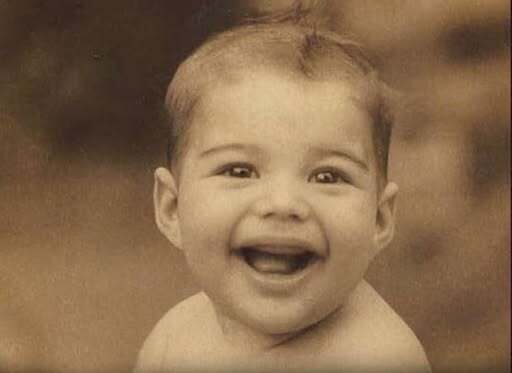
Freddie Mercury’s Life, Reinvention, and the Voice That Refused to Fade
From Farrokh Bulsara to a Future Icon
Freddie Mercury was born Farrokh Bulsara on 5 September 1946 in Stone Town, Zanzibar, to Parsi parents from India. Long before the world knew him as the electrifying frontman of Queen, he was a child shaped by distance, discipline, displacement, and a deep need to transform pain into something powerful.
His early life carried the marks of separation. At the age of eight, he was sent to a strict boarding school in India, where he stood apart from many of the children around him. His background, accent, personality, and growing sense of difference made him feel like an outsider from a young age.
Those years were not only lonely. They were also described as difficult and damaging, with emotional and physical abuse leaving wounds that followed him long after childhood. Yet those experiences did not silence him. Instead, they became part of the force that later pushed him toward reinvention.
A Young Man Forced to Start Over
In 1964, the Zanzibar Revolution changed the course of the Bulsara family’s life. Forced to leave Africa, they fled to England with little more than survival in mind. For Farrokh, London became more than a place of refuge. It became the stage on which he could begin again.
The city’s energy in the 1960s offered him a new kind of freedom. He enrolled at Ealing Art College and studied graphic design, developing the visual imagination that would later help shape Queen’s identity. His artistic eye was already clear, even before his voice became his most famous instrument.
Life was not glamorous in those early London years. To support himself, he worked as a baggage handler at Heathrow Airport while holding tightly to his ambition. He was not content with an ordinary path. He wanted scale, drama, color, noise, and impact.
In his small living space, he studied Jimi Hendrix posters with the intensity of someone learning a sacred language. He absorbed not only the music, but also the attitude, theatricality, and freedom that came with it. The young man who had once been sent away and made to feel different was now building a new identity from everything that had once hurt him.
The Birth of Queen
In 1970, Farrokh Bulsara stepped closer to destiny when he met Brian May and Roger Taylor, two students from Imperial College who had been part of a band called Smile. By then, he had begun calling himself Freddie Mercury, a name that matched the boldness he was preparing to unleash.
Freddie joined May and Taylor, and John Deacon later came in on bass. Together, they became Queen, a name Freddie chose with full awareness of its grandeur and theatrical power. He also designed the group’s famous crest, combining his visual training with his instinct for mythmaking.
From the start, Queen was never meant to sound like a conventional rock band. Freddie imagined something bigger and stranger. He wanted opera, heavy rock, gospel, vaudeville, camp, drama, tenderness, and spectacle all colliding in one place.
Some saw that confidence as arrogance. Freddie saw it as truth. He believed Queen could be more than a band. He believed they could become an experience, and he was willing to risk ridicule to make that happen.
The Sound That Changed Rock Music
Queen’s breakthrough arrived in 1974 with “Killer Queen,” a song that revealed Freddie’s taste for wit, elegance, and theatrical precision. It was stylish, sharp, and unlike the straightforward rock dominating much of the period.
Then came “Bohemian Rhapsody” in 1975, a song that shattered expectations. At six minutes long, with no traditional chorus, it moved through ballad, opera, and hard rock sections in a way that seemed almost impossible for radio. Yet it became the longest song ever to reach No. 1 in the UK.
The song proved that Freddie’s instincts were not reckless. They were visionary. What looked risky on paper became one of the defining recordings in popular music, showing that audiences were ready for something bold when it carried enough emotion and conviction.
Freddie’s voice was central to that power. It could move from velvet softness to explosive force, from tenderness to command, from vulnerability to triumph. His range and control gave Queen’s music an emotional scale few performers could match.
Turning Pain Into Performance
Freddie Mercury did not simply sing songs. He turned private wounds into public electricity. The loneliness of childhood, the pressure of being different, the displacement of becoming a refugee, and the fear of rejection all seemed to find release in his performances.
That is why his music connected so deeply with people who felt misunderstood. Songs like “Somebody to Love,” “Love of My Life,” “Who Wants to Live Forever,” “Don’t Stop Me Now,” and “We Are the Champions” were more than hits. They became emotional lifelines for listeners who heard their own struggles inside his voice.
His stage persona was dazzling, but it was not empty. The painted nails, dramatic costumes, tight outfits, and bold movements were part of a larger act of self-creation. Freddie used performance as armor, weapon, invitation, and confession.
He understood how to hold a crowd because he understood longing. He knew what it meant to want acceptance, to crave love, and to hide parts of himself from a world that might not understand. That tension gave his performances their unusual intensity.
The Live Aid Moment
On 13 July 1985, Freddie Mercury walked onto the stage at Wembley Stadium during Live Aid and delivered one of the most celebrated live performances in rock history. In front of 72,000 people and a worldwide television audience of 1.9 billion, Queen transformed a charity concert into a defining cultural moment.
The performance lasted twenty-one minutes. That was all Freddie needed. With a piano, a microphone, and a crowd ready to follow him anywhere, he turned the stadium into a single living voice.
His command of the audience became legendary. He did not merely lead the crowd; he played with it, challenged it, charmed it, and lifted it. Every movement seemed effortless, yet every second carried total control.
For many people, that Live Aid set remains the clearest example of Freddie’s genius. It showed his voice, confidence, timing, humor, and emotional authority all at once. He was not just performing songs. He was proving what a human being could become onstage.
The Private Man Behind the Myth
Behind the public spectacle was a man who guarded his private life carefully. Freddie was flamboyant onstage, but away from the spotlight he could be reserved, loyal, funny, and deeply sensitive.
He remained careful about his sexuality for years, carrying concern about how it might affect his traditional parents. The contrast between his public boldness and private caution revealed the emotional complexity at the center of his life.
He could appear larger than life, but he never fully abandoned the quiet boy from Zanzibar. That child remained present beneath the fame, the costumes, the parties, and the headlines. Freddie’s greatness came partly from the fact that he never erased his vulnerability. He transformed it.
Facing Illness Without Surrender
From 1987 onward, AIDS began to consume Freddie Mercury’s body. Even as his health declined, his determination did not disappear. He continued recording, working, and giving what strength he had to the music.
One of his most powerful final statements came through “The Show Must Go On.” Recorded when he was barely able to stand, the song captured his refusal to let illness define his ending. It was not only a performance. It was a declaration.
Freddie died on 24 November 1991 at the age of 45. He spent his final days surrounded by people he loved, having continued to shape his own story until the end. His final chapter was marked by pain, but also by control, courage, and artistic commitment.
A Legacy Written in Music
The money, fame, mansions, and headlines never fully explain Freddie Mercury. They are only the outer layer of a much deeper story. The real explanation lives in the music, where his pain, humor, longing, power, and defiance remain alive.
His songs continue to fill stadiums, films, radios, playlists, and private moments around the world. Decades after his death, people still sing his words together as if joining a family. That connection is part of why his legacy has not faded.
Freddie Mercury turned wounds into spectacle and loneliness into communion. He took the experience of being different and made it sound triumphant. He gave outsiders a voice loud enough to shake arenas.
Born Farrokh Bulsara, he reinvented himself as Freddie Mercury and then helped reinvent what rock performance could be. He did not simply live a life in music. He performed his life with such force, beauty, and conviction that the applause has never truly stopped.