
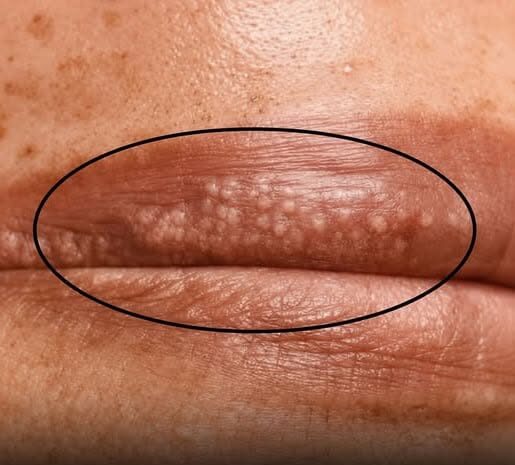
White Bumps on the Lips or Intimate Areas: When They May Need Medical Attention
Most Small Bumps Are Not Emergencies, but Certain Changes Should Never Be Ignored
Discovering small white bumps on the lips or intimate areas can immediately cause concern.
These areas contain delicate skin and naturally occurring glands, so not every visible spot signals an infection or serious medical condition.
Some bumps may simply represent harmless anatomical variations. Others, however, may require professional evaluation, especially when they appear with redness, pain, itching, swelling, or fluid leakage.
The appearance of a bump alone is rarely enough to identify its cause.
Its location, duration, associated symptoms, and changes over time can all help a healthcare provider determine whether treatment is necessary.
Symptoms That May Suggest an Infection or Reaction
White bumps that remain small, stable, and painless may be less concerning than spots that suddenly become inflamed.
Redness around a bump can indicate that the surrounding skin has become irritated or that inflammation is developing.
Itching may occur with allergic reactions, fungal conditions, or irritation caused by products that have touched the skin.
Swelling can also suggest that the body is responding to irritation, infection, or another underlying issue.
These symptoms do not automatically identify a particular condition, but they provide important information about whether the area should be medically examined.
A healthcare provider can assess the complete pattern rather than relying only on the color or size of the bumps.
Painful or Rapidly Changing Bumps Deserve Attention
Pain is another sign that should be taken seriously, particularly when it worsens or interferes with eating, speaking, walking, sitting, or other daily activities.
A previously painless spot that becomes tender may have developed additional inflammation.
Bumps that begin leaking clear fluid, pus, blood, or another discharge should not be ignored.
Fluid leakage may mean the skin surface has opened, increasing the chance of irritation or secondary infection.
Rapid spreading is also a reason to seek care.
A small group of spots that expands quickly or begins appearing in nearby areas may require professional evaluation to determine the cause.
Changes in shape, texture, number, or color can also help distinguish a harmless variation from a condition that needs targeted care.
Why Self-Diagnosis Can Be Difficult
Many different skin changes can look similar, particularly when they appear as pale or white bumps.
Harmless glands, blocked pores, irritation, allergic reactions, bacterial infections, and fungal issues may sometimes share overlapping features.
Images found online may make this confusion worse because lighting, skin tone, camera quality, and the stage of a condition can greatly change how a bump appears.
Two spots that look nearly identical in photographs may have completely different causes.
The lips and intimate areas are especially difficult to assess without a medical examination because the skin there naturally differs from skin elsewhere on the body.
A healthcare provider can consider symptoms, medical history, product exposure, recurrence, and the exact location of the bumps before recommending care.
Avoid Squeezing, Scratching, or Picking
It can be tempting to squeeze a white bump in the hope that it will disappear more quickly.
This should be avoided.
The skin of the lips and intimate areas is sensitive and can tear more easily than thicker skin on other parts of the body.
Squeezing or picking may create a small wound even when the original bump was harmless.
Once the skin is broken, bacteria can enter the area and create a new problem.
Repeated touching may also increase swelling, prolong irritation, and make it harder for a healthcare provider to evaluate the original appearance.
Scratching itchy bumps can have similar effects.
Fingernails can damage the surface, introduce bacteria, and increase the possibility of scarring.
Harsh Acne Products May Make the Area Worse
Products designed for facial acne should not automatically be applied to bumps on the lips or intimate skin.
Strong ingredients such as salicylic acid may cause significant irritation when used on delicate areas.
These treatments can create burning, dryness, peeling, redness, or inflammation without addressing the true cause of the bumps.
A product that helps an ordinary facial blemish may be unsuitable for tissue around the mouth or genital area.
Applying harsh chemicals may also temporarily change the appearance of the skin, making a later diagnosis more difficult.
Unless a healthcare professional recommends a specific treatment, gentle care is usually safer than experimenting with strong over-the-counter products.
When Persistent Bumps Should Be Examined
Some bumps disappear after irritation settles or the skin recovers.
Others remain unchanged for extended periods.
A healthcare provider should be consulted when white bumps continue for several weeks without improvement.
Persistence does not necessarily mean the condition is dangerous, but a medical examination can clarify whether the spots are harmless or require treatment.
Bumps that repeatedly disappear and return should also be discussed with a professional.
Frequent recurrence may suggest an ongoing trigger, repeated irritation, or a condition that has not been fully addressed.
Keeping track of when the bumps appear, how long they last, and whether anything seems to trigger them can be useful during the appointment.
Additional Symptoms That Should Not Be Overlooked
White bumps accompanied by fever require greater attention because fever may indicate that the body is responding to an infection or another significant inflammatory process.
Ulcers or open sores are also important symptoms to mention.
A bump that breaks down into a sore or appears beside ulcerated skin should be professionally evaluated.
Swollen lymph nodes can be another warning sign.
Lymph nodes may enlarge when the immune system is responding to infection or inflammation.
These symptoms are especially important when they appear together rather than in isolation.
A healthcare provider can determine whether additional testing, medication, or monitoring is appropriate.
Professional Evaluation Can Prevent Unnecessary Worry
Medical care is not only useful when a serious condition is suspected.
It can also prevent weeks of anxiety over a harmless anatomical variation.
A clinician may be able to identify a benign feature during a straightforward examination and reassure the patient that treatment is unnecessary.
When a bacterial, fungal, or inflammatory condition is suspected, the provider can recommend treatment suited to the actual cause.
This is safer than trying several unrelated products and hoping one of them works.
Targeted care can reduce irritation, shorten symptoms, and prevent avoidable complications.
Gentle Skin Care May Reduce Irritation
Prevention begins with protecting the skin barrier.
Fragrance-free cleansers and skincare products may be less likely to irritate sensitive areas.
Strong perfumes, flavored products, aggressive scrubs, and heavily scented washes can cause discomfort in some people.
The skin should be cleaned gently rather than scrubbed.
Repeated friction can increase redness and make small bumps more noticeable.
After washing, the area should be dried carefully instead of being rubbed with a rough towel.
Introducing several new products at once should also be avoided because it becomes difficult to identify which product caused a reaction.
Avoid Sharing Personal Lip Products
Lip balms, glosses, lipsticks, and similar products come into direct contact with the mouth.
Sharing them may transfer bacteria, fungi, or other contaminants from one person to another.
Even when another person has no visible symptoms, using the same applicator can expose sensitive skin to organisms or ingredients that trigger irritation.
Personal lip products should be kept clean and replaced if their texture, smell, or appearance changes.
Products that have been used during an active lip irritation may also need to be handled carefully to avoid repeated exposure.
Breathable Clothing Can Reduce Friction
For bumps affecting intimate areas, clothing choices may influence irritation.
Tight clothing can trap moisture and repeatedly rub against sensitive skin.
Heat, sweat, and friction may make existing bumps feel more uncomfortable.
Breathable clothing can allow better airflow and reduce prolonged moisture around the area.
Changing out of damp exercise clothing or swimwear may also help limit irritation.
However, clothing changes alone will not treat an infection or persistent condition.
They are supportive measures intended to reduce friction while the cause is being assessed or the skin is recovering.
Do Not Use Someone Else’s Medication
Because white bumps can have several causes, a treatment prescribed for another person may be inappropriate.
Antibiotic, antifungal, or anti-inflammatory products are designed for specific conditions.
Using the wrong treatment may fail to improve the bumps and can sometimes worsen irritation.
Leftover prescription creams should not be applied without medical advice.
The same rule applies to treatments recommended informally by friends or relatives who experienced something that looked similar.
Visual resemblance does not confirm that two conditions are the same.
What to Observe Before a Medical Appointment
Patients may find it helpful to note when the bumps first appeared.
They can also record whether the spots are painful, itchy, swollen, or producing fluid.
Any recent change in skincare products, detergents, cosmetics, clothing, or hygiene routines may be relevant.
It is also useful to mention whether the bumps have appeared before and how long previous episodes lasted.
People should avoid altering the area immediately before the appointment with squeezing, shaving, harsh treatments, or strong cosmetic products.
Preserving the natural appearance may help the healthcare provider make a more accurate assessment.
Not Every White Bump Requires Treatment
Some visible bumps are normal parts of the skin and do not need to be removed.
Attempting to eliminate every small spot may create more harm than the bump itself.
A professional examination can distinguish between a benign feature that should be left alone and a condition requiring prescription care.
This distinction is especially important in sensitive areas where unnecessary treatment can lead to pain, inflammation, or scarring.
The goal should not be to remove every variation in texture.
The goal is to identify meaningful changes and respond safely.
Early Care Can Protect Sensitive Skin
White bumps associated with redness, itching, swelling, pain, discharge, or rapid spreading should receive careful attention.
Persistent or frequently recurring bumps should also be evaluated, particularly when they appear with fever, ulcers, or swollen lymph nodes.
Until the cause is known, squeezing, picking, scratching, and applying harsh acne products should be avoided.
Gentle fragrance-free care, personal use of lip products, breathable clothing, and reduced friction may help protect the skin.
These steps cannot replace a diagnosis when symptoms continue or worsen.
When uncertainty remains, a healthcare provider can determine whether the bumps are harmless, caused by irritation, or connected to a condition requiring specific treatment.
Seeking medical guidance protects both physical health and peace of mind while reducing the risks created by unnecessary self-treatment.