
Strange Dark Balls Found Along Pensacola Bay Have a Surprisingly Natural Explanation
A Curious Discovery Along the Shore
A family walk beside Pensacola Bay can quickly turn into an unexpected mystery when a child spots a dark, rounded object resting in the sand or shallow water.
The object may look soft, muddy, and strangely familiar. A curious child might pick it up, race toward a parent, and proudly announce, “I found a sea turd!”
For many parents, the first reaction is not amusement but concern. The dark object may resemble waste, decaying material, or something carried into the bay by pollution.
Adults may wonder whether it came from a sewer, whether it contains harmful material, or whether it should be taken away from the child immediately.
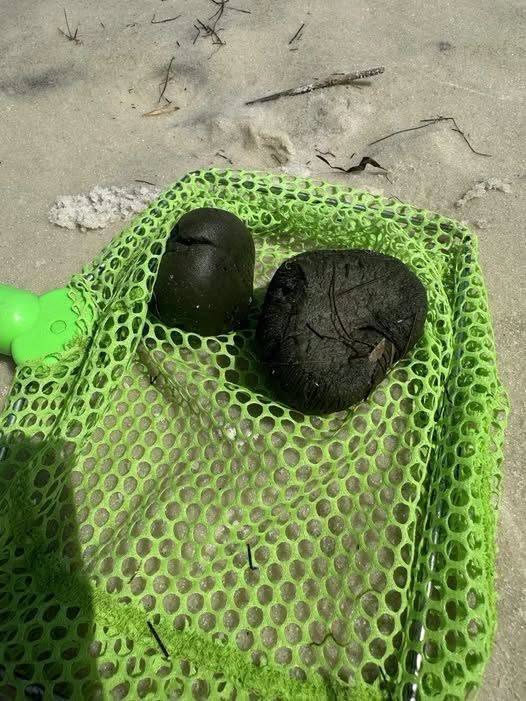
Its appearance provides very few clues. It may be dark green, brown, or almost black, with a smooth surface and a shape that looks surprisingly deliberate.
Despite its unusual appearance, the object is usually not sewage, animal waste, or a manufactured form of pollution. It is a naturally created mudball formed through movement beneath the surface of the bay.
What the Mysterious Objects Really Are
The rounded objects are made from soft, clay-rich sediment found along underwater mud banks in Pensacola Bay.
Small pieces of this sediment can separate from the larger banks. Once loose, they begin moving across the seabed under the steady influence of tides and currents.
The process is slow and largely hidden from anyone standing on the shore. Beneath the water, the detached mud is rolled, pushed, turned, and compressed as the surrounding water continues to move.
Each movement gradually changes the original piece of sediment. Rough edges become smoother, loose material becomes more compact, and an irregular clump begins developing a rounded shape.
Over time, the repeated motion may transform the sediment into a nearly perfect sphere. The finished mudball can then be carried closer to shore, where waves or changing water conditions leave it within reach of beach visitors.
By the time a child discovers one, the object may look as though it was carefully shaped by hand. In reality, the tides, currents, sediment, and seabed completed the work naturally.
How Loose Mud Becomes a Smooth Sphere
The creation of a mudball begins when a piece of soft sediment breaks away from an underwater bank. The original fragment may be uneven, fragile, and far from spherical.
As the water pushes it along the bottom, the fragment begins to roll. Every turn presses the soft material against the seabed and helps reshape its surface.
The process resembles the natural smoothing of stones in a river or pieces of glass moved repeatedly by waves.
River stones become rounded as water pushes them against other rocks and surfaces. Sea glass loses its sharp edges after being tumbled through sand and water.
Mudballs develop through a related pattern of repeated motion. Instead of hard rock or glass, the material involved is clay-rich sediment that can be shaped and compressed more easily.
With every tumble, the mud becomes slightly denser. Material that might once have broken apart begins holding together as the surface is pressed and smoothed.
The result can be remarkably uniform. Some mudballs become round enough to appear manufactured, even though no person or machine was involved in their creation.
Why Their Appearance Causes Concern
Dark objects found near the water often trigger immediate suspicion because their origin is not visible.
Parents may associate an almost-black, soft sphere with waste, contamination, or something that should not be touched. The playful description used by children can make those concerns feel even more believable.
The object’s texture may also add to the uncertainty. A mudball can feel firm enough to hold its shape while still yielding slightly when squeezed.
That combination makes it difficult to identify. It is not as solid as a stone, but it is more structured than an ordinary handful of wet sand or loose mud.
Its smooth surface may suggest that it spent a long time in the water, yet the lack of a familiar shape prevents most beach visitors from recognizing it immediately.
Without knowing how underwater sediment moves, a person may reasonably assume that the object came from a source connected to human activity.
The true explanation is much simpler. The mudball is a small product of the natural forces continually reshaping the floor and shoreline of the bay.
Usually Clean, Harmless, and Odorless
Although they may look unpleasant, most naturally formed mudballs are clean, odorless, and harmless to handle.
They are primarily compacted sediment rather than waste. Their color comes from the natural material from which they formed, not from sewage or another dangerous substance.
A freshly discovered mudball may leave a small amount of mud on a child’s hands, especially if it is squeezed or begins drying in the sun.
Its appearance can still make adults cautious, particularly when they have never seen one before. Once its natural origin is understood, however, the object becomes far less alarming.
Instead of being treated as a sign of contamination, it can be viewed as a physical example of how water shapes material over time.
The object offers an unusual connection between the visible beach and the hidden environment beneath the bay.
A Natural Science Lesson for Children
A mudball can become more than a strange beach discovery. It can also encourage children to ask questions about the world beneath the water.
A child may wonder how something so round formed without being made by a person. That question opens the door to a simple explanation involving tides, currents, sediment, and movement.
The discovery can help show that water is never completely still, even when the surface appears calm.
Tides cause water levels and movement to change. Currents push material from one area to another, while waves help shape the border between land and water.
The mudball is evidence that those forces affect more than the surface. They also move and reshape material along the seabed.
Children can compare the object with stones, shells, or pieces of sea glass that have also been changed by repeated contact with water and sand.
The difference is that the mudball remains softer. Its clay-rich material allows it to be shaped into a sphere while still retaining a gently yielding texture.
What begins as a funny object in a child’s hand can therefore become a memorable introduction to natural processes that are usually difficult to observe directly.
The Hidden Activity Beneath Pensacola Bay
From the shoreline, Pensacola Bay may appear peaceful and familiar. Visitors can see the water, sand, waves, and changing line of the tide.
Much of the bay’s activity, however, takes place out of sight.
Under the surface, water moves across deposits of sediment. Mud banks can slowly release small sections, and loose material can travel along the bottom.
These movements do not require a storm or a dramatic event. Ordinary tides and currents can gradually change the position and shape of natural materials.
The formation of a mudball is one small example of this continuous activity.
No single moment creates the finished sphere. It develops through repeated motion, with each roll contributing to its smoother and more compact form.
When the object eventually arrives near the shore, it carries visible evidence of a process that may have unfolded quietly beneath the water for an extended period.
Why Mudballs Can Look Almost Perfect
One of the most surprising features of the mudballs is their shape. Natural clumps of mud are usually expected to be flat, cracked, or irregular.
A rounded mudball can appear too symmetrical to have formed by chance. Its shape may resemble a small handmade ball, a dark piece of fruit, or a smooth object created for a game.
The rounded form develops because rolling applies pressure from many directions.
As the sediment turns, different parts of its surface come into contact with the seabed. Protruding sections are pressed inward, while loose edges are worn or folded into the main body.
Repeated tumbling gradually removes the strongest irregularities. The sphere becomes smoother because no single side remains in the same position for long.
The same general principle explains why stones moved by water often become rounded. Constant motion favors smooth forms by reducing sharp corners and uneven edges.
Because mud is softer than stone, the shaping may produce an object that looks especially uniform while still feeling slightly flexible.
A Beach Memory That Can Last for Years
For children, finding a mudball can feel like discovering a rare treasure. Its unusual color, smooth shape, and mysterious origin make it more exciting than an ordinary clump of sediment.
A child may carry it proudly, show it to family members, or try to place it in a pocket alongside shells and stones collected during the day.
Parents may initially remember the moment for the brief wave of concern it caused. Later, the fear is often replaced by humor and affection.
The object that looked like pollution becomes part of a family story about curiosity, misunderstanding, and discovery.
The details surrounding the moment can remain vivid: sandy fingers, wet feet, an excited voice, and the proud expression of a child convinced that something extraordinary has been found.
Even after the mudball is lost, broken, or returned to the shore, the memory of the discovery may remain.
From Alarm to Appreciation
The emotional shift caused by the discovery can happen quickly.
At first, a parent may see only a suspicious dark object that could pose a risk. The instinct may be to remove it immediately and wash the child’s hands.
After learning how the object formed, the same mudball becomes evidence of a quiet natural process.
Its dark surface no longer suggests contamination. Its rounded shape no longer seems artificial or threatening.
Instead, the object represents the combined work of sediment, moving water, and time.
The experience is a reminder that unfamiliar things found in nature are not always dangerous. Sometimes they simply require a closer look and a better understanding of the environment that produced them.
A Small Sphere With a Larger Story
A mudball may be small enough to fit in a child’s palm, but its formation reflects forces acting across the entire bay.
Tides move through the water, currents travel along the bottom, and sediment shifts from one place to another.
The sphere is created without noise, machinery, or human direction. It forms quietly beneath the surface before appearing unexpectedly along the shore.
Its journey may end when a wave deposits it in the shallows or on the sand, where someone notices its unusual shape.
To an adult unfamiliar with the process, it may look like a troubling sign of pollution. To a child, it may look like a strange treasure worthy of an excited announcement.
Both reactions begin with the same mystery. The difference comes from understanding what the object really is.
The Wonder Behind an Ordinary Beach Walk
Beach visits are often remembered for large experiences such as swimming, waves, sunsets, or time spent with family.
Yet a much smaller discovery can sometimes become the most memorable part of the day.
A dark, squishy sphere found near Pensacola Bay may initially seem unpleasant or alarming. Its natural origin reveals a far more interesting story.
The object began as soft sediment beneath the water. Tides and currents moved it across the seabed, gradually smoothing and compacting it into a rounded form.
By the time it reached the shore, it had become a small example of nature shaping ordinary material into something unexpected.
The mudball is not usually sewage, toxic waste, or a dangerous object. It is a harmless product of the bay’s constantly moving underwater environment.
For a curious child, it offers a mystery that can be held in one hand. For a parent, it offers a reminder that wonder often appears in forms that are easy to misunderstand.
The strange little sphere may eventually crumble, dry out, or disappear back into the sand. The memory of finding it, however, can remain long after the family leaves the beach.
What first looked like something dirty or frightening becomes a story about tides, discovery, and the hidden beauty of natural forces working beneath the surface of Pensacola Bay.