
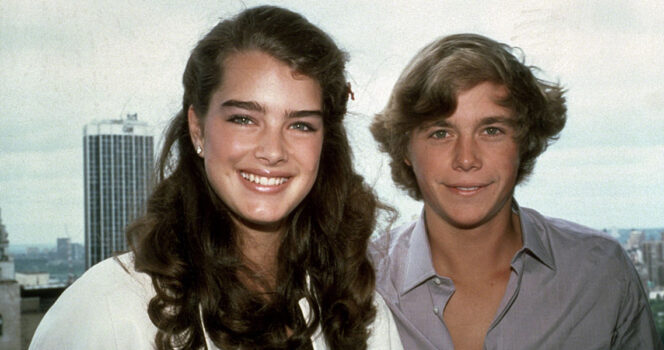
Christopher Atkins Says Sudden Blue Lagoon Fame Cost Him the Lead Role in Footloose
The Actor Says His Rapid Rise to Stardom Became Overwhelming Before He Was Ready to Handle It
Christopher Atkins became one of Hollywood’s most recognizable young stars almost overnight after appearing in the 1980 film The Blue Lagoon.
He was only 18 years old when he was cast opposite 14-year-old Brooke Shields, despite having no previous acting experience and no long-term plan to enter the entertainment industry.
The movie transformed Atkins from an unknown teenager into an international celebrity. His face appeared across magazines, and the attention surrounding the film changed nearly every part of his life.
Looking back decades later, Atkins says the speed of that transformation left him unprepared for the pressures that followed.
The actor believes the partying and drinking that became part of his early fame eventually cost him the opportunity to lead another major film of the 1980s: Footloose.
Acting Was Never His Childhood Dream
Before The Blue Lagoon, Atkins did not imagine himself becoming a movie star.
His original ambition was connected to sports rather than Hollywood. He wanted to play baseball and had never seriously considered pursuing an acting career.
During a question-and-answer appearance at Fanboy Expo Knoxville in Tennessee, the 65-year-old reflected on how unexpectedly the opportunity entered his life.
“I’d never done anything before. Never wanted to be an actor, only wanted to play baseball. That was my dream,” Atkins told the audience.
At the time, he had been doing modeling work when he began receiving repeated invitations to audition for The Blue Lagoon.
He was stepping into an unfamiliar professional world without the training or experience usually expected from the lead performer in a major film.
A Newcomer Sent to Fiji
Atkins has openly acknowledged how little he understood about filmmaking when he received the role.
He did not know the basic language used on a movie set and had no practical experience working in front of a camera.
“I didn’t know what a camera looked like. I had no idea what a mark was, and I knew nothing. And I had to jump on an airplane and fly all the way to Fiji,” he said.
The production required the young newcomer to leave behind the life he knew and travel to Fiji for a demanding film project.
Rather than gradually building a career through small parts, Atkins entered the industry through a highly visible leading role.
That unusual beginning meant he had little time to adjust before being placed under intense public attention.
The Blue Lagoon Changed Everything
The Blue Lagoon became one of the most discussed films of 1980 and brought enormous attention to both Atkins and Shields.
The story followed two young people growing up together on a remote tropical island after becoming separated from the adult world.
Its subject matter generated controversy, but the attention also made its young stars instantly recognizable.
Atkins has described the period after the release as a dramatic break from the life he had known before.
“We were young, and so you’re constantly getting this notoriety,” he recalled.
Fame arrived quickly, leaving little opportunity for either performer to understand how permanently their lives had changed.
Atkins went from being a teenager with no acting background to appearing throughout popular media.
“It changes your life, because all of a sudden, you’re nothing and then you’re on every single grocery store magazine,” he said.
The Pressure of Becoming Famous Overnight
Sudden fame can create opportunities, but it can also disrupt a young performer’s sense of direction.
For Atkins, there had been no gradual transition into public life. He had not spent years developing professional routines or learning how to manage the attention surrounding a successful film.
He was immediately confronted with recognition, publicity, career offers, and expectations from the entertainment industry.
The actor suggested that this rapid rise made it increasingly difficult for him to remain grounded.
He had achieved the kind of breakthrough many aspiring performers spend years pursuing, yet he had entered Hollywood without originally wanting to become an actor.
The attention that followed The Blue Lagoon created a new lifestyle before Atkins had developed the experience needed to manage it responsibly.
A Major Opportunity Emerged After The Blue Lagoon
A few years after his breakthrough, Atkins was considered for the lead role in Footloose.
The 1984 film centered on a teenager who moves to a community where dancing has been prohibited and challenges the restrictions placed on the town’s young people.
The role would require a charismatic young actor capable of carrying a major studio production.
Atkins says he was not merely one of many performers attending an early audition. He believed the filmmakers had already selected him and wanted one final meeting before confirming the arrangement.
At that stage of his career, the project could have given him another defining role and helped establish him as one of the decade’s leading actors.
Instead, the meeting became one of the most painful professional turning points of his life.
Drinking Interfered With the Final Meeting
By the time the Footloose opportunity arrived, Atkins says his partying had become a serious problem.
When he was called to meet with the filmmakers, he knew he was not in the right condition to present himself professionally.
“I was a mess back then. I was partying it up way too much, and they called me in,” Atkins recalled.
He initially tried to avoid the meeting because he had been drinking.
“I said, ‘I can’t go in right now. I’ve been drinking and carrying on.’ And they said, ‘No, they need to see you.’”
Despite his concerns, Atkins attended.
He now believes his condition immediately undermined the confidence the filmmakers had placed in him.
The Role Slipped Away
Atkins remembers the meeting as a moment when he lost control of an opportunity that had nearly become his.
“And I went in and I just blew that audition…I mean, it wasn’t even an audition – I had the part, but I was so messed up that they said, ‘Yeah, we’re going to have to pass on this guy,” he claimed.
His account suggests that the decision was not based on a lack of talent or his previous screen work.
Instead, the filmmakers reportedly became concerned after seeing his condition during the final meeting.
The opportunity that might have extended his position as a leading young Hollywood star disappeared.
The role was ultimately given to Kevin Bacon.
Kevin Bacon Made Footloose a Defining 1980s Film
Bacon’s performance in Footloose became one of the most memorable parts of his career.
The film’s music, dance sequences, youthful energy, and conflict between personal freedom and community restrictions helped make it a lasting favorite.
Bacon became strongly associated with the role, particularly through the film’s energetic dance scenes.
For Atkins, watching the movie become a defining production of the decade may have served as a lasting reminder of the opportunity he had lost.
His account also offers a glimpse into how quickly decisions can change a performer’s career.
One troubled meeting was enough to redirect the project toward another actor and alter the professional path of everyone involved.
Atkins Eventually Left That Lifestyle Behind
Although Atkins speaks honestly about the mistakes he made during his early fame, he does not describe that period as his present reality.
He says he eventually stopped drinking and has maintained his sobriety for decades.
“And I’m almost 40 years sober, so there you go.”
The statement places the lost Footloose role within a much larger personal journey.
While the missed opportunity remained significant, Atkins ultimately moved away from the lifestyle that contributed to it.
His sobriety represents a far more enduring achievement than any single film role.
His Career Continued Beyond the Missed Role
Atkins remained active in entertainment after the disappointment surrounding Footloose.
He appeared in television productions including Dallas and continued building a career beyond the movie that first made him famous.
Even so, The Blue Lagoon remained the role most closely associated with his name.
The film’s continuing cultural visibility has kept Atkins connected to the earliest and most intense period of his career.
Public events and conversations with fans have also given him opportunities to reconsider what happened during those years.
Rather than presenting his past as a flawless rise to success, he has spoken openly about confusion, excess, and missed opportunities.
Brooke Shields Also Remembered the Aftermath
Brooke Shields has similarly reflected on the extraordinary attention that followed The Blue Lagoon.
The two former co-stars discussed the experience during a conversation connected to her podcast, Now What? With Brooke Shields.
Shields emphasized how young they were when the film was made and how little they understood about the consequences that would follow.
“I was just 14 and he was 18, and back then we honestly had no idea how much the movie was going to change our lives. The years that followed were the only thing I could think of as pure insanity,” Shields told Atkins.
Her description echoed Atkins’s belief that the success happened too rapidly for either of them to process it normally.
They were still teenagers when they became the focus of worldwide attention.
A Golden Ticket With Complicated Consequences
Atkins acknowledged that many people enter Hollywood hoping for precisely the kind of opportunity he and Shields received.
A major leading role can function as a rare entry point into an industry where thousands compete for limited chances.
“You look back on it, and people who come into Hollywood want to be actors. Their dream is to get that golden ticket. You know that that hit,” Atkins told Shields.
He recognized how fortunate they were to receive a film capable of changing their careers.
At the same time, he did not pretend that the experience was simple or entirely positive.
“And how lucky were we that we had something that was so incredibly messy.”
The comment captured the contradiction at the center of their shared experience.
The Blue Lagoon gave them visibility and professional opportunities, but it also brought controversy, pressure, and attention they were not fully prepared to manage.
Fame Arrived Before Experience
Atkins’s story illustrates the difference between achieving success and being ready for it.
When The Blue Lagoon made him famous, he had no acting background and little understanding of the film industry.
He had not spent years preparing for interviews, publicity, career negotiations, or the temptations that could accompany celebrity life.
His success came before he had time to develop the habits needed to protect it.
The actor’s recollections do not erase his responsibility for the decisions he made, but they explain how rapidly his circumstances changed.
A teenager whose dream had been baseball suddenly found himself treated as one of Hollywood’s most recognizable young performers.
The Career That Might Have Been
It is impossible to know how Footloose might have looked with Atkins in the leading role.
His established image following The Blue Lagoon could have given the character a different style and changed the direction of his career.
The movie might have strengthened his position as a major star throughout the 1980s.
Instead, Kevin Bacon made the role his own and became inseparable from the film’s legacy.
Atkins continued working, but the missed meeting remained a striking example of how personal struggles can affect professional opportunities.
His willingness to discuss the incident openly shows that he has spent years considering the consequences of that period.
A Story of Fame, Regret, and Recovery
Christopher Atkins’s early career contained the kind of sudden success that many aspiring actors dream about.
At 18, without experience or plans to become a performer, he traveled to Fiji and starred in a film that made him internationally famous.
That breakthrough opened doors, placed him on magazine covers, and brought him close to another role that would become an important part of 1980s film history.
It also introduced pressures that he was not ready to handle.
Atkins believes his drinking and partying destroyed his chance to star in Footloose, allowing a nearly secured role to pass to Kevin Bacon.
Decades later, however, the actor can discuss that loss from the perspective of someone who rebuilt his life and remained sober for almost 40 years.
The missed role remains part of his Hollywood story, but it is no longer the final chapter.
His reflections reveal both the excitement and danger of becoming famous before a young person has learned how to live with that fame.