
How to Freeze Milk Safely and Reduce Waste at Home
A Simple Kitchen Trick That Helps Save Milk Before It Spoils
Milk can be one of the hardest grocery items to plan for, especially in a household where weekly use changes without warning. Some weeks, a container that seemed large enough disappears in a couple of days. Other weeks, buying extra milk can lead to waste when it sits in the refrigerator too long and reaches its expiration date before anyone finishes it.
For families who deal with this kind of unpredictable milk use, freezing milk can be a practical solution. Many people do not realize that milk can be frozen safely, stored for later, and thawed when needed. This simple method can help reduce wasted groceries, avoid last-minute store trips, and make it easier to take advantage of extra milk before it spoils.
Freezing milk is not complicated, but it does need to be done correctly. Because milk expands as it freezes, the container needs enough empty space to prevent pressure from building up. With the right storage method and thawing process, frozen milk can be useful for drinking, cooking, baking, coffee, cereal, and other everyday needs.
Why Freezing Milk Can Be Useful
Milk consumption can vary from week to week for many reasons. A family may go through more milk when children eat extra cereal, when more coffee is made at home, or when recipes require milk during the week. At other times, the same household may barely use the milk in the refrigerator.
This makes grocery planning difficult. Buying too little milk can mean running out quickly, while buying too much can mean throwing away milk that was never used. Freezing milk offers a middle ground by allowing extra milk to be saved instead of wasted.
This approach can be especially helpful when milk is purchased during a sale. Instead of worrying that the extra container will expire before it is opened, the milk can be placed in the freezer and used later. It can also be helpful before travel, when leftover milk in the refrigerator might otherwise spoil while the family is away.
The same idea applies to small amounts of milk. Even if there is not enough left to justify keeping an entire container in the refrigerator, freezing smaller portions can make that milk useful later. Small frozen portions can be convenient for recipes, coffee, or baking.
How to Prepare Milk Before Freezing
The most important step before freezing milk is making sure there is room in the container for expansion. Milk increases in volume when it freezes. If a full gallon is placed directly into the freezer without removing any liquid first, the container can split, leak, or create a frozen mess.
For a full gallon of milk in a plastic jug, about one cup should be poured out before freezing. This creates enough space at the top of the container for the milk to expand safely. Skipping this step can cause the pressure inside the container to rise as the liquid freezes.
Once some milk has been removed, the cap should be secured tightly. The jug can then be placed upright in the freezer. Keeping it upright helps reduce the risk of leaking while the milk begins to freeze.
Milk should only be frozen in containers that can handle the freezing process. Plastic jugs are suitable because they allow some flexibility as the milk expands. Glass containers are not a safe choice because they can crack or break when exposed to drastic temperature changes.
Freezing a Full Jug of Milk
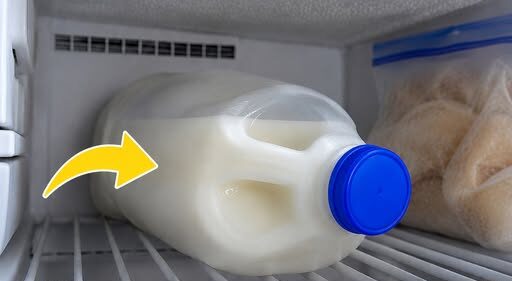
Freezing milk in the original plastic jug is one of the easiest storage methods. It works well for households that expect to use a larger amount of milk after thawing. A gallon or smaller plastic container can be placed directly in the freezer after enough milk has been removed to allow for expansion.
This method is useful when the goal is to preserve a container that will eventually be used for regular household needs. Once thawed, the milk can be returned to the refrigerator and used over the following days.
When freezing an entire jug, it is important to remember that thawing takes time. A large container will not be ready immediately after being removed from the freezer. Planning ahead can make the process easier, especially if the milk is needed for breakfast, coffee, or cooking.
For best handling, the jug should be placed somewhere stable in the freezer. A flat surface helps the container freeze evenly and reduces the chance of it tipping. The cap should remain tightly closed while frozen and during thawing.
Freezing Milk in Smaller Portions
Another useful method is freezing milk in an ice cube tray. This is a practical option for people who do not always need a full jug after thawing. Smaller frozen portions can be added directly to recipes or thawed in small amounts as needed.
Milk cubes are especially convenient for baking or cooking because they allow measured amounts to be stored without opening a full container. They can also be useful for coffee when only a small amount of milk is needed.
To freeze milk this way, the milk can be poured into an ice cube tray and placed in the freezer. Once frozen, the cubes can be kept frozen until they are needed. This approach helps reduce waste from small leftover amounts that might otherwise be poured out.
Freezing milk in smaller portions can also help households that use milk irregularly. Instead of thawing an entire jug and needing to finish it quickly, smaller portions can be used one at a time. This gives more control over how much milk is thawed and used.
How Long Frozen Milk Can Be Stored
Frozen milk can be safely consumed for up to three months. This gives households a reasonable amount of time to use stored milk without feeling rushed. It also makes freezing milk useful as a short-term storage method rather than a long-term stockpile.
Keeping the storage time in mind is important. Freezing milk helps extend its usefulness, but it does not mean milk should be forgotten indefinitely in the freezer. Using frozen milk within three months helps maintain safer and more practical storage habits.
It can be helpful to remember when the milk was placed in the freezer. Since the milk may look similar to other frozen containers, keeping track of timing can prevent older containers from being left too long. The goal is to use the frozen milk while it is still within the recommended storage window.
For households that freeze milk regularly, rotating containers can also help. Older milk should be used first, while newer milk can remain in the freezer for later. This simple habit can prevent waste and keep the freezer organized.
How to Thaw Frozen Milk
When frozen milk is needed, the safest and simplest thawing method is to place it in the refrigerator. A container of frozen milk should be left in the fridge for about 24 hours. This allows it to thaw gradually while remaining cold.
Refrigerator thawing is a good choice when the milk is not needed immediately. It requires planning ahead, but it helps keep the milk at a stable temperature during the thawing process. Once thawed, the milk can be used from the refrigerator.
There is also a faster method for thawing milk when time is limited. The frozen container can be submerged in a sink filled with cold water. Using cold water helps speed up the thawing process while avoiding warmer temperatures.
With this method, milk can thaw in about 30 minutes. This can be useful when milk is needed for a recipe or when the family runs out unexpectedly. The container should remain closed while it is thawing in the cold water.
Why Cold Water Matters
Cold water is used for quicker thawing because it helps the frozen milk soften without exposing it to excessive heat. The goal is to thaw the container efficiently while still keeping the milk cool.
Using this method can be helpful when a frozen jug needs to become usable faster than refrigerator thawing allows. It is not as hands-off as leaving milk in the fridge overnight, but it can work well in situations where milk is needed the same day.
The container should be checked as it thaws. Depending on how much milk is frozen and the size of the container, the process may vary slightly. Smaller portions will thaw more quickly than a full gallon.
Once the milk has thawed, it should be handled like regular refrigerated milk. It should not be left sitting out unnecessarily. After thawing, it should be returned to the refrigerator if it is not being used right away.
Best Uses for Frozen and Thawed Milk
Frozen and thawed milk can be useful in many everyday situations. It can help with coffee, cereal, cooking, and baking. For families that use milk in different ways throughout the week, freezing can make it easier to keep milk available without overbuying.
Milk cubes can be especially useful in recipes that require only a small amount of milk. Instead of opening a larger container, a few frozen portions can be thawed or added as needed. This can reduce waste from leftover milk that might otherwise expire.
Thawed milk can also be useful after returning from a trip. If milk was frozen before leaving home, it can be thawed after the household returns. This avoids coming back to spoiled milk in the refrigerator and can reduce the need for an immediate grocery run.
Freezing milk also helps when shopping habits do not match household use. If milk is purchased in bulk or during a sale, freezing some of it can prevent unnecessary waste. Instead of trying to finish everything before the expiration date, part of the supply can be stored for later.
A Simple Way to Avoid Milk Waste
Throwing away expired milk can feel frustrating, especially when grocery prices make waste even more noticeable. Freezing milk provides a simple way to stretch its usefulness and reduce the amount that gets poured down the drain.
The process does not require special equipment. A plastic jug, enough space for expansion, and a freezer are all that is needed for larger amounts. For smaller amounts, an ice cube tray can make storage even more convenient.
The main points are easy to remember. Remove about one cup from a full gallon before freezing, avoid glass containers, use plastic jugs or small freezer portions, store frozen milk for up to three months, and thaw it in the refrigerator or in cold water when needed.
For households with unpredictable milk habits, this method can make weekly grocery planning less stressful. It allows extra milk to be saved during slower weeks and used during busier ones.
Making Milk Last Without Overthinking It
Freezing milk may not solve every grocery problem, but it can make one common household issue easier to manage. Instead of guessing perfectly every week, families can keep extra milk from going bad and still have it available when demand suddenly increases.
This is especially helpful in homes where milk use changes quickly. One week may bring heavy cereal consumption, baking, coffee, or cooking. Another week may bring barely any use at all. Freezing gives the household more flexibility.
It can also reduce the pressure to make exact predictions at the store. Buying milk no longer has to feel like a choice between running out too soon or wasting what is left. With proper freezing and thawing, extra milk can become part of a practical backup plan.
For anyone who has dealt with milk disappearing in two days one week and expiring untouched the next, freezing can be a useful habit. It is simple, safe when done correctly, and can help cut down on waste in a way that fits ordinary home routines.
The next challenge may be predicting how much cereal the household will eat, but at least the milk problem has a practical solution. With a little freezer space and the right storage method, milk can last longer, be used more efficiently, and stay out of the drain.