
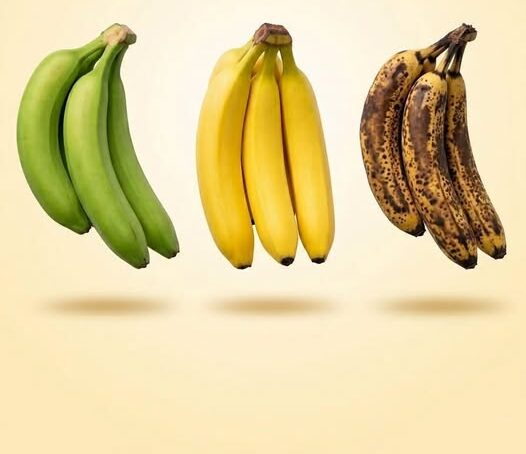
Don’t Throw Away Bananas With Brown Spots — Here’s What Happens to Your Body When You Eat Them at Different Stages
From Green to Yellow to Brown, a Banana’s Ripeness Changes Its Starch, Sugar, Texture, and Digestion — and the Best Choice May Surprise You
Most of us have done it at least once.
We buy a bunch of beautiful yellow bananas, leave them on the kitchen counter, and return a few days later to find their peels covered in brown spots.
Suddenly, the fruit that looked perfect just days earlier seems less appealing.
Some people throw those bananas away immediately, assuming they have lost their nutritional value or are no longer good to eat.
But the truth is more interesting.
Those brown spots are often a natural sign of ripening, not spoilage. And as a banana changes color, important changes take place inside the fruit.
Its starch gradually turns into sugar, its texture becomes softer, and the way its carbohydrates are digested can change.
That means a green banana, a yellow banana, and a spotted banana can offer slightly different nutritional advantages.
So which one should you eat?
The answer depends on your preferences, digestion, and individual nutritional needs.
What Really Happens as a Banana Ripens?
Bananas continue ripening after they are harvested.
During this process, naturally occurring enzymes gradually break down starch into simpler sugars.
This is why a green banana usually tastes less sweet than a ripe yellow one.
As ripening continues, the banana becomes sweeter and softer, while its peel changes from green to yellow and eventually develops brown spots.
These visible changes reflect transformations occurring inside the fruit.
However, a banana does not suddenly become unhealthy simply because its color changes.
Bananas at different stages of ripeness can all fit into a balanced diet.
The main differences involve the types of carbohydrates they contain, their texture, and how easily some people digest them.
1. Green Bananas: More Resistant Starch
Green bananas are firmer, less sweet, and contain more starch than fully ripe bananas.
One particularly interesting component is resistant starch.
As its name suggests, resistant starch resists digestion in the small intestine.
Instead of being broken down and absorbed in the same way as ordinary digestible starch, some of it travels to the large intestine.
There, it can be fermented by certain gut bacteria.
This is one reason resistant starch has attracted attention in nutrition research.
It can act as a fermentable carbohydrate that supports activity within the gut microbiome.
However, the effects depend on the amount consumed, the individual, and the rest of their diet.
Why Green Bananas May Support Digestive Health
When resistant starch reaches the colon, bacteria can ferment it and produce substances known as short-chain fatty acids.
These compounds play roles in normal intestinal function.
One of them, butyrate, serves as an energy source for cells lining the colon.
That does not mean eating a green banana automatically transforms your gut health.
But it helps explain why resistant starch is considered an interesting component of a fiber-rich eating pattern.
For some people, foods containing resistant starch may also contribute to feelings of fullness.
The amount of resistant starch in a banana varies with its ripeness and other factors, so the effects cannot be predicted precisely from peel color alone.
Can Green Bananas Affect Blood Sugar Differently?
Because greener bananas generally contain more resistant starch and less freely available sugar than ripe bananas, their carbohydrates may produce a different blood glucose response.
Some studies suggest that less-ripe bananas can lead to a gentler rise in blood sugar under certain conditions.
However, individual responses vary.
The size of the banana, the amount eaten, the rest of the meal, and a person’s metabolic health all influence what happens after eating.
People with diabetes do not necessarily need to avoid ripe bananas, and green bananas should not be considered a treatment for blood sugar problems.
Instead, ripeness can be one factor to consider when choosing fruit as part of an overall eating plan.
One Drawback of Green Bananas You Should Know
Resistant starch can be useful for gut bacteria, but it may also cause digestive discomfort in some people.
Because it can be fermented in the colon, consuming larger amounts may contribute to gas, bloating, or abdominal discomfort.
This is particularly relevant for people with sensitive digestive systems.
If you are not accustomed to eating green bananas, introducing them gradually may be more comfortable than suddenly consuming large amounts.
Some people prefer green bananas cooked rather than raw because of their firm texture and starchy taste.
The important point is that more resistant starch is not automatically better for everyone.
2. Yellow Bananas: A Convenient Source of Energy
As bananas turn yellow, much of their starch gradually converts into sugars.
This makes them sweeter and changes their texture from firm to tender.
Yellow bananas are often popular because they are easy to eat, portable, and require no preparation.
They also provide carbohydrates that the body can use for energy.
For someone looking for a convenient snack before or after physical activity, a ripe banana can be a practical option.
Its carbohydrate content makes it useful when energy needs to be replenished.
But bananas are not only about carbohydrates.
They also provide several important nutrients.
Yellow Bananas Still Contain Valuable Nutrients
A medium banana provides approximately 105 calories, although the exact amount depends on its size.
It also supplies dietary fiber, potassium, and vitamin B6.
Potassium contributes to normal muscle and nerve function and helps the body maintain fluid balance.
Vitamin B6 participates in many processes involved in metabolism.
Fiber supports normal digestive function and can contribute to a balanced eating pattern.
These nutrients do not disappear simply because a banana becomes sweeter.
Although ripening changes the proportions of different carbohydrates, yellow bananas remain a nutritious fruit choice.
They can be eaten alone, added to oatmeal, mixed into yogurt, or blended into smoothies.
Are Yellow Bananas Better Before Exercise?
For many people, a ripe banana is a convenient pre-workout snack.
Its carbohydrates can provide fuel for physical activity, and it is easy to carry in a gym bag or backpack.
Some people find ripe bananas more pleasant to eat shortly before exercise than firmer, greener bananas.
However, the ideal pre-workout snack depends on the type of activity, its duration, and personal digestive tolerance.
A banana is not necessary for a successful workout, and it does not provide any unique performance benefit that cannot be obtained from other appropriate foods.
Still, it remains a simple and accessible option for people who enjoy it.
3. Brown-Spotted Bananas: Sweeter, Softer, and Often Misunderstood
Now comes the stage that causes the most confusion.
When brown spots begin appearing on a banana’s peel, many people assume the fruit is starting to go bad.
But brown spotting is commonly part of normal ripening.
As the banana matures, more of its starch is converted into sugar.
The fruit becomes sweeter, softer, and sometimes easier to mash or blend.
That makes spotted bananas especially useful in baking and recipes where a smooth texture and natural sweetness are desirable.
In fact, many banana bread recipes work particularly well with very ripe bananas.
Rather than throwing them away, you may be able to use them in several delicious ways.
Are Brown Bananas Actually Healthier?
You’ve probably encountered claims suggesting that bananas become dramatically healthier once brown spots appear.
Some online posts even suggest that heavily spotted bananas provide extraordinary immune benefits.
However, these claims often go beyond what human research has established.
Ripening can affect the levels and availability of various plant compounds, including substances with antioxidant activity.
But that does not prove that eating a spotted banana provides a major immune-system boost or prevents disease.
Laboratory findings about individual compounds should not be treated as evidence of dramatic health effects in humans.
A brown-spotted banana can still be nutritious, but it is not a miracle food.
What About Antioxidants in Ripe Bananas?
Bananas naturally contain plant compounds that can contribute to their antioxidant properties.
Antioxidants are substances that can participate in reactions involving oxidative processes.
During ripening, the composition of these compounds may change.
However, research findings can vary depending on the banana variety, the stage of ripeness, and the methods used to measure antioxidant activity.
It would therefore be misleading to say that every brown banana is necessarily much richer in beneficial antioxidants than every green or yellow banana.
For most people, eating a variety of fruits and vegetables is a more reliable approach to obtaining different beneficial plant compounds.
Can Very Ripe Bananas Be Easier to Digest?
Some people find that softer, ripe bananas are easier to eat and tolerate than firm green bananas.
This may be related to their softer texture and lower resistant starch content.
However, digestion is highly individual.
Some people tolerate ripe bananas comfortably, while others may notice symptoms depending on the amount consumed or their sensitivity to particular carbohydrates.
There is no single stage of ripeness that is guaranteed to be best for every digestive system.
If bananas frequently cause discomfort, paying attention to portion size and ripeness may help identify which form is more comfortable.
What People With Diabetes Should Know About Banana Ripeness
Bananas contain carbohydrates, so they can influence blood glucose levels.
As a banana ripens, its starch-to-sugar balance changes, which can affect how its carbohydrates are digested.
But that does not mean people with diabetes must avoid yellow or spotted bananas.
The overall amount of carbohydrate consumed is an important consideration.
A smaller portion of a ripe banana may fit into a meal plan more comfortably than a large serving.
Combining banana with foods containing protein or fat, such as plain yogurt or nuts, may also help moderate the meal’s glucose response for some people.
Individual responses differ, so people managing diabetes should follow advice appropriate to their own treatment plan and blood glucose patterns.
Does Eating a Banana With Nuts Make a Difference?
Pairing fruit with other foods can change the overall nutritional composition of a snack.
For example, a banana eaten with a small serving of nuts provides carbohydrates along with fat, some protein, and additional fiber.
A banana combined with unsweetened yogurt provides carbohydrates alongside protein.
These combinations may be more satisfying for some people than eating fruit alone.
They can also influence the speed and magnitude of the glucose response compared with consuming carbohydrates by themselves.
However, the effect depends on the specific foods, portions, and individual.
There is no need to pair every banana with another food unless doing so suits your preferences or nutritional goals.
When Is a Brown Banana Too Ripe to Eat?
Brown spots on the peel do not automatically mean a banana is spoiled.
In many cases, the fruit inside remains perfectly usable.
However, there is an important difference between normal ripening and actual deterioration.
A banana should be discarded if it shows visible mold, signs of rot, or other clear indications of spoilage.
An unusually unpleasant odor, leaking decomposition, or extensively deteriorated flesh can also indicate that it should not be eaten.
Simply having freckles on the peel is not enough reason to throw it away.
Checking the fruit itself is more useful than judging it by peel color alone.
How to Use Bananas Before They Go to Waste
Very ripe bananas are particularly useful in recipes because their soft texture makes them easy to incorporate.
They can be mashed into oatmeal, blended into smoothies, or mixed into pancake batter.
They also work well in banana bread, muffins, and other baked foods.
If you have several ripe bananas that you cannot use immediately, freezing them is another practical option.
Peeling and freezing bananas before they spoil can preserve them for later use in smoothies or baking.
These simple habits can help reduce unnecessary food waste.
And they allow you to enjoy bananas at different stages rather than discarding them as soon as their appearance changes.
Green, Yellow, or Brown: Which Banana Is Best?
The answer depends on what you want from your snack.
If you prefer firmer fruit with more resistant starch, a greener banana may appeal to you.
If you want a naturally sweet, convenient source of carbohydrates, a yellow banana is an excellent everyday option.
If you enjoy a softer texture or want fruit for baking, a brown-spotted banana may be the most practical choice.
None of these stages is automatically superior for everyone.
Ripeness changes the characteristics of the fruit, but it does not create a universal ranking of healthy and unhealthy bananas.
Personal taste, digestion, portion size, and overall dietary needs are all worth considering.
Why Banana Size Matters More Than Many People Realize
People often focus on whether a banana is green or brown while overlooking its size.
But portion size has a direct influence on the total amount of carbohydrates and calories consumed.
A large banana generally contains more carbohydrates than a small one.
This matters particularly for individuals who monitor their carbohydrate intake.
Ripeness can influence the type of carbohydrates present, but the amount eaten remains important.
That is why a balanced approach considers both the stage of ripeness and the serving size.
Who Should Be Careful About Eating Bananas?
Bananas are suitable for many people, but they are not appropriate for everyone.
Anyone with a confirmed banana allergy should avoid them.
People who have been advised to restrict potassium because of kidney disease or certain medical conditions may also need individualized guidance about how bananas fit into their diet.
Those with digestive sensitivities may find that particular stages of ripeness cause discomfort.
For most healthy adults, however, bananas can be enjoyed as part of a varied eating pattern.
As with other foods, individual circumstances matter more than sweeping claims that a particular version is always the healthiest.
The Biggest Myth About Spotted Bananas
Perhaps the most persistent misunderstanding is that a banana becomes useless once brown spots appear.
That simply isn’t true.
Spots are often part of the natural ripening process, and the fruit may still be enjoyable and nutritious.
At the same time, the opposite extreme is also misleading.
Brown spots do not automatically turn bananas into powerful immune-boosting or disease-fighting foods.
The most useful way to understand ripeness is through the changes in carbohydrates, texture, sweetness, and personal tolerance.
Those changes are real and meaningful without needing exaggerated health claims.
Final Thoughts: Don’t Judge a Banana by Its Peel
The next time you notice brown spots appearing on your bananas, don’t assume they belong in the trash.
What you’re seeing may simply be the natural progression of ripening.
Green bananas contain more resistant starch, yellow bananas offer a convenient source of readily available carbohydrates, and brown-spotted bananas become sweeter and softer.
Each stage has qualities that may suit different preferences and needs.
The healthiest choice isn’t necessarily the greenest, yellowest, or brownest banana.
It’s the one that fits your diet, digestive tolerance, and nutritional goals.
And as long as the fruit shows no signs of spoilage, those little brown spots may be a reason to enjoy your banana in a different way rather than throw it away.
Sometimes, the most important thing to understand about food isn’t how it looks on the outside, but what is changing beneath the surface.