
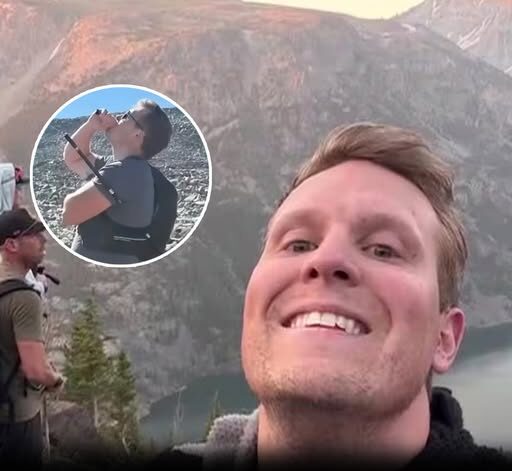
ER Nurse Survives After Trekking Pole Pierces His Torso During Granite Peak Hike
David Cifaldi Relied on His Emergency Medical Training During a Grueling 6 1/2-Hour Journey Back to Safety
A challenging hike on Montana’s tallest mountain became a remarkable survival ordeal after an emergency room nurse fell and was pierced through the torso by one of his own trekking poles.
David Cifaldi, 32, was climbing Granite Peak with two friends on July 20 when a small loose rock caused him to lose his footing approximately 10 miles into the hike.
The fall drove a trekking pole through the middle of his back and left him injured high on the mountain, surrounded by snowfields, boulders, and difficult terrain.
Despite the shocking nature of the accident, Cifaldi remained calm. His professional experience as an emergency room nurse helped him evaluate the injury and decide what to do next.
A Sudden Fall Changes the Entire Hike
Cifaldi had been hiking with friends Jesse Ross and another companion when the accident occurred.
The group was moving through the Granite Peak route when Cifaldi stepped on a loose rock and slipped. The fall happened quickly, leaving little time for him to protect himself.
One of the trekking poles he was carrying entered his side and passed through the soft tissue of his back.
“It was just kind of a freak thing,” Cifaldi said while describing the unexpected accident.
The pole remained lodged in his body, protruding from both sides. His friends later estimated that approximately eight inches of the pole were visible between the two wounds.
The location and severity of the injury could have caused panic, particularly in such a remote environment. However, Cifaldi immediately began assessing his physical condition.
His Nursing Experience Takes Over
Years of working in emergency medicine helped Cifaldi focus on the information that mattered most.
“I think my nurse brain clicked on,” he explained. “As soon as I was able to self-assess and establish that this was not life-threatening right now, I was pretty convinced I was going to get off that mountain under my own power.”
He took several deep breaths and carefully considered whether the pole had entered his chest cavity or damaged one of his lungs.
His breathing remained stable, and he did not experience lightheadedness, major blood loss, loss of feeling, or other immediate signs that a vital organ had been struck.
“I was pretty confident that it was a soft tissue injury,” he said.
Removing an embedded object in a remote location could have caused severe bleeding. Cifaldi therefore left the trekking pole in place while he and his friends evaluated their options.
The pole itself helped limit movement around the wound, but it also made every step more difficult.
His Friends Help Examine the Injury
Because Cifaldi could not clearly see the object in his back, his friends took photographs of the injury and showed them to him.
The images allowed him to study the entry and exit points and make a more informed assessment of the damage.
Ross later explained that the trekking pole had passed “all the way through his lat, sticking out both ends, with roughly 8 inches between the two holes.”
The pole had apparently traveled through the latissimus dorsi area without striking a major organ.
Ross said his friend remained composed while checking himself for dangerous symptoms.
“He self-assessed calmly: no bleeding, full feeling, no lightheadedness, nothing vital hit, and the pole stable in place,” Ross wrote.
The group had access to search-and-rescue assistance, but an extraction from the mountain could have required a long wait in difficult conditions.
Cifaldi believed he was physically capable of moving and decided to attempt a self-rescue.
A Difficult Decision High on Granite Peak
The decision meant hiking back through miles of rugged mountain terrain with the pole still passing through his body.
Cifaldi understood that his condition could change without warning. A shift in the pole, internal bleeding, or a sudden decline could have turned the journey into a much more serious emergency.
However, he was alert, able to walk, and confident that the injury had not affected his breathing or circulation.
“At that point, I was up moving around, walking a little bit, and I was pretty confident that I could keep moving,” he said.
Search-and-rescue personnel remained on standby while the group began heading back toward the trailhead.
The return route included snowfields, steep sections, loose boulders, and uneven ground. Each obstacle required Cifaldi to control his movements carefully.
A normal stumble could have shifted the pole or caused additional damage.
A Makeshift Sling Stabilizes the Pole
Cifaldi used part of his running vest to support the embedded trekking pole while he walked.
He adjusted the vest’s chest strap into a makeshift sling, helping prevent the object from moving excessively with each step.
One of his friends remained close behind him throughout the descent.
The friend watched the wound for bleeding and monitored Cifaldi’s condition for any sign that the injury was becoming more dangerous.
The group moved slowly and carefully across the plateau.
Cifaldi had to maintain his balance while carrying an object through his torso, but he continued making steady progress.
The companions remained prepared to stop and request an emergency extraction if his condition deteriorated.
Humor Helps the Group Manage the Stress
As the hours passed, the hikers became increasingly hopeful that Cifaldi would reach safety without suffering a sudden complication.
The emotional pressure began to ease slightly, and the friends found a way to use humor to manage the frightening situation.
“We started making kebab jokes,” Cifaldi recalled.
Ross said Cifaldi remained in “remarkably high spirits” throughout the long journey.
The humor did not diminish the seriousness of the injury. Instead, it helped the group stay calm and focused while continuing toward the trailhead.
Cifaldi did not complain as he crossed the difficult landscape.
His ability to remain composed helped his friends maintain their own concentration while watching for signs of bleeding or shock.
Concern for Other Hikers Along the Route
Even while dealing with his own injury, Cifaldi remained concerned about the people they might encounter on the trail.
Near Mystic Lake, he asked one of his friends to move ahead of the group and warn approaching hikers.
He was particularly concerned that children might see the exposed injury and become frightened.
“David navigated the plateau’s snowfields and boulder fields, made his way down past Mystic Lake, and reached the trailhead entirely under his own power – never once complaining, staying in remarkably high spirits. Near Mystic Lake, he even asked one of us to hike ahead and warn other hikers, so no children would have to see the wound,” Ross wrote.
The request demonstrated the awareness Cifaldi maintained throughout the ordeal.
Although he was dealing with pain, uncertainty, and a potentially dangerous medical emergency, he continued thinking about the well-being of those around him.
The Long Journey Finally Ends
After approximately 6 1/2 hours, Cifaldi and his friends reached the trailhead.
He had completed the demanding return journey under his own power with the trekking pole still lodged through his body.
Cifaldi was taken to a local hospital for initial treatment before being transferred to Intermountain Health in Billings.
Doctors safely removed the trekking pole.
His medical treatment continued after the removal, and the full recovery process could still require surgery.
Ross organized a GoFundMe campaign to help cover Cifaldi’s medical needs while he recovered.
By July 28, the fundraiser had collected close to $5,000 toward its $8,000 goal.
A Matter of Inches
Cifaldi later reflected on how easily the accident could have produced a far more serious outcome.
The trekking pole passed through soft tissue without striking a vital organ, major blood vessel, or lung.
A slight change in the direction of the pole could have resulted in catastrophic injuries high on the mountain.
“A couple inches the other way, and this would be a different story,” he said.
He described himself as “very lucky.”
His medical knowledge helped him recognize that he was stable, but the safe outcome also depended on the exact path the pole took through his body.
The fact that he retained full feeling, remained conscious, and experienced no major bleeding allowed him to consider walking out rather than waiting for an extraction.
Preparation and Teamwork Prove Essential
The survival story highlights the importance of remaining calm during a remote emergency.
Cifaldi’s training allowed him to conduct a careful self-assessment instead of reacting only to the frightening appearance of the injury.
His friends also played an essential role.
They helped him inspect the wound, supported the pole, monitored him for bleeding, and remained beside him throughout the difficult descent.
The running vest became an improvised stabilization device, while the group’s communication helped them make decisions as conditions changed.
Search-and-rescue support remained available if the self-rescue became impossible.
The group’s ability to work together gave Cifaldi a safer path back to medical care.
The Accident Has Not Ended His Climbing Plans
Despite the fall, the embedded pole, and the exhausting journey back to the trailhead, Cifaldi has not abandoned his goal of reaching the summit of Granite Peak.
The July 20 accident forced him to turn around before completing the climb.
Rather than allowing the experience to keep him away permanently, he plans to return the following year.
His goal is to complete the climb that was interrupted by the accident.
The decision reflects the same determination he displayed while leaving the mountain with the trekking pole still inside his body.
Cifaldi’s experience began as a day of hiking with friends and quickly became a test of medical judgment, endurance, and teamwork.
He faced a severe injury in a remote location, assessed the immediate risks, stabilized the embedded object, and traveled for more than six hours across demanding terrain.
Doctors later removed the pole safely, and Cifaldi began the process of recovery while recognizing how narrowly he had avoided a much worse outcome.
His story serves as a striking example of how calm thinking, professional training, and dependable companions can make a critical difference when an outdoor adventure suddenly becomes a fight for survival.