
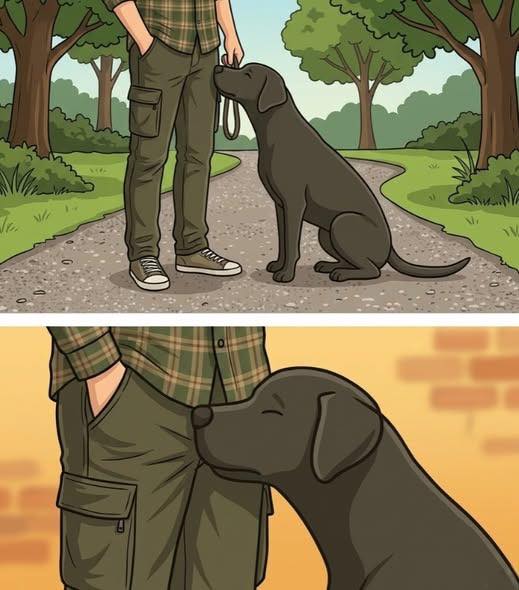
Why Dogs Sniff Certain Areas of the Human Body and What It Really Means
Dogs Experience the World Through Scent
Dogs interact with their surroundings in a way that is very different from humans. While people rely mostly on language, facial expressions, and visual cues, dogs depend heavily on smell to gather information about the world around them.
For dogs, scent is one of the most important tools for communication and understanding. Their noses provide them with details that humans cannot detect, helping them recognize people, environments, emotions, and changes in physical condition.
This difference in perception explains many common canine behaviors that may confuse or embarrass people. One of the most frequently misunderstood examples is when a dog sniffs a person’s private area during a greeting.
Although this behavior may feel uncomfortable in social situations, it is generally considered normal canine behavior rather than something aggressive or inappropriate.
A Dog’s Sense of Smell Is Extremely Advanced
Dogs possess an extraordinary sense of smell that is far more powerful than that of humans. They have significantly more scent receptors inside their noses, allowing them to detect odors at levels people cannot even notice.
In addition, a larger portion of a dog’s brain is dedicated to analyzing smells. This gives dogs the ability to process detailed scent information quickly and efficiently.
To humans, a room may smell neutral or ordinary. To a dog, however, the same environment can contain layers of information from different people, objects, foods, emotions, and activities.
Because scent plays such a major role in canine perception, dogs naturally investigate strong odor sources whenever they meet someone new.
Why Dogs Focus on Certain Areas
The human body produces natural odors through glands located in different areas. Some regions create stronger scent signals than others, making them more noticeable to dogs.
When dogs greet people, they are often drawn toward areas where scent is naturally more concentrated. From a dog’s perspective, this is simply the fastest way to gather information.
Dogs are not interpreting the interaction in the same way humans do. They are responding to biological scent cues rather than social customs or personal boundaries.
What feels awkward to people is often just a routine investigative behavior for dogs.
Sniffing Functions as Social Communication
In the canine world, sniffing is a major part of social interaction. Dogs use scent the way humans use conversation.
By smelling another dog or person, they gather details that help them understand identity, mood, familiarity, and environmental context.
Dogs can recognize individuals through scent alone. They may also detect subtle changes connected to emotional states such as nervousness, excitement, calmness, or fear.
This is one reason dogs often react differently to people depending on the emotional atmosphere around them.
For dogs, gathering scent information is not rude behavior. It is part of how they interpret the world and build social understanding.
Dogs Can Detect More Than Humans Realize
Research and training experience have shown that dogs are capable of noticing physical and chemical changes in humans that people themselves may not immediately recognize.
Some specially trained dogs can identify medical conditions or alert owners to changes in physical state. Others are trained to respond to emotional distress or stress-related signals.
Even household pets without formal training may react to scent-based changes connected to emotions, illness, or hormonal shifts.
This sensitivity is tied directly to their highly developed olfactory system and their constant reliance on scent-based information.
Puppies and Young Dogs Often Sniff More
Younger dogs and puppies are especially likely to engage in frequent sniffing behavior. At an early age, dogs are still learning about social interaction, boundaries, and environmental cues.
Because scent is their primary method of exploration, puppies often investigate everything around them with intense curiosity.
This includes people, objects, other animals, and unfamiliar environments.
Young dogs may not yet understand which greeting behaviors humans prefer or dislike. As they mature and receive training, they gradually learn more controlled social habits.
Training Can Help Manage the Behavior
Although sniffing is natural canine behavior, owners can still teach dogs more appropriate ways to greet people.
Training usually works best when it focuses on positive reinforcement and consistency.
Rewarding calm greetings, redirecting attention, and reinforcing commands can help dogs learn alternative behaviors during social interactions.
Over time, many dogs learn to approach guests more politely while still satisfying their natural curiosity in less intrusive ways.
Patience is important during this process because sniffing is rooted deeply in instinct and sensory communication.
Understanding the Behavior Reduces Misinterpretation
Many people mistakenly assume that dogs engage in this type of sniffing because they are behaving badly or intentionally invading personal space.
In reality, dogs do not interpret the behavior through human social rules.
They are responding naturally to scent information that their brains consider important.
Recognizing this difference helps owners respond more calmly and avoid unnecessary punishment for behavior that is largely instinctive.
At the same time, proper guidance and training can still encourage respectful interactions in public and at home.
The Role of Instinct in Everyday Canine Behavior
Dogs have lived alongside humans for thousands of years, but many of their core instincts remain unchanged.
Their dependence on smell continues to shape how they explore, communicate, and interpret their surroundings.
Behaviors that appear unusual from a human perspective often make perfect sense within the canine world.
Sniffing is one of the clearest examples of this difference.
To a dog, scent provides detailed information that humans simply cannot access. What appears to be an awkward greeting may actually be a complex exchange of sensory data.
Why Patience Matters for Dog Owners
Understanding canine instincts can help strengthen the relationship between dogs and their owners.
When people recognize that sniffing is connected to natural communication rather than misbehavior, they are often better prepared to guide dogs calmly and effectively.
Dogs respond best to consistent boundaries, clear expectations, and positive reinforcement.
Harsh reactions or punishment may confuse dogs because they do not understand the social meaning humans attach to the behavior.
Instead, patient training allows dogs to adjust their greetings while still expressing normal curiosity and social interest.
Dogs and Humans Perceive the World Differently
The way dogs interpret the world is built around scent in a way that humans rarely experience.
People naturally focus on words, appearances, and body language. Dogs prioritize odor, chemical signals, and environmental traces.
This difference explains why dogs sometimes behave in ways that seem unusual or embarrassing to humans.
For dogs, sniffing is not random. It is an important source of information that helps them understand the people and environments around them.
By learning more about how dogs communicate, owners can better appreciate the instincts that shape everyday canine behavior while still teaching appropriate social manners.