
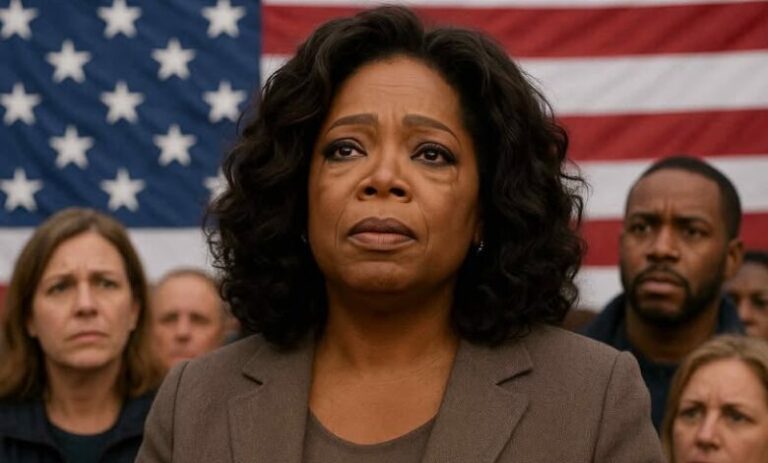
Oprah Winfrey at 72: From a Difficult Childhood to Global Media Influence
A Life Shaped by Hardship and Determination
Oprah Winfrey’s rise from a childhood marked by poverty to a position of international influence represents one of the most recognizable journeys in modern media.
In 2026, as she celebrates her 72nd year, Winfrey continues to reflect publicly on her health, career, personal choices, and the legacy she has created over several decades.
Her path began in rural Mississippi before her childhood took her to inner-city Milwaukee. Those early years included severe hardship and experiences that would continue affecting her long after she became famous.
Winfrey has spoken openly about being molested during childhood. She also experienced the loss of an infant son when she was 14 years old.
Rather than hiding every painful part of her history, she eventually incorporated those experiences into the candid communication style that helped her connect with millions of viewers.
Her willingness to discuss trauma, self-worth, personal responsibility, and recovery became central to the relationship she developed with her audience.
The Beginning of a Broadcasting Career
Winfrey’s circumstances began changing after she moved to Nashville to live with Vernon Winfrey, the man she identifies as her father.
Her communication abilities soon opened a path into broadcasting. She obtained a radio position while still attending high school and became a co-anchor on a local evening television newscast by the age of 19.
These early opportunities introduced her to the demands of live media. Her natural delivery did not always resemble the reserved style traditionally expected from news presenters, but it revealed an ability to communicate with emotional immediacy.
That quality ultimately proved especially effective in daytime television, where personal connection and spontaneous conversation could matter as much as formal presentation.
Winfrey later entered the talk-show industry and took control of a Chicago program that ranked third in its market. Under her leadership, it developed into a widely recognized television phenomenon with an audience extending far beyond the city.
Her style placed emotional honesty and direct human conversation at the center of the program. Viewers were invited to see the people on screen as individuals with complicated experiences rather than distant subjects of entertainment.
Taking Control Through Harpo Productions
The success of Winfrey’s television work enabled her to establish Harpo Productions and gain substantial control over her content.
That level of ownership was particularly significant for a Black woman working in the media industry during the 20th century. Instead of remaining only the on-screen host, Winfrey became a producer and business owner with authority over how her work was created and distributed.
By the middle of the 1990s, she had also reconsidered the direction of her television program. As tabloid-driven content became increasingly prominent, Winfrey shifted her focus toward personal development, literature, reflection, and emotional well-being.
The change helped distinguish her program from other daytime productions. It also strengthened her reputation as a host interested in long-term personal growth rather than momentary spectacle alone.
Books, meaningful interviews, and conversations about life choices became defining parts of her public identity. Her influence extended beyond individual broadcasts and helped shape how many viewers discussed private struggles in public settings.
A Direct Statement About Her Weight
In 2026, Winfrey’s health and weight-loss journey remain major subjects of public attention.
Her recent position has been summarized through a concise three-word statement:
“I’m not sorry.”
The declaration reflects her refusal to apologize for making private decisions concerning her body and health. It also challenges the long-running expectation that she must publicly justify every physical change.
For decades, Winfrey’s weight was repeatedly discussed by audiences and media outlets. Her body became part of her public story in ways that often placed personal matters under continuous scrutiny.
Her current message rejects the idea that her appearance should be treated as a public project. It also separates her present health choices from judgments about how she looked in earlier periods of her life.
The principle behind that message is straightforward: her current body is not evidence of moral success, and her former body was not a personal failure.
By speaking without apology, Winfrey has presented her weight-loss experience as an individual health decision rather than a performance designed to satisfy public expectations.
Strength and a New Personal Balance
Winfrey marked her 72nd birthday in early February 2026 while continuing to demonstrate an active approach to health.
She shared a video showing herself deadlifting, using physical strength to illustrate how her relationship with her body has changed.
The exercise represented more than a visible transformation. It reflected her emphasis on discovering a stronger and more stable way of living as she grows older.
One philosophy associated with her outlook explains that difficulties can force people to locate a different form of balance when familiar approaches no longer work.
“Challenges are gifts that force us to search for a new centre of gravity.”
This idea has remained relevant throughout Winfrey’s career. Public controversies, private struggles, business pressure, and changing expectations have repeatedly required her to reassess her direction.
Rather than describing her life as a single transformation in which every problem was permanently resolved, Winfrey has treated it as an ongoing sequence of experiences.
Each stage brought new responsibilities and demanded different forms of adaptation, from her early broadcasting work to international celebrity and media ownership.
Facing Rumors and Online Misinformation
Winfrey’s high public profile has also made her a frequent subject of misleading online content.
Claims suggesting troubling developments involving her health or family periodically circulate through attention-seeking headlines. Such stories can spread rapidly because her name is instantly recognizable to audiences around the world.
The intensity of online speculation can create confusion between verified personal updates and content designed primarily to generate clicks.
Winfrey has spent years defending her ability to describe her own life rather than allowing misleading reports to define it for her.
Her continued public activity in 2026, including the exercise video shared around her birthday, presents a very different picture from the unsupported dramatic narratives that sometimes surround her.
Misinformation is not a new challenge in her career. She has previously faced bizarre fabricated claims, including the widely circulated “9,000 penises” hoax from the early 2000s.
Incidents of that kind demonstrate how an outrageous statement can become attached to a public figure and continue circulating even when it has little connection to reality.
The Challenge of Building OWN
Winfrey has also experienced significant pressure through her business ventures, including the launch of OWN, the Oprah Winfrey Network.
Creating the network required her to move beyond the familiar structure of a successful talk show and accept responsibility for a much larger media operation.
The project brought financial and professional tension, but it also represented another stage in her development as a proprietor rather than only a television personality.
Her career had already demonstrated that ownership could provide greater creative authority. OWN expanded that principle by giving her a platform capable of supporting multiple programs and voices.
The network’s development became part of a longer record of persistence. Winfrey continued adapting even when a new venture did not immediately reproduce the success of her earlier work.
That willingness to reconsider strategy without abandoning the broader goal has remained one of the central characteristics of her professional life.
Changing the Language of Personal Storytelling
Winfrey’s cultural influence can be seen in the confessional style that now appears throughout television, interviews, podcasts, and online media.
Long before deeply personal public conversations became common across countless platforms, her television program created space for guests to discuss experiences that had often remained private.
She approached vulnerability as something capable of creating recognition between strangers. Trauma, shame, grief, family conflict, health, and self-image could be discussed as shared human experiences rather than concealed personal failures.
Winfrey reinforced that approach by speaking about her own life. Her childhood abuse, struggles with weight, professional setbacks, and private doubts became part of the dialogue she established with viewers.
This openness helped produce a powerful sense of trust. Audience members did not connect with her only because of professional success; many responded to her willingness to acknowledge the difficult experiences beneath it.
Her work demonstrated that authority and vulnerability did not have to be opposites. A person could hold significant influence while remaining honest about emotional scars and unresolved challenges.
From Talk-Show Host to Media Proprietor
Describing Winfrey only as a former talk-show host does not capture the full extent of her career.
She became a producer, business owner, network founder, interviewer, and one of the most influential figures in American media.
Her journey from Kosciusko, Mississippi, to global prominence was built through a combination of communication ability, emotional insight, strategic ownership, and continual adaptation.
Her estimated net worth of $2.8 billion represents the financial scale of that achievement. It also places her among the most prominent examples of wealth and ownership attained by a Black woman in the media industry.
Claims that 92% of audiences consider her the most trusted voice in self-improvement and wellness reflect the reputation described around her continuing influence, although her broader legacy cannot be reduced to one measurement.
Likewise, the description of her as maintaining a “100% commitment” to the “not sorry” philosophy is best understood as a statement about her current public outlook rather than a conventional statistical measure.
A Legacy Built on Personal Authority
At 72, Winfrey remains associated with the belief that people can examine their past without allowing it to determine every part of their future.
Her early hardships did not disappear when success arrived. Instead, they became part of the perspective that shaped her interviews, programming choices, public conversations, and business decisions.
She created an audience relationship by discussing subjects that many people had been taught to hide. That approach gave viewers permission to recognize their own experiences in conversations taking place on television.
Her recent health message continues the same pattern. By refusing to apologize for her choices, she asserts control over a story that has frequently been interpreted by strangers.
The larger meaning of her career lies in that sustained determination to define herself. She moved from poverty and childhood trauma into broadcasting, transformed a struggling television program, secured ownership through Harpo Productions, and expanded her influence through additional media ventures.
Online rumors may continue to generate dramatic claims, but they do not replace the visible record of her work or her own account of her life.
Winfrey’s story in 2026 is therefore not centered on one final reinvention. It is the continuing story of a woman evaluating her experiences, protecting her voice, and choosing how the next part of her public and private life will be told.