
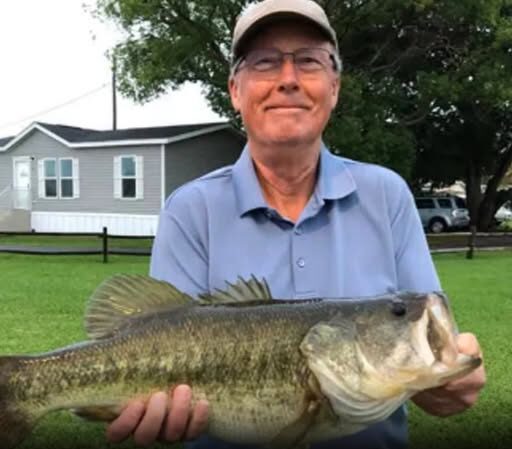
Florida Fisherman, 71, Dies After Alligator Attack at Park Where He Went Fishing Every Day
Witnesses Describe Steven Hamilton’s Final Fishing Trip as Authorities Investigate the Tragic Encounter in Winter Garden
A Florida community is mourning the death of 71-year-old Steven Hamilton, a familiar visitor to a local park whose regular fishing trip ended in tragedy after an encounter with a large alligator.
Hamilton was fishing at Dr. Bradford Memorial Park in Winter Garden, Florida, on October 16 when an alligator reportedly grabbed him near the water and pulled him beneath the surface.
Witness accounts indicate that the incident happened shortly after Hamilton caught a bass and held it up for a photograph.
Wildlife trappers later restrained the alligator and recovered Hamilton from the water, but he was pronounced dead shortly afterward.
The incident has deeply affected people who recognized Hamilton from his frequent visits to the park. Those who knew him described a friendly man who enjoyed fishing and was not known for bothering wildlife.
As the Florida Fish and Wildlife Conservation Commission continues investigating, the tragedy has renewed attention to the importance of remaining cautious around Florida waterways.
A Familiar Fisherman at Dr. Bradford Memorial Park
Steven Hamilton was a regular presence at Dr. Bradford Memorial Park, a location where he reportedly spent time fishing every day.
For people who visited the park frequently, Hamilton was more than an occasional stranger standing beside the water. His routine had made him recognizable to others who enjoyed the area.
Fishing was an established part of his daily life, and his repeated visits meant that other parkgoers had become familiar with seeing him there.
On October 16, Hamilton returned to the park for what appeared to be another ordinary fishing outing.
Nothing in the reported account suggests that he arrived expecting anything unusual to happen.
He was participating in an activity he had enjoyed regularly, spending time near the water and trying to catch fish.
However, the familiar setting became the scene of an unexpected and fatal wildlife encounter.
Witnesses Say He Had Just Caught a Bass
According to accounts of the incident, Hamilton had successfully caught a bass shortly before the alligator approached.
He was reportedly holding the fish up while someone prepared to take his photograph.
The moment would ordinarily have been a simple part of a successful fishing trip, allowing him to capture a memory of his catch.
Instead, witnesses described a sudden attack that unfolded while his attention was on the fish and the photograph.
Beatrice Soto, who spoke about the incident to WFTV, described what witnesses understood had happened.
“He caught a bass. He held it up for whoever it was to take a picture of him, and the gator came up and grabbed him by the leg and pulled him in,” she said.
Her account places the encounter immediately after Hamilton’s catch, emphasizing how quickly the situation changed.
The report does not establish the identity of the person taking the photograph or provide additional details about the moments immediately preceding the alligator’s approach.
What witnesses described was a sudden encounter that left little time for those nearby to understand what was happening.
The Alligator Was Nearly 12 Feet Long
The animal involved in the incident was reported to measure approximately 11 feet, 8 inches in length.
That substantial size was among the details that attracted attention following Hamilton’s death.
According to witness accounts, the alligator seized Hamilton by the leg and pulled him into the water.
The incident occurred near the place where he had been fishing, transforming a familiar recreational activity into a dangerous emergency.
Although the animal’s reported length provides an indication of its size, the available information does not explain why it approached Hamilton or what specifically triggered the encounter.
Those questions remain separate from the eyewitness descriptions of the attack itself.
Authorities have confirmed that the incident remains under investigation, making it important not to draw conclusions beyond the details already reported.
Wildlife Trappers Responded to the Emergency
Following the attack, wildlife trappers became involved in efforts to manage the situation and recover Hamilton from the water.
Reports indicate that the trappers successfully restrained the alligator.
They were also able to bring Hamilton out of the water after the encounter.
Despite those efforts, he was pronounced dead shortly afterward.
The outcome was devastating for the people who knew him and for others who learned that a routine fishing trip had ended in the loss of a life.
The available account does not provide a detailed timeline of the emergency response or establish exactly how much time passed between the attack and Hamilton’s recovery.
It does confirm that wildlife personnel were able to restrain the animal and that Hamilton did not survive.
The Florida Fish and Wildlife Conservation Commission subsequently addressed the incident and confirmed that an investigation was underway.
A Fellow Park Visitor Feared the Victim Was Someone He Knew
For Connor Kelley, another person familiar with the park, news of the attack immediately raised concerns about Hamilton.
Kelley explained that he was preparing to leave when he heard someone mention that an older man who regularly fished at the park had been involved in the incident.
Because Hamilton was known for fishing there frequently, Kelley feared that he might be the person being discussed.
His concern was later confirmed.
“As I was leaving to go home, I heard someone say apparently it was an older gentleman who fishes there every night, and just immediately my stomach dropped because I was so worried it was Steve, and it turns out it unfortunately was.”
The statement illustrates how quickly the news became personal for people who had come to recognize Hamilton through his regular visits.
Although fishing is often a solitary activity, repeated visits to the same public place can create familiarity among those who share the environment.
Hamilton’s absence will now be felt by people who had grown accustomed to seeing him near the water.
Friends and Regular Visitors Remember His Kindness
Kelley also spoke about Hamilton’s personality, offering a description that contrasted sharply with the tragic circumstances of his death.
“He was a very kind man, very relatable.”
Those words provided a glimpse of how Hamilton was regarded by someone who knew him from the park.
Kelley emphasized that Hamilton was not someone who deliberately interfered with alligators or attempted to provoke wildlife.
His remarks were important because they discouraged assumptions about Hamilton’s behavior during the encounter.
There is no information in the provided account establishing that Hamilton intentionally approached or disturbed the animal.
Instead, the reported circumstances describe a fisherman who had just caught a bass when the alligator unexpectedly appeared.
For those who knew him, the tragedy was not simply another report of a wildlife incident. It involved a recognizable member of the local community whose presence had become part of the park’s routine.
A Reminder About Caution Near Florida Waterways
In discussing Hamilton’s death, Kelley also reflected on the broader importance of awareness around water in Florida.
He described the encounter as an unfortunate event and a reminder that people should remain mindful of their surroundings.
His comments did not suggest that Hamilton had knowingly taken an unnecessary risk or acted irresponsibly.
Instead, they emphasized the unpredictable nature of an encounter with wildlife in an area where people regularly spend time outdoors.
Fishing often involves concentrating on the water, equipment, and the activity itself.
Hamilton’s reported final moments demonstrate how a familiar location can still present dangers that may not be immediately apparent.
The tragedy has therefore prompted reflection on the relationship between recreational activities and the natural environments in which they take place.
Remaining aware of wildlife is particularly important in places where people and animals may occupy nearby spaces.
Florida Wildlife Officials Express Sympathy to Hamilton’s Family
The Florida Fish and Wildlife Conservation Commission issued a statement following Hamilton’s death.
The agency acknowledged the loss and offered condolences to the people affected.
“The FWC extends its deepest sympathies to the family and loved ones of the victim during this difficult time.”
The statement recognized the human impact of the incident while confirming that officials were continuing to examine the circumstances.
“This is an active investigation, and this is all the information available at this time.”
The agency’s response makes clear that its examination of the incident had not been completed at the time of the statement.
As a result, certain details remain unresolved, including the circumstances that led the alligator to approach Hamilton.
The investigation is an important part of establishing a clearer account of what occurred.
For Hamilton’s family and loved ones, however, the immediate reality is the loss of a man who had been enjoying one of his familiar daily activities.
How Common Are Serious Alligator Attacks in Florida?
Despite the fatal outcome of Hamilton’s encounter, Florida wildlife officials have emphasized that serious alligator attacks are uncommon.
In information shared following the incident, the Florida Fish and Wildlife Conservation Commission addressed the frequency of such events.
“Serious injuries caused by alligators are rare in Florida,” the agency stated.
That distinction is important when considering an individual tragedy within the broader context of wildlife encounters.
Hamilton’s death was a devastating event, but officials cautioned against interpreting it as evidence that serious attacks occur routinely.
The agency’s public safety efforts are intended to address concerns involving particular alligators that may present risks to people, pets, or property.
Its response combines attention to individual complaints with measures designed to manage potentially dangerous wildlife situations.
Although fatal incidents are rare, the agency continues to encourage people to report alligators that raise safety concerns.
The Statewide Nuisance Alligator Program
The Florida Fish and Wildlife Conservation Commission operates a Statewide Nuisance Alligator Program, commonly known as SNAP.
The program addresses complaints involving specific alligators believed to pose a threat to people, domestic animals, or property.
Through this system, members of the public can report an animal that is causing concern.
The agency then arranges for contracted nuisance alligator trappers to respond to the situation.
According to the commission, public safety is the highest priority of the program.
The purpose is to provide a defined process for addressing potentially hazardous encounters rather than leaving individuals to manage the situation themselves.
Wildlife officials encourage people to use the established reporting system when they have concerns about an alligator.
The program represents one of the measures available to address conflicts between wildlife and people in areas where alligators are present.
How Florida Residents Can Report a Concerning Alligator
The Florida Fish and Wildlife Conservation Commission provides a dedicated telephone number for people who need to report an alligator that may pose a risk.
The agency’s toll-free Nuisance Alligator Hotline is 866-FWC-GATOR, also listed as 866-392-4286.
Officials explain that calls involving concerning alligators can result in the dispatch of a contracted nuisance alligator trapper.
The system allows trained personnel to evaluate and address situations involving animals believed to present a threat.
Reporting concerns through the official program helps ensure that the situation is handled by people assigned to that responsibility.
The commission’s public safety message is particularly relevant following a serious incident because it provides a practical way for people to respond when they encounter an animal that causes concern.
Although the program cannot eliminate every possible wildlife encounter, it establishes a process for responding to reported risks.
The Investigation Continues After the Fatal Encounter
Authorities have not yet provided a final explanation of the circumstances surrounding Hamilton’s death.
The known details include the date and location of the incident, the witness descriptions of the attack, the reported size of the alligator, and the response by wildlife trappers.
Hamilton was fishing at Dr. Bradford Memorial Park on October 16 when the encounter occurred.
Witnesses said he had caught a bass and was holding it for a photograph when the alligator seized his leg and pulled him into the water.
The animal was subsequently restrained, and Hamilton was recovered but pronounced dead.
Beyond those reported facts, the agency has stated that its investigation remains active.
That means the available information should not be treated as a complete account of every factor involved in the encounter.
Further conclusions about the animal’s behavior or the precise sequence of events would require information not yet established in the report.
Remembering Steven Hamilton Beyond the Tragedy
Although Hamilton’s death has attracted attention because of the unusual and frightening circumstances, the memories shared by people who knew him offer a more personal perspective.
He was 71 years old and had made fishing at Dr. Bradford Memorial Park a familiar part of his routine.
To regular visitors, he was someone they expected to see near the water.
Kelley’s description of Hamilton as kind and approachable suggests that he had made a positive impression on those who encountered him.
Those memories are important because they allow his life to be remembered for more than the circumstances of his passing.
He was a man who enjoyed fishing, returned frequently to a place he knew, and became familiar to others through that shared environment.
His final outing began with an ordinary activity and a successful catch before taking a tragic turn.
For those who knew him, the suddenness of the loss has made the incident particularly difficult to process.
A Tragic Loss and an Important Public Safety Reminder
The death of Steven Hamilton has left a Florida community grieving while wildlife officials continue investigating the encounter.
His story has also drawn attention to the need for awareness near waterways where alligators may be present.
The Florida Fish and Wildlife Conservation Commission maintains that serious injuries caused by alligators are rare, but it also provides a statewide program for addressing animals believed to pose a threat.
Those two messages are not contradictory. They acknowledge that severe incidents are uncommon while recognizing the importance of taking concerns seriously.
For Hamilton’s loved ones, the central loss is not a statistic or a public safety issue. It is the death of someone they knew and cared about.
For regular visitors to Dr. Bradford Memorial Park, his absence will be a reminder of a familiar fisherman who had made the location part of his daily life.
As the investigation continues, the memories shared by those who knew Hamilton emphasize his kindness and his enjoyment of fishing.
His death was sudden and tragic, but the people who remember him have made clear that he deserves to be known for more than his final moments.