
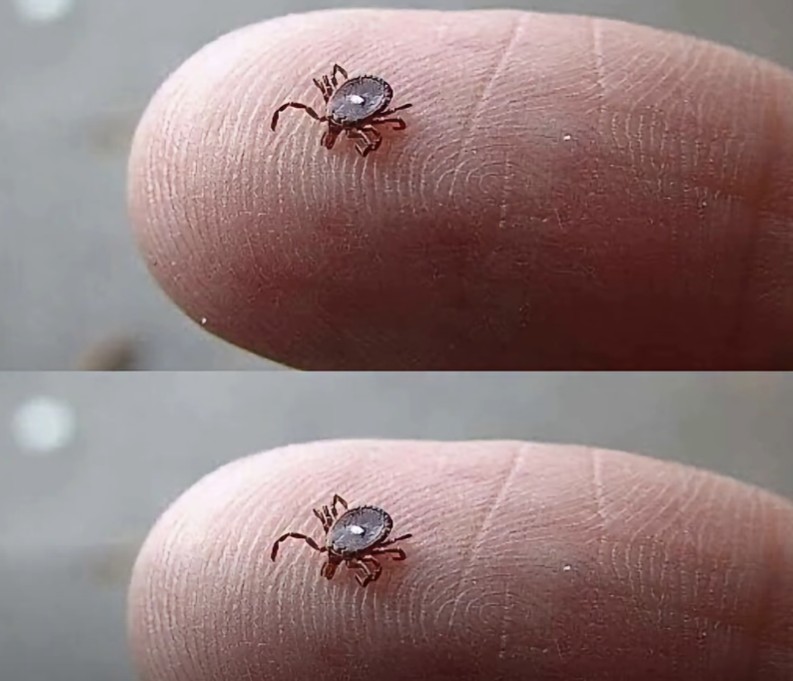
Found a Tick With a White Spot on Your Child? Here’s What It Could Mean and What Parents Should Do Immediately
A Tiny Tick With a Distinctive White Marking Can Be Alarming, Especially When Found on a Child’s Skin. Learn How to Recognize a Possible Lone Star Tick, Remove It Safely, Understand the Health Risks, and Know When Medical Attention Is Necessary.
Imagine helping your child get ready for bed after an afternoon playing outside when you notice something unusual on their skin.
At first, it looks like a tiny dark speck.
But when you look more closely, you realize it may be a tick.
And there is something particularly noticeable about it.
A small white spot appears on its back.
For many parents, that discovery immediately raises questions.
What kind of tick is it? Could it transmit a disease? Should you remove it yourself? And does your child need to see a doctor?
The white marking may be an important clue. One species, known as the lone star tick, is recognized for a distinctive pale spot on the back of the adult female.
However, the appearance of a tick alone cannot determine whether it carries an infection or whether a child has been exposed to a disease.
The most important steps are to remove an attached tick promptly, clean the bite area, and watch for symptoms that may require medical evaluation.
Why a Tick With a White Spot Attracts Attention
Ticks are small arachnids that feed on the blood of animals and people.
They are commonly encountered in grassy, wooded, and brushy environments.
Children may be exposed while playing in gardens, visiting parks, hiking, camping, or spending time around vegetation.
Because ticks can be very small, they sometimes remain unnoticed until a parent checks a child’s skin or discovers an attached tick during bathing or dressing.
Some ticks have distinctive markings that help with identification.
A single pale or silvery-white spot on a dark tick may suggest an adult female lone star tick.
But markings are only one part of identification.
The tick’s size, shape, geographic location, and developmental stage also matter.
Most importantly, the presence of a white spot does not automatically mean that the tick is infected.
What Is a Lone Star Tick?
The lone star tick, scientifically known as Amblyomma americanum, is a tick species found in parts of the United States.
It is widely distributed across the eastern, southern, and central regions, including areas of the Northeast and Midwest.
The species is named for the distinctive pale marking on the back of an adult female.
That marking often resembles a tiny white or silvery dot.
Adult male lone star ticks have a different arrangement of pale markings rather than the female’s single prominent spot.
Immature ticks can be much smaller and may not show the same recognizable appearance.
Lone star ticks are known to actively seek hosts, including humans.
They can transmit certain disease-causing organisms and are associated with other health conditions.
However, a bite does not mean that an infection or allergic condition will develop.
Can a Lone Star Tick Make a Child Sick?
Some lone star ticks can transmit pathogens responsible for illnesses such as ehrlichiosis and tularemia.
They are also associated with Heartland virus and Bourbon virus infections.
Not every tick carries a pathogen, and not every bite results in illness.
The likelihood of infection depends on the species, the region, the pathogen involved, and other circumstances.
Parents should understand that the lone star tick is not considered an established vector of the bacteria responsible for Lyme disease in the United States.
Lyme disease is primarily transmitted by infected blacklegged ticks and western blacklegged ticks.
Different tick species present different risks, which is why identification can be useful when a healthcare professional assesses a bite.
The Surprising Connection Between Lone Star Ticks and Red Meat Allergy
One of the less familiar conditions associated with lone star tick bites is alpha-gal syndrome.
Alpha-gal syndrome is an allergic condition that can develop after certain tick bites.
In the United States, it is primarily associated with the lone star tick.
People with this condition may develop allergic reactions after eating certain mammalian meats, such as beef, pork, or lamb, or after exposure to other products containing alpha-gal.
Symptoms can include hives, stomach pain, nausea, vomiting, swelling, or breathing difficulties.
Unlike many immediate food allergies, reactions associated with alpha-gal syndrome often occur several hours after exposure.
Symptoms may begin weeks or months after the tick bite that triggered the condition.
However, most people who experience a lone star tick bite do not necessarily develop alpha-gal syndrome.
A white-spotted tick found on a child is not, by itself, a reason to remove meat or dairy products from the child’s diet.
If unexplained allergic reactions develop, a healthcare professional can determine whether further evaluation is appropriate.
What Should You Do First If You Find a Tick on Your Child?
The first step is to remain calm.
Discovering a tick can be upsetting, but prompt and careful removal is more useful than panic.
Move your child to a well-lit area.
Look closely to determine whether the tick is attached to the skin or simply crawling across it.
If it is crawling, remove it from the child without crushing it against the skin.
If it is attached, remove it promptly rather than waiting for an appointment or spending time trying to identify the species.
Delaying removal can increase the opportunity for transmission of some tick-borne infections.
How to Remove an Attached Tick Safely
According to the Centers for Disease Control and Prevention, a clean pair of fine-tipped tweezers is an effective tool for removing an attached tick.
Grasp the tick as close to the skin’s surface as possible.
Avoid squeezing its swollen body.
Pull the tick away from the skin using steady, even pressure.
Do not twist or jerk it.
Once the tick has been removed, thoroughly clean the bite area and your hands with soap and water or an appropriate antiseptic.
If tiny mouthparts remain in the skin and cannot be removed easily with clean tweezers, do not dig into the skin.
The body will generally expel remaining mouthparts naturally as the area heals.
If removal is difficult or the site becomes inflamed, seek medical advice.
Never Use These Popular Tick-Removal Tricks
Some home remedies suggest covering an attached tick with petroleum jelly, nail polish, alcohol, or other substances to make it detach.
Others recommend applying heat or using a match.
These methods are not recommended.
They may cause injury, delay removal, or interfere with safe handling of the tick.
There is no need to wait for a tick to detach on its own.
Using tweezers and steady pressure is the preferred approach.
If fine-tipped tweezers are unavailable, regular tweezers can also be used carefully.
What Should You Do With the Tick After Removal?
After removing the tick, you may take a clear photograph to help with identification.
If a clinician may need to identify the species, the tick can be kept in a secure, sealed container.
Otherwise, it can be disposed of safely according to public health guidance.
Do not crush a live tick with your fingers.
It is also useful to record the date of removal and the location where your child may have encountered it.
Make a note of where the tick was attached to the body.
If it appeared swollen with blood, mention that observation to a healthcare professional.
However, a tick’s appearance cannot establish the exact duration of attachment.
Routine commercial testing of removed ticks for disease-causing organisms is generally not recommended as a basis for medical treatment decisions.
A positive test does not prove that a child was infected, and a negative test does not guarantee that no infection occurred.
Check Your Child for Additional Ticks
Finding one tick does not necessarily mean it was the only one.
After removing it, carefully inspect the rest of your child’s body.
Pay attention to areas where ticks may be difficult to notice, including the scalp, hairline, behind the ears, neck, armpits, waist, groin, and behind the knees.
Examine clothing and any outdoor equipment that may have been exposed.
Parents should also check themselves and other family members who spent time in the same environment.
Prompt identification and removal can help reduce the risk of certain tick-borne illnesses.
What Symptoms Should Parents Watch for After a Tick Bite?
Many tick bites cause little more than a small area of irritation.
A minor red bump near the bite can occur without indicating a tick-borne infection.
However, symptoms developing in the days or weeks afterward may require medical attention.
Watch for fever, chills, unusual fatigue, headache, muscle aches, or a new rash.
Some tick-borne infections may also cause nausea, vomiting, or other symptoms.
Ehrlichiosis, for example, commonly produces symptoms within one to two weeks after an infected tick bite.
Rashes associated with tick-borne diseases do not always have the familiar bull’s-eye appearance.
Some illnesses cause no rash at all.
If your child develops a fever, spreading rash, or other concerning symptoms following a tick bite, contact a healthcare professional promptly and explain the possible exposure.
When Does a Tick Bite Require Urgent Medical Attention?
Seek immediate emergency care if a child experiences difficulty breathing, swelling of the tongue or throat, fainting, or signs of a severe allergic reaction.
Severe headache with a stiff neck, confusion, or serious deterioration in a child’s condition also requires urgent assessment.
Do not wait for a rash to appear if a child becomes seriously ill after a possible tick exposure.
For less urgent concerns, such as a new fever, expanding rash, or signs of infection at the bite site, contact your child’s healthcare professional promptly.
Tell the clinician when and where the tick was discovered, where the exposure may have occurred, and whether the tick was attached.
Early evaluation is important because some tick-borne illnesses can become more serious if treatment is delayed.
Does Every Child Need Antibiotics After a Tick Bite?
No. Most tick bites do not automatically require antibiotics.
For certain high-risk bites involving blacklegged ticks in areas where Lyme disease is common, a healthcare professional may consider a preventive single dose of doxycycline.
That decision depends on factors such as the likely tick species, geographic location, possible attachment duration, and how recently the tick was removed.
When indicated, preventive treatment for Lyme disease is time-sensitive and is generally considered within 72 hours after removal.
Current guidance allows clinicians to consider this approach for children of any age when the appropriate criteria are met.
Parents should not give leftover antibiotics or begin treatment without medical guidance.
Preventive antibiotics used for Lyme disease are not routinely recommended to prevent other infections such as ehrlichiosis or Rocky Mountain spotted fever.
If a child develops symptoms, the clinician will determine whether diagnostic evaluation or treatment is needed.
Can a Tick With a White Spot Cause Lyme Disease?
This is an important distinction.
The adult female lone star tick is known for its single white spot, but it is not recognized as a vector of Lyme disease in the United States.
Lyme disease is associated with infected blacklegged ticks, which look different.
Nevertheless, lone star tick bites may be followed by a circular rash associated with a condition called southern tick-associated rash illness, or STARI.
STARI can resemble the expanding rash associated with Lyme disease.
Because visual identification of a rash may be difficult, parents should seek medical evaluation rather than attempting to diagnose the condition themselves.
A healthcare professional can consider the child’s symptoms, location, and possible tick exposure.
What If You Live Outside the United States?
The geographic location matters when identifying ticks and evaluating disease risks.
The lone star tick is primarily associated with the United States.
In Europe, other species are more relevant to common tick-borne infections.
For example, the castor bean tick, Ixodes ricinus, can transmit the bacteria responsible for Lyme borreliosis and, in some regions, the virus responsible for tick-borne encephalitis.
It does not normally display the characteristic single white spot of an adult female lone star tick.
Parents should not rely on photographs of American ticks when trying to identify species found elsewhere.
Local health authorities and medical professionals can provide advice based on the species and diseases present in a particular region.
How to Help Prevent Tick Bites in Children
Tick prevention begins before children head outdoors.
When visiting wooded or grassy areas, encourage children to remain on established paths and avoid brushing against dense vegetation where possible.
Long trousers, socks, and appropriate footwear can help reduce exposed skin.
Light-colored clothing may make crawling ticks easier to notice.
Use an age-appropriate, EPA-registered insect repellent according to its label instructions.
Products containing permethrin may be used on clothing and certain outdoor gear, but should not be applied directly to skin.
After outdoor activities, check children’s clothing and skin for ticks.
Bathing or showering after returning indoors can provide a convenient opportunity for a thorough tick check.
Parents should pay particular attention to the scalp and other places where a child may not notice an attached tick.
Should Parents Be Frightened by a White-Spotted Tick?
Finding a tick on a child can understandably cause anxiety.
But it is important to distinguish a possible exposure from a confirmed illness.
A white marking may help identify the tick, yet it cannot reveal whether the tick carries a pathogen.
Many children who experience tick bites do not develop a tick-borne disease.
The appropriate response is practical rather than fearful.
Remove the tick promptly.
Clean the skin.
Check for additional ticks.
Record the exposure and monitor for symptoms.
Seek medical advice when the circumstances or the child’s health warrant it.
These steps allow parents to respond effectively without assuming the worst.
The Most Important Thing to Remember
A tiny white spot on a tick can be an important identification clue, particularly in regions where lone star ticks are found.
But the marking itself is not a diagnosis.
It does not prove that the tick is infected, and it does not mean a child will develop a disease.
What matters most is recognizing a possible tick exposure and taking appropriate action.
Prompt removal, careful observation, and timely medical evaluation when needed are the most useful steps parents can take.
For families who enjoy spending time outdoors, understanding these precautions can make parks, gardens, hiking trails, and other natural spaces easier to enjoy with confidence.
The goal is not to make parents afraid of every small insect they encounter.
It is to help them recognize when something deserves attention and know exactly what to do next.
Medical Information Disclaimer
This article provides general educational information about ticks, tick removal, and potential tick-borne illnesses. It is not a substitute for individualized medical advice, diagnosis, or treatment. Recommendations may vary depending on the child’s age, symptoms, location, and the type of tick involved. Consult a qualified healthcare professional for concerns about a tick bite, and seek emergency care for severe symptoms.