
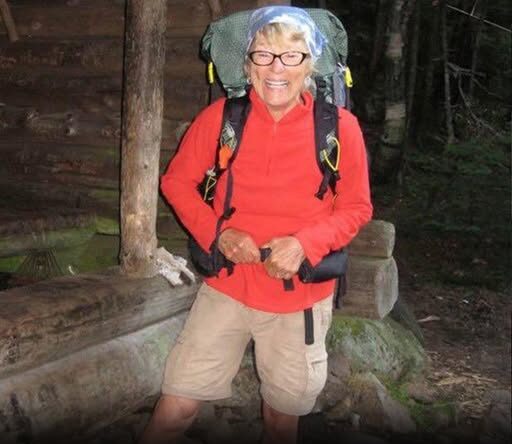
Hiker, 66, Vanished on the Appalachian Trail — Two Years Later, Rescuers Found Her Tent and a Heartbreaking Final Message
What Investigators Discovered Deep in the Maine Wilderness Revealed a Tragic Story of Survival, Hope, and a Final Goodbye
For more than two years, the disappearance of Geraldine Largay remained a heartbreaking mystery.
The 66-year-old retired Air Force nurse had been pursuing an extraordinary personal goal: completing the Appalachian Trail, one of America’s most demanding long-distance hiking routes.
She had already traveled more than 1,000 miles when she disappeared in the remote wilderness of Maine in July 2013.
Search teams spent months trying to locate her, but the dense forest offered few answers.
It was not until October 2015 that a discovery deep among the trees finally revealed what had happened.
Investigators found the remains of a campsite, personal belongings, and a notebook containing the words of a woman who had struggled to survive while hoping someone would eventually find her.
Her final written message was addressed not to rescuers alone, but to the people she loved most.
A Dream That Took Her More Than 1,000 Miles From Home
Geraldine Largay, affectionately known as Gerry, was an experienced hiker who had spent years exploring trails near her home in Tennessee.
Retirement gave her the opportunity to pursue a much larger challenge.
She wanted to walk the Appalachian Trail, a route stretching more than 2,190 miles between Georgia and Maine.
The trail crosses mountains, forests, and isolated stretches of wilderness where hikers must be prepared for rapidly changing conditions.
Completing the entire route typically requires several months of sustained physical effort.
Participants carry essential supplies, sleep outdoors, arrange food deliveries or resupply stops, and navigate terrain that can become difficult even for experienced walkers.
Gerry understood that the journey would test her endurance.
She had prepared by taking a course focused on long-distance hiking and had already developed considerable outdoor experience.
In April 2013, she began her journey northward.
Like many Appalachian Trail hikers, she adopted a trail nickname.
Hers was Inchworm, reflecting the steady, determined pace with which she approached the demanding route.
Her Husband Supported the Journey From the Road
Gerry’s husband, George Largay, had been married to her for 42 years.
Although he did not share her desire to complete the long-distance trek, he supported her ambition.
Instead of hiking beside her, George traveled by vehicle and arranged to meet her at designated points along the route.
These meetings allowed Gerry to replenish food and other supplies without having to carry everything she would need for the entire journey.
It was an arrangement that helped her continue moving toward Maine while maintaining contact with her husband.
George understood how much completing the trail meant to her, even though spending months sleeping outdoors was not something he personally wanted to experience.
He described his feelings with humor.
“Hiking the Appalachian Trail and sleeping in tents and wearing the same stuff for three and four days in the rain — not on my bucket list,” he said.
But he also recognized that his wife needed assistance to make the journey possible.
His willingness to provide that support became an important part of her adventure.
Neither of them could have anticipated that one of their planned meetings would never happen.
The Morning Everything Went Wrong
By July 22, 2013, Gerry had reached the mountainous wilderness of western Maine.
She had successfully completed a substantial portion of the Appalachian Trail and was continuing north.
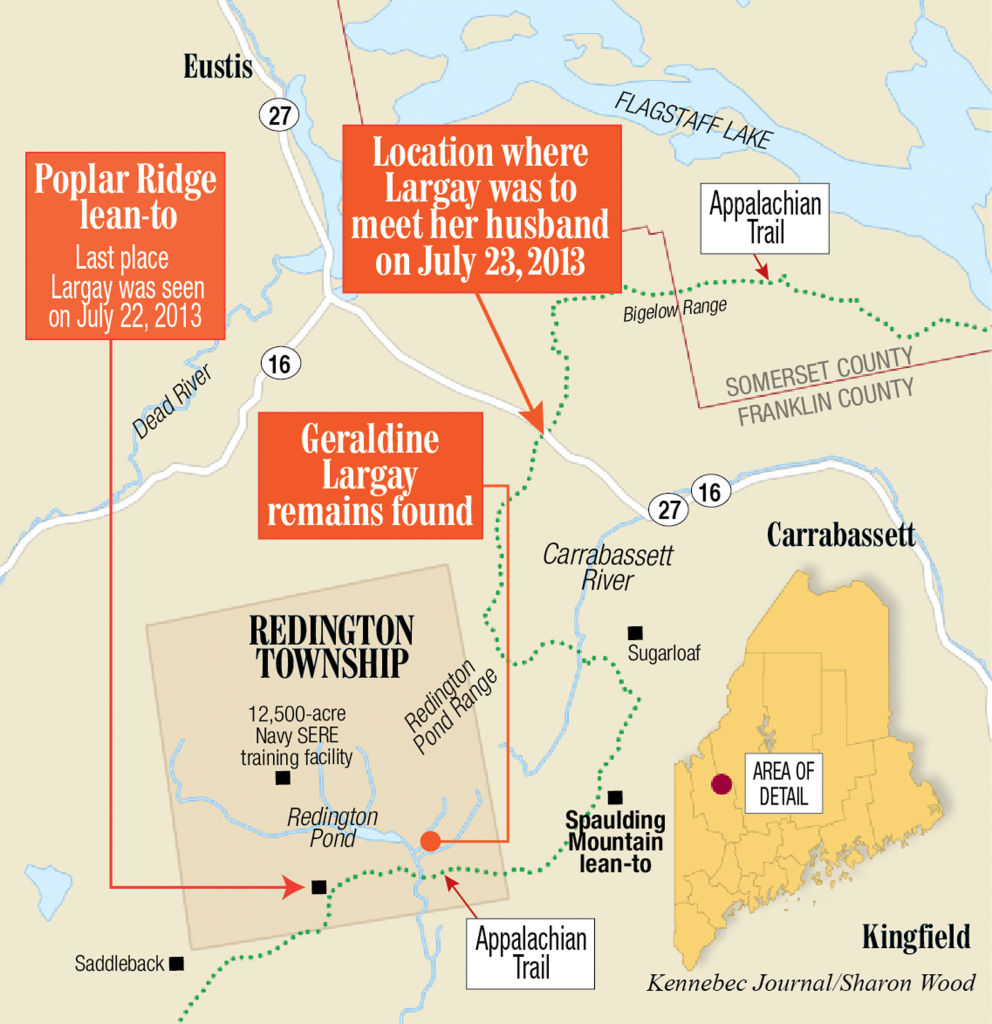
That morning, she was near a trail shelter in an area surrounded by thick forest.
At some point during her hike, Gerry stepped away from the established path to use the bathroom.
It was an ordinary decision that countless hikers make while traveling through remote areas.
But after leaving the trail, she became disoriented.
The surrounding vegetation made it difficult to identify the direction from which she had come.
What initially appeared to be a short departure from the path became a desperate attempt to find her way back.
Gerry moved through the woods searching for familiar landmarks.
Instead of returning to the trail, she became increasingly lost.
She had entered an area where even a relatively small navigational mistake could leave a person separated from the route by dense vegetation and difficult terrain.
The Desperate Text Message That Never Arrived
Gerry realized she needed help and attempted to contact George.
At approximately 11:01 that morning, she composed a text message explaining that she had left the trail and could not find her way back.
Her message read:
“In somm trouble. Got off trail to go to br. Now lost. Can u call AMC to c if a trail maintainer can help me. Somewhere north of woods road. XOX”
It was a brief but urgent request.
Gerry wanted her husband to contact someone familiar with the trail who might be able to guide rescuers toward her location.
But the remote wilderness had little or no reliable cellular coverage.
The message never reached George.
Gerry continued trying to send messages, making repeated attempts over the following hour and a half.
None successfully reached the person who could have alerted others to her precise predicament.
Her phone allowed her to write the messages, but it could not establish the connection needed to deliver them.
As the day progressed, she remained alone in the forest.
Another Message Revealed How Far She Believed She Had Wandered
By the following day, Gerry still had not found the Appalachian Trail.
She attempted to send another message to her husband.
This time, she believed she might be several miles away from the route.
“Lost since yesterday. Off trail 3 or 4 miles. Call police for what to do pls. XOX.”
Once again, the message failed to reach its intended recipient.
For Gerry, the inability to communicate created an additional obstacle beyond the physical challenge of navigating the woods.
She knew help was necessary, but the people who cared about her did not receive the information she was trying to provide.
Meanwhile, the landscape around her offered few obvious clues about how to return to safety.
Her later journal entries would reveal that she had continued trying to orient herself after becoming lost.
She searched for higher ground and attempted to understand where she was in relation to the trail.
Those efforts ultimately did not lead her back.
A Massive Search Begins in the Maine Wilderness
When Gerry failed to arrive as expected, concern about her whereabouts grew.
Her disappearance prompted an extensive search involving multiple agencies and volunteers.
State police, Maine game wardens, national park personnel, fire departments, and search dogs participated in efforts to locate the missing hiker.
Searchers faced a difficult environment.
Western Maine’s thick woodland, uneven ground, and changing weather conditions complicated the task of locating someone who might have wandered away from the established route.
Heavy rain further complicated the search and reduced the usefulness of potential clues.
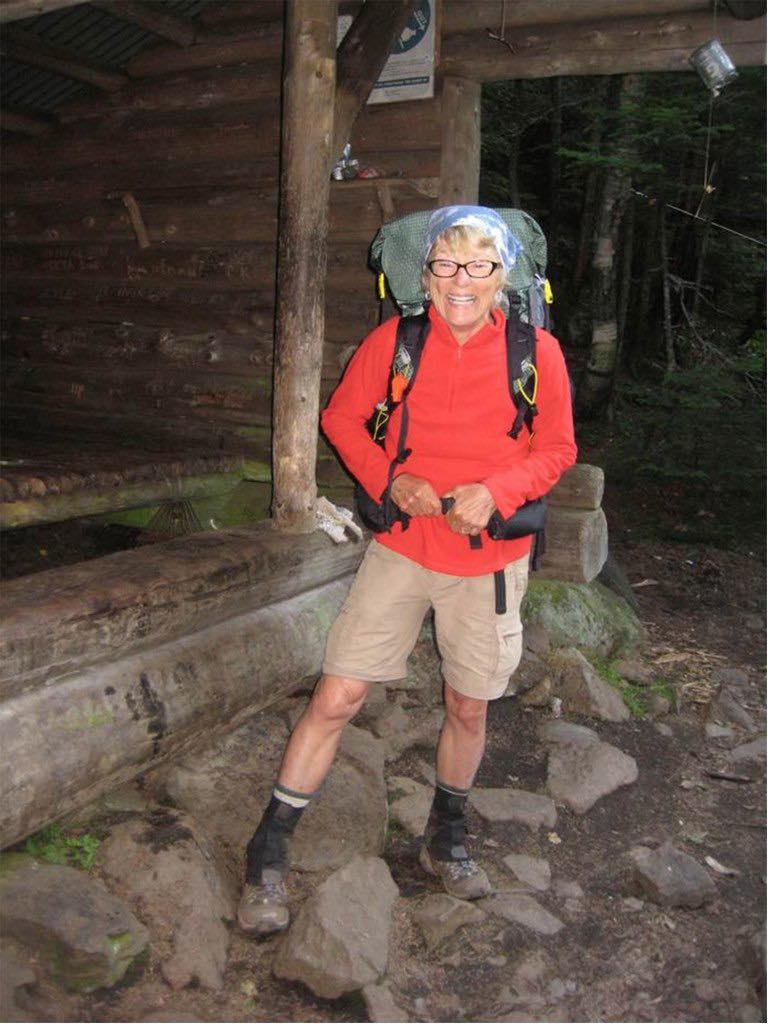
Investigators had a photograph taken on the morning Gerry disappeared.
It showed her near a trail shelter with a corrugated metal roof and a nearby fire pit.
The photograph helped establish where she had been before vanishing.
But it did not reveal which direction she had traveled after leaving the trail.
At one point that morning, George had been approximately 22 miles from the shelter where she was last seen.
Despite the resources committed to finding her, the search produced no discovery that explained her fate.
Two Years Passed Without the Answer Her Family Needed
As time passed, Gerry’s disappearance remained unresolved.
Her photograph appeared on notices intended to alert hikers who might encounter evidence of her whereabouts.
For her family, the uncertainty was devastating.
Without confirmation of what had happened, there was no clear explanation for why a woman with considerable hiking experience had vanished so completely.
The possibility that she had become injured, disoriented, or trapped somewhere in the forest remained a concern.
Yet the wilderness was vast, and searchers had no confirmed location to investigate.
Months turned into years.
The absence of answers meant that Gerry’s loved ones were left waiting for information that might never come.
Then, in October 2015, a discovery on land associated with the U.S. Navy finally changed the investigation.
A Forester Notices Something Deep Among the Trees
A forester working on Navy property near the Appalachian Trail came upon an unusual scene in the woods.
What initially appeared to be an indistinct object on the forest floor soon raised the possibility of human remains.
The discovery prompted a closer examination of the area.
Lieutenant Kevin Adam documented the moment when the possibilities became clear.
“The possibilities were: it was a human body; it was animal bones, or if it was a human body, was it Gerry Largay?”
As the site was examined, the evidence became unmistakable.
A collapsed tent lay beneath the trees.
Nearby were a green backpack and human remains.
The location was deeply concealed by vegetation, making it difficult to see from a distance.
Adam immediately recognized the significance of what had been found.
“I saw a flattened tent, with a green backpack outside of it and a human skull with what I believed to be a sleeping bag around it. I was 99% certain that this was Gerry Largay’s.”
After more than two years of uncertainty, investigators had finally located the missing hiker’s campsite.
Her Hidden Campsite Revealed a Determined Fight for Survival
The campsite provided important clues about how Gerry had spent her final weeks.
She had established a sheltered area beneath dense branches that obscured the site from above.
The tent stood in a place where the surrounding vegetation made it extremely difficult to spot.
Gerry had taken steps to improve her temporary shelter.
She created a bedding area using pine needles and soil, apparently attempting to keep her sleeping space separated from wet ground.
She had also secured a space blanket between branches to provide additional protection.
Nearby, investigators found signs that she had attempted to make fires.
The campsite contained practical supplies, including maps, a rain jacket, string, plastic bags, a space blanket, and a flashlight that still worked.
These belongings demonstrated that Gerry had not simply abandoned hope immediately after becoming lost.
She had tried to establish a place where she could remain sheltered while waiting for assistance.
But the most revealing discovery was not a piece of camping equipment.
It was a notebook that contained her account of the ordeal.
The Notebook With Her Husband’s Name on the Cover
Among Gerry’s possessions was a journal marked with a message intended for George.
The words on its cover read:
“George Please Read XOXO.”
The notebook had been exposed to the damp forest environment, but its contents offered investigators and family members an extraordinary record of her final days.
Gerry had written about her attempts to navigate the wilderness after leaving the trail.
She described becoming lost, searching for direction, and trying to find a way out.
Her writing also revealed that she had continued documenting the passing days while remaining at her campsite.
She made notes and created a small calendar to help track time.
The entries extended until August 18, 2013, nearly four weeks after she disappeared.
Those dates showed that Gerry had survived far longer than someone might have assumed from the circumstances of her disappearance.
They also revealed how long she had waited in the forest without rescue.
Her Final Words Were About the People She Loved
One passage in the notebook became especially heartbreaking after the campsite was discovered.
As Gerry’s situation grew increasingly serious, she left instructions for anyone who might eventually find her.
Her words reflected a concern for the family members who would be left wondering what had happened.
She wrote:
“When you find my body, please call my husband George, and my daughter Kerry. It will be the greatest kindness for them to know that I am dead and where you found me – no matter how many years from now.”
The message was both practical and deeply personal.
Gerry wanted her husband and daughter to receive confirmation of her fate, even if that confirmation came long after her death.
She understood the pain that uncertainty could cause.
Her final instructions showed that, while facing an increasingly desperate situation, she was still thinking about the people waiting for her at home.
More than two years later, the discovery of her campsite finally made it possible to fulfill that wish.
Investigators Determined How She Died
Following the discovery of Gerry’s remains, the medical examiner determined that she had died from exposure.
Her journal established that she had survived for at least 26 days after becoming lost.
During that period, she had been isolated in an area where communication was unavailable and locating the trail had proved impossible.
Her supplies could provide only limited support during an extended emergency.
Although she had created shelter and attempted to improve her circumstances, those efforts were not enough to ensure her survival.
The finding brought a tragic conclusion to the search.
It also raised difficult questions about how someone could remain missing for so long in an area that had been searched extensively.
Search Dogs Had Come Remarkably Close
One of the most painful findings emerged from a later examination of the search operation.
At least three search-and-rescue dog teams had passed within approximately 100 yards of Gerry’s final campsite during the 2013 search.
That distance was remarkably small compared with the enormous wilderness area being examined.
Yet the teams did not locate her.
The finding illustrated how challenging searches can become when a person is concealed by thick forest vegetation.
Even experienced search personnel working with trained dogs can encounter obstacles involving terrain, weather, visibility, and scent conditions.
Gerry’s campsite was particularly difficult to see because it was hidden beneath dense tree cover.
The knowledge that searchers had come so close added another painful dimension to the tragedy.
It demonstrated how narrowly a rescue effort can miss someone in a remote environment.
A Family Finally Receives the Closure It Had Sought
After the discovery, Gerry’s family expressed appreciation for the search personnel who had worked to find her.
They recognized the commitment of the Maine Warden Service and others involved in the investigation.
The family also requested privacy while confronting the emotional consequences of the discovery.
For more than two years, they had lived without knowing exactly where Gerry was or what had happened to her.
Finding her remains answered those questions, but it also confirmed the loss they had feared.
The journal provided an intimate record of Gerry’s struggle and allowed her loved ones to understand more about the circumstances of her final days.
It also preserved the final message she had wanted them to receive.
Although the discovery could not change what had happened, it brought an end to the uncertainty surrounding her disappearance.
A Small Memorial Marks the Place Where She Was Found
Gerry’s family later visited the area where her campsite had been discovered.
They placed a white wooden cross and personal mementos at the location.
The memorial marked a place that had remained hidden for more than two years.
Messages written on the cross reflected the grief and affection of those who remembered her.
One short message, written in a child’s handwriting, carried a particularly emotional meaning.
“I wish you were here.”
The simple words expressed the loss felt by a family whose loved one had set out on an adventure and never returned.
The location became a place of remembrance rather than merely the site of a tragic discovery.
What Gerry Largay’s Story Reveals About Wilderness Safety
Gerry was not someone who had entered the Appalachian Trail without preparation.
She had hiking experience, had taken a course on long-distance trekking, and had successfully completed more than 1,000 miles before her disappearance.
Her story demonstrates that experience does not eliminate the possibility of becoming disoriented in difficult terrain.
Leaving an established trail for a short distance can become dangerous when vegetation blocks recognizable landmarks.
Remote areas can also make communication unreliable, as Gerry’s unsuccessful text messages tragically demonstrated.
Her experience underscores the importance of navigation planning, emergency communication options, and caution when traveling away from marked routes.
It also reveals the limitations that even organized search operations can face in dense wilderness.
The fact that search teams passed relatively close to her campsite without finding it remains one of the most striking details of the case.
The Heartbreaking Legacy of Inchworm
Geraldine Largay began her Appalachian Trail adventure with determination and a desire to accomplish something extraordinary.
Known as Inchworm, she had spent months moving steadily north, supported by a husband who wanted to help her fulfill her dream.
Her journey ended after a brief departure from the trail led her into unfamiliar wilderness.
For at least 26 days, she attempted to survive, created shelter, searched for a way back, and recorded her experiences.
When rescue did not arrive, she left a final message asking that her husband and daughter be told where she had been found.
That message remained hidden until October 2015, when investigators discovered her campsite and finally resolved the mystery.
Gerry’s story is remembered not only because of the circumstances of her disappearance, but also because of the determination revealed in her journal.
Her writings preserved the experience of a woman who faced extraordinary isolation while continuing to think about the people she loved.
For her family, the notebook offered an answer they had waited more than two years to receive.
And for everyone who learns what happened on that remote stretch of the Appalachian Trail, it remains a moving reminder of both the unforgiving nature of wilderness and the enduring strength of family bonds.