
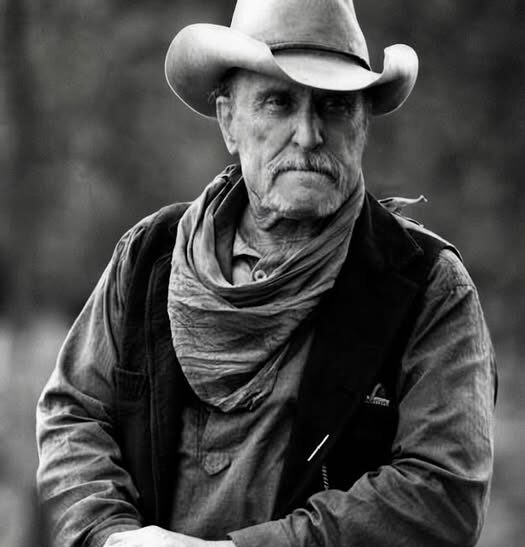
Robert Duvall Dies at 95 After a Legendary Career Spanning Generations of American Cinema
A Celebrated Actor Remembered for Decades of Remarkable Performances
Robert Duvall, one of the most admired character actors in American cinema, died peacefully at his home in Middleburg, Virginia, on February 15, 2026. He was 95.
His death marked the end of an extraordinary career that stretched across generations and included memorable performances in some of the most celebrated films in American movie history.
Over the decades, Duvall became known for an acting style that could be commanding without being excessive. Whether portraying a powerful figure, a conflicted family member or a deeply complicated individual, he brought a distinctive presence to the screen.
His body of work included The Godfather, Apocalypse Now, Tender Mercies and The Great Santini, among many other performances that established his reputation as a remarkably versatile actor.
Even late in his life, Duvall remained widely respected among fellow performers and movie audiences around the world.
Tom Hagen Became One of His Defining Roles
Among Duvall’s most recognizable performances was his portrayal of Tom Hagen in The Godfather films.
The character became one of the defining roles of his career and helped establish Duvall as an essential presence in one of cinema’s most enduring stories.
Tom Hagen required a restrained kind of authority. Rather than dominating scenes through theatrical displays, Duvall communicated intelligence, loyalty and tension through controlled expressions and carefully measured reactions.
That understated approach became closely associated with Duvall’s broader reputation as a character actor.
He could remain quiet within a scene and still become one of its most memorable figures.
The role introduced generations of moviegoers to a performer whose greatest strength often came from making complicated characters feel believable rather than exaggerated.
A Career Built on Range Rather Than a Single Character
Although Tom Hagen remained one of his most famous roles, Duvall’s career extended far beyond The Godfather.
His performances demonstrated an ability to move between dramatically different characters without losing the sense of authenticity that became central to his work.
In Apocalypse Now, Duvall delivered another performance that became permanently associated with his career.
The film gave him an opportunity to display a very different kind of screen presence from the controlled restraint of Tom Hagen.
That ability to change tone from role to role helped explain why Duvall remained relevant for so many years.
Audiences could recognize him immediately while still believing in the individual character he was portraying.
Few actors manage to maintain that balance across decades of work.
The Great Santini Added Another Memorable Performance
Duvall’s work in The Great Santini further demonstrated his ability to portray characters containing both strength and emotional complexity.
The performance became another major part of his film legacy and strengthened his standing among the most accomplished actors of his generation.
His characters were rarely memorable because they were simple.
Instead, Duvall frequently excelled when portraying people whose personalities contained contradictions that could not easily be reduced to heroes or villains.
That complexity allowed audiences to see vulnerability beneath authority and uncertainty beneath confidence.
It was a quality that remained visible throughout much of his career.
Tender Mercies Brought Academy Award Recognition
Duvall’s work in Tender Mercies became another defining achievement.
His performance earned him an Academy Award, placing one of the industry’s highest honors alongside a career already filled with acclaimed roles.
The recognition confirmed something movie audiences and other performers had understood for years: Duvall possessed an unusual ability to make restrained performances emotionally powerful.
He did not need constant dialogue or exaggerated gestures to command attention.
Small choices could carry enormous weight.
That approach became one of the characteristics that separated Duvall from performers who depended on more visibly dramatic techniques.
His Academy Award was one of numerous honors he received during his long career.
An Actor Who Could Command Attention Without Chasing It
Some performers become famous through an unmistakably larger-than-life style.
Duvall often worked differently.
His performances could feel lived-in, as though the character existed before the camera arrived and would continue existing after the scene ended.
That natural quality made him particularly effective as a character actor.
Rather than forcing viewers to notice the performance, he allowed audiences to become absorbed in the person he was portraying.
It was a skill that served him across films with very different tones, stories and generations of collaborators.
His ability to disappear into a role became part of what made him recognizable.
Respect From Generations of Actors
Duvall’s influence extended beyond audiences.
Across his long career, he became an admired figure among actors who respected the precision and discipline behind his performances.
Longevity in the film industry can be difficult for any performer.
Careers change, audiences change and styles of filmmaking evolve.
Duvall remained respected through those changes because the qualities at the center of his work did not depend on a particular era.
Believable characters, emotional restraint and careful attention to performance remained valuable regardless of changing trends.
That consistency helped his work reach viewers who discovered his films decades after they were originally released.
A Filmography That Crossed Generations
Part of Duvall’s remarkable legacy was the length of time over which he continued working and attracting admiration.
His career was not confined to a brief period of Hollywood history.
Instead, his films became familiar to multiple generations of moviegoers.
Some viewers first encountered him through The Godfather and its world of family loyalty and organized power.
Others knew him from Apocalypse Now, The Great Santini or Tender Mercies.
Later audiences encountered those performances through repeated viewings and the continuing popularity of the films.
As a result, Duvall’s reputation was not preserved only through nostalgia.
His work continued to be watched, discussed and admired because the performances themselves remained compelling.
Why His Characters Felt So Real
Duvall’s strongest performances often seemed to contain more beneath the surface than the character openly expressed.
A pause, a glance or a change in posture could communicate information without requiring explanation.
This made his acting particularly effective in roles involving complicated relationships and internal conflict.
Instead of telling audiences exactly what a character was feeling, Duvall often allowed viewers to recognize those emotions gradually.
That restraint created a sense of realism.
His characters could be intimidating, vulnerable, weary, proud or deeply conflicted without becoming one-dimensional.
The result was a body of work that rewarded close attention.
More Than One Famous Film
For many actors, one enormously successful movie can overshadow everything else they accomplish.
Duvall avoided being defined entirely by a single title.
The Godfather may have provided one of his most celebrated roles, but his performances in Apocalypse Now, Tender Mercies and The Great Santini ensured that his reputation rested on a broader foundation.
Each project demonstrated a different part of his range.
Together, they formed a career that could not easily be summarized by one character or one type of performance.
That variety became an important reason Duvall remained so highly regarded.
The Power of a Character Actor
The term character actor sometimes suggests a performer who exists primarily around larger stars.
Duvall’s career demonstrated how misleading that description can be.
A powerful character actor can shape the entire emotional atmosphere of a film.
Duvall repeatedly accomplished that without needing every scene to revolve around him.
His presence could strengthen the performances around him while simultaneously creating a memorable character of his own.
That ability became especially visible in ensemble films where many strong personalities shared the screen.
Rather than competing for attention, Duvall often made the scene itself stronger.
An Academy Award Among Numerous Honors
The Academy Award Duvall received during his career represented one of the clearest acknowledgments of his achievements.
But his reputation was never dependent on a single trophy.
Numerous other honors accompanied decades of respected work.
More importantly, his standing among audiences and fellow actors endured long after individual awards ceremonies had passed.
The films remained.
The performances remained.
And younger generations continued discovering the work that had made him one of America’s most respected actors.
Admired Even in His Later Years
Duvall’s status did not disappear as he grew older.
Even in his later years, his name carried enormous respect among people who loved acting and cinema.
His longevity gave his career an unusual perspective.
He had become part of films that were themselves considered important pieces of American cinema, yet he remained more than simply a figure from an earlier generation.
His performances continued to serve as examples of how powerful screen acting could emerge from restraint, observation and emotional precision.
For younger actors, that kind of legacy could be as significant as any individual award.
A Peaceful Final Chapter in Virginia
Robert Duvall died peacefully at his home in Middleburg, Virginia, on February 15, 2026.
He was 95 years old.
His publicist and his wife confirmed his death.
The peaceful circumstances of his passing closed a life that had been connected to American film for decades.
For audiences, however, the connection will continue through the performances he left behind.
Film has a unique ability to preserve an actor’s work across time.
A scene recorded decades earlier can still introduce a performer to someone watching for the first time today.
Duvall’s career contains many such moments.
A Legacy Written Across American Cinema
Robert Duvall’s legacy cannot be reduced to one award, one film or even one famous character.
Tom Hagen remains unforgettable, but the breadth of Duvall’s work revealed an actor capable of repeatedly transforming himself without losing the grounded quality that made his performances distinctive.
Apocalypse Now showed another side of his presence.
The Great Santini demonstrated additional emotional complexity.
Tender Mercies brought him Academy Award recognition.
Together, those performances became milestones within a career that remained admired across generations.
Duvall built his reputation gradually, role by role, rather than relying on celebrity alone.
That may be why his work retained so much respect.
He became famous, but the performances remained more important than the fame surrounding them.
Remembering Robert Duvall
For decades, movie audiences watched Robert Duvall inhabit characters who could be powerful, difficult, vulnerable and unforgettable.
His greatest performances rarely seemed interested in announcing themselves.
They simply felt true.
That quality allowed him to stand alongside some of the most recognizable performers and films in American cinema while creating a legacy entirely his own.
At 95, Duvall left behind a career filled with work that crossed generations and earned some of the industry’s highest honors.
His portrayal of Tom Hagen remains permanently connected to The Godfather films, while Apocalypse Now, Tender Mercies and The Great Santini demonstrate the extraordinary range that made his career so enduring.
Robert Duvall is gone, but the characters he created remain exactly where audiences have always found them: alive on the screen, waiting for another generation to discover why he was considered one of America’s greatest character actors.