
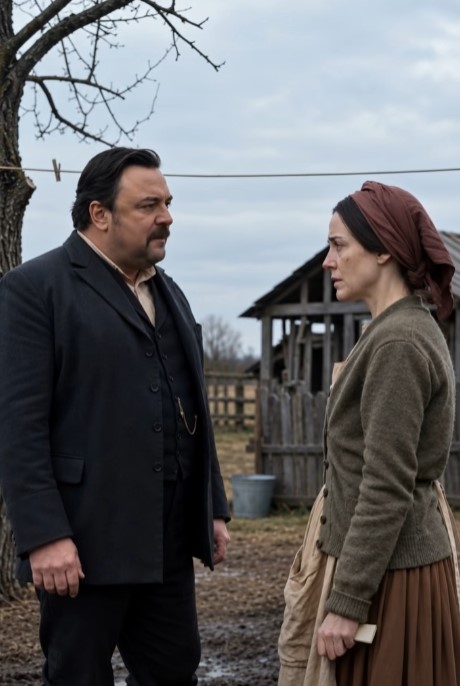
Wealthy Landowner Offers to Save a Farm Worker’s Family, but She Discovers the Truth on Their Wedding Night
A Life Defined by Responsibility
The young farm worker was only 22, but she had already carried responsibilities that might have overwhelmed someone twice her age.
Every morning, she rose before sunrise, pulled on her worn rubber boots and walked to the village farm. Her days were spent milking cows, cleaning stalls and helping feed the animals.
The work was physically demanding, and the wages were low. In the small village, however, there were almost no other opportunities for her to earn a dependable income.
Her father had died several years earlier. Since then, she had become the primary provider for her mother and two younger brothers.
Her mother suffered from recurring health problems and could barely work. Both brothers remained in school and depended on their sister for food, clothing and educational expenses.
A Family Surviving From One Day to the Next
The young woman’s earnings were rarely enough to cover every household need. Some weeks, the family struggled to afford basic food.
When her mother required medicine, she borrowed money from neighbors. She then spent months repaying each debt in small installments from her farm wages.
This pattern had become so familiar that she no longer imagined escaping it. Each day was organized around the next bill, the next meal and her mother’s next medical need.
Dreams of building a family or finding a different life gradually disappeared. She believed her responsibility was to keep the people she loved from falling even deeper into hardship.
Her devotion made her dependable, but it also left her vulnerable to anyone capable of placing a price on her family’s survival.
An Unexpected Request After Work
One evening, the owner of the farm asked her to remain after the other workers had left.
The landowner was approximately 45 and possessed considerable wealth. In addition to the farm, he owned several large areas of land and nearly half the rental houses in a neighboring town.
He rarely spoke directly with ordinary employees. He maintained a formal distance and usually communicated through supervisors.
The young woman was therefore surprised when he offered to walk her home. During most of the journey, he said almost nothing.
When they reached the family’s aging wooden house, the landowner stopped and finally explained why he had followed her.
“I have less than a year left to live. Marry me, have my child — and I will provide for your family forever,” the wealthy landowner told the poor farm worker.
An Offer She Could Barely Understand
The young woman initially believed she had misunderstood him. She expected a conversation about work, not a proposal that connected marriage, a child and her family’s financial security.
The landowner said doctors could do nothing to save him. He wanted to leave behind a biological child before his death.
If she agreed to become his wife, he promised to pay for her mother’s medical treatment. He would also purchase a new house for the family and provide enough money for her brothers to complete their education.
The offer appeared capable of solving every problem that had controlled her life. It could also place her future entirely in the hands of a man she barely knew.
She refused and spent the following days avoiding him whenever possible.
Her Mother’s Condition Worsens
During the same period, her mother became seriously unwell. A doctor explained that she required expensive treatment available in the city.
The family could not afford it. The young woman had already borrowed from neighbors and had no property or savings she could use.
Her mother’s worsening condition transformed the landowner’s proposal from an unwanted conversation into a possible means of survival.
A week after presenting the offer, he arrived at the family home and placed enough money for the treatment on their table.
He told the young woman that the money would remain with her even if she continued refusing him. He only asked her to consider the proposal again.
She Agrees for Her Family
The young woman accepted the marriage proposal after convincing herself that the decision was not about her own wishes. She was making a sacrifice for her mother and brothers.
The landowner behaved calmly throughout the arrangements. He never raised his voice or openly pressured her after she agreed.
He fulfilled every financial promise immediately. Her mother received the necessary treatment, her brothers’ educational expenses were paid and workers began renovating the family’s old house.
Those actions reassured the young woman that she had at least protected the people depending on her. She tried not to think about what the marriage would require from her emotionally.
They arranged a small wedding attended by very few guests. There was little celebration because both understood that their marriage had begun as an agreement.
A Sleepless First Night
On their first night as husband and wife, the young woman lay awake beside the landowner. She could not stop thinking about his supposed illness.
If his doctors were correct, she might become a widow within months. She had married someone she barely knew while preparing for his death before their life together had truly begun.
The situation produced sadness as well as uncertainty. The man had saved her mother and provided for her brothers, yet she still did not understand why he selected her.
During the middle of the night, the landowner quietly rose from bed and left the room.
A few minutes later, the young woman heard voices through the wall. Her husband was speaking with the farm manager inside the study.
A Sentence Changes Everything
At first, she tried to ignore the conversation. Then one sentence reached her clearly.
The landowner said she must never discover something they were hiding.
The young woman immediately became alert. She left the bed and moved quietly toward the study door.
The manager asked what would happen if she learned the truth too early. Her husband answered that everything would collapse.
He said he needed her to decide independently that she wanted to remain at the estate.
The conversation made her hands tremble. The marriage was apparently built around information deliberately kept from her.
She Demands the Truth
The following morning, the young woman confronted her husband. She repeated what she had overheard and demanded a complete explanation.
The landowner remained silent at first. He seemed to understand that another carefully prepared answer would only deepen the deception.
Eventually, he admitted that he was not dying.
The statement destroyed the foundation on which the young woman had made her decision. She had accepted a marriage with a limited future because she believed a dying man wanted one final chance to leave a child behind.
Instead, the terminal diagnosis had been invented.
The Real Story Behind His Health
The landowner did have a serious medical concern, but it was not fatal. Doctors had warned that if he wanted a biological child, he could not delay the decision for several more years.
He had already been married once. His first wife died during a difficult childbirth, and their baby died with her.
The loss changed him profoundly. After the tragedy, he decided that he would never marry or attempt to start a family again.
The new medical warning forced him to reconsider that decision. If he continued waiting, the possibility of having a biological child could disappear.
He wanted a family, but he remained terrified of loving another woman and losing her as he had lost his first wife.
Why He Created the Terminal-Illness Story
The landowner convinced himself that a temporary arrangement would protect him emotionally. He did not want love, vulnerability or a promise intended to last for life.
By claiming that he had less than a year remaining, he created a marriage that appeared to have a predetermined ending.
The young woman would receive security for her family. He would have an opportunity to become a father without confronting the fears created by his first wife’s death.
He believed the agreement would be simple because both people would understand what they were expected to provide.
What he ignored was the fact that the young woman had consented based on a lie.
A Decision Built on Deception
The young woman did not respond with sympathy when she learned the truth. His previous loss was tragic, but it did not excuse the way he had manipulated her circumstances.
He knew she was poor, responsible for a sick mother and desperate to support two younger brothers. He used those pressures while hiding the information that would have allowed her to make an informed decision.
The landowner may have fulfilled his promises, but money did not give him the right to control another person’s future.
He had treated the marriage like a private arrangement that could be designed entirely around his fear. The young woman’s emotions, choices and long-term life became secondary.
She Refuses to Accept His Justification
The young woman told him that he could have approached her honestly. He could have explained his health concern, his desire for a child and the trauma left by his first marriage.
Instead, he assumed that deceiving someone without money was acceptable as long as he compensated her family.
His wealth allowed him to solve her mother’s medical crisis and provide opportunities for her brothers. It did not erase the power imbalance behind the proposal.
The landowner had given her a choice that was never fully real because he withheld the truth needed to evaluate it.
She Leaves That Morning
The young woman returned to the bedroom and packed her belongings immediately. She did not wait to see whether her husband would offer another explanation.
The marriage had lasted only one night, but remaining any longer would require her to accept a relationship built on deliberate manipulation.
The landowner did not prevent her from leaving. He also did not demand repayment of the money already used for her mother’s care, her brothers’ education or the house renovations.
He understood that her family should not be punished for his deception. The financial support had already changed their circumstances, and he allowed those commitments to remain in place.
The Consequences of His Fear
The landowner created the lie because he believed it would protect him from another devastating loss. Instead, it destroyed the possibility of trust before the marriage could begin.
His fear of emotional pain led him to treat another person’s life as something he could manage through money and carefully selected information.
He wanted the young woman to decide that she genuinely wished to stay. Yet she could not make that choice while the truth remained hidden.
By attempting to control how the relationship developed, he guaranteed that she would leave as soon as she discovered what he had done.
A Promise Kept After the Marriage Ends
The young woman returned to her family knowing that her future was uncertain again. She had walked away from wealth, property and the security offered by the landowner.
Her decision did not mean she had stopped caring about her mother and brothers. It meant she refused to exchange control of her life for financial protection obtained through deception.
The landowner continued funding her mother’s treatment. He also honored the commitments he had made concerning her brothers.
Those payments could not repair what happened, but they ensured that innocent family members did not lose essential support because the young woman rejected the marriage.
The Truth Behind the Offer
The landowner had not been facing death within a year. His real struggle involved grief, fear and the diminishing opportunity to have a biological child.
Those circumstances might have inspired understanding if he had revealed them honestly. By replacing the truth with a terminal diagnosis, he turned a difficult personal request into manipulation.
The young woman accepted his offer believing she understood its consequences. On their first wedding night, she discovered that the most important part of the arrangement had been concealed.
She left not because he was healthy, but because he believed her poverty made her easier to control.
Her family received the help they desperately needed, yet she refused to remain in a marriage where money had been used to replace honesty.
The landowner had offered to provide for her family forever. What he failed to offer from the beginning was the truth.