
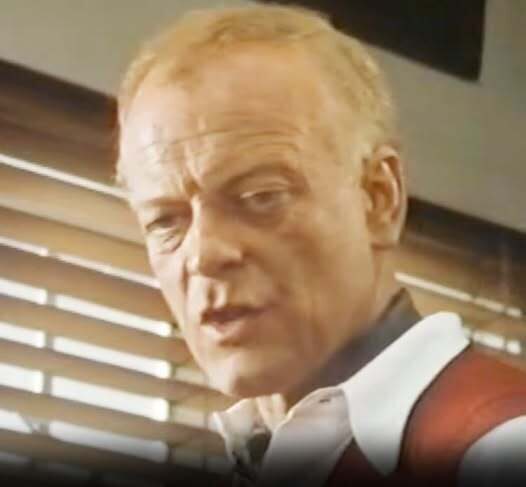
Michael Byrne Remembered for a Remarkable Career Across Film and Television
A Familiar Face Whose Presence Left a Lasting Mark
Michael Byrne is gone, leaving behind a screen legacy that feels both vast and deeply personal to generations of viewers.
For decades, he appeared in films and television dramas that became part of popular memory, often bringing intensity, danger, discipline, and quiet authority to the characters he played.
He was rarely the actor placed at the very center of a production, yet his presence often gave important scenes their weight. Audiences may not always have known his name immediately, but they recognized his face, his voice, and the unmistakable seriousness he brought to a role.
That was part of his enduring power. Michael Byrne became the kind of performer whose work seemed to belong naturally inside major stories, whether those stories involved war, politics, fantasy, crime, history, or adventure.
Across a career that included more than 150 film and television roles, he built a reputation as a dependable and memorable screen actor. His characters could be severe, threatening, conflicted, formal, or mysterious, but they rarely felt forgettable.
From Modest Beginnings to the Stage
Byrne’s story began in Hampstead, where he was born into modest circumstances.
He was raised by a single mother who worked as a cook, supporting the family while he grew up far from the glamour later associated with his acting career.
Those early years became part of the background to a life shaped by persistence, discipline, and artistic ambition. His path did not begin with privilege, but with determination and the gradual discovery of performance as a serious calling.
That calling eventually led him to one of Britain’s most prestigious drama schools, where he received the training that helped prepare him for a long and varied career.
For an actor with his background, that move marked a major turning point. It placed him in a world where skill, timing, voice, presence, and emotional control mattered every day.
From there, Byrne began building the foundation for a professional life that would stretch across decades and place him alongside some of the most recognizable names and productions in modern screen history.
A Career Built on Range and Recognition
Michael Byrne’s filmography was unusually broad, covering more than 150 appearances across film and television.
That number alone reflects a rare level of endurance in an industry where many actors struggle to remain visible for more than a few years.
Byrne’s work crossed genres and generations. He appeared in major cinematic worlds connected to Indiana Jones, Harry Potter, James Bond, Braveheart, and Gangs of New York.
Each of those titles carried a different style, audience, and dramatic demand, yet Byrne found a place within them. His ability to adapt was one of the reasons he remained useful to directors and memorable to viewers.
He could step into a historical epic, a fantasy adventure, a thriller, or a television drama and immediately make the setting feel more grounded.
He understood how to serve a story without overpowering it. That quality made him valuable in supporting roles, where an actor must often make a strong impression in limited time.
Byrne did not need to dominate the screen to change the temperature of a scene. A look, a pause, a controlled line delivery, or a stern physical presence could be enough.
The Villain Audiences Remembered
Many viewers associated Byrne with villains, officers, and figures of authority who carried an atmosphere of menace.
He became known as one of those actors who could make danger feel calm, intelligent, and controlled rather than loud or exaggerated.
That made his performances especially effective. He did not have to shout to create tension. He could stand still and make a scene feel colder.
His screen work often placed him in uniforms, formal clothing, or roles connected with power and conflict. Those parts helped shape the public memory of him as an actor audiences loved to fear.
Yet the strength of those performances also revealed his craft. Playing a convincing antagonist requires more than appearing harsh. It requires restraint, precision, and an understanding of how fear works within a story.
Byrne gave his characters a sense of history, even when the audience knew little about them. He suggested that behind every cold expression was a life, a belief, or a danger that extended beyond the immediate scene.
That ability helped him stand out in large productions filled with stars, spectacle, and action.
Part of Britain’s Television Memory
Alongside his film work, Byrne also became a familiar presence on British television.
His appearances in Coronation Street, Casualty, and Sharpe connected him to programs that reached broad audiences and remained part of everyday viewing culture.
Television gave Byrne another way to enter people’s homes and memories. Unlike cinema, where a performance may be experienced as a single event, television allows actors to become familiar over time.
For many viewers, Byrne was one of those performers who appeared across different programs and always seemed to bring credibility with him.
His work in television showed the same discipline that marked his film career. Whether the setting was contemporary, historical, dramatic, or action-driven, he carried himself with professionalism and control.
Those qualities helped explain why he continued to work so consistently. He was not only recognizable; he was reliable.
In a long-running career, reliability can be as important as fame. Productions need actors who can enter a role quickly, understand the tone, and deliver performances that strengthen the whole piece.
A Supporting Actor With Leading Impact
Byrne almost never played the lead, but that never made his career small.
Some actors become unforgettable because they carry entire stories. Others become unforgettable because they shape the worlds around those stories.
Michael Byrne belonged firmly to the second group. He was the actor placed into a scene when the story needed seriousness, tension, authority, or emotional force.
His work reminds audiences that supporting performances are often what make major films and television dramas feel complete.
A hero is rarely convincing without a strong opponent. A historical drama rarely feels full without figures who represent the pressure of the world around the main characters.
Byrne filled those spaces with skill. He gave weight to roles that might have seemed ordinary in less capable hands.
That is why audiences continued to remember him. His screen time may sometimes have been brief, but the impression often lasted.
The Man Behind the Characters
Offscreen, Michael Byrne’s life was far removed from many of the severe and frightening characters he played.
He was a husband, a father, and a grandfather. He leaves behind Carole Nimmons, their two daughters, and three grandchildren.
That private side of his life stands in contrast to the uniforms, swords, wands, and intimidating roles that shaped his public image.
For audiences, that contrast is often one of the most moving parts of remembering an actor. The face that once represented danger on screen belonged to a person with a family, a home life, and relationships beyond the camera.
Byrne’s work may have asked viewers to fear him, distrust him, or watch him with suspicion, but the man behind those performances was part of a different story.
That difference speaks to the nature of acting itself. The strongest performers can disappear into roles so completely that the public begins to associate them with fictional worlds and fictional conflicts.
Yet when the performer is gone, the full picture becomes clearer. The roles remain, but so does the human life behind them.
A Legacy Across Generations
Michael Byrne’s legacy is not limited to a single role, franchise, or decade.
His career reached across major films, respected television dramas, and stories that continue to be watched by new audiences.
That kind of legacy is built slowly. It comes from showing up again and again, bringing seriousness to the work, and making every role feel as though it matters.
For viewers who grew up watching British television, he may be remembered from familiar dramas. For film fans, he may be tied to some of cinema’s biggest adventures and historical epics.
For others, he may simply remain one of those actors whose name becomes known only after the face has already become unforgettable.
That is a powerful kind of recognition. It means his work reached people before biography did. It means the performances spoke first.
Remembering a Career of Quiet Strength
The death of Michael Byrne brings renewed attention to a career defined by patience, craft, and remarkable consistency.
He did not need constant headlines to matter. He built his place through performance after performance, scene after scene, year after year.
His career shows how much an actor can contribute without always being placed in the spotlight. He helped shape the atmosphere of major productions and gave audiences characters they could fear, remember, and believe.
More than 150 roles stand as proof of a life spent in the craft of acting.
From Hampstead beginnings to prestigious training, from British television to international cinema, Byrne’s journey carried him far beyond the modest circumstances into which he was born.
Now, as fans look back on the villains, officers, and unforgettable supporting figures he brought to life, they are also remembering the person behind them.
Michael Byrne leaves behind a body of work that will continue to appear on screens for years to come.
The characters remain fixed in film and television history, still capable of unsettling, commanding, and holding attention. Behind them was an actor whose quiet force helped make those stories stronger.