
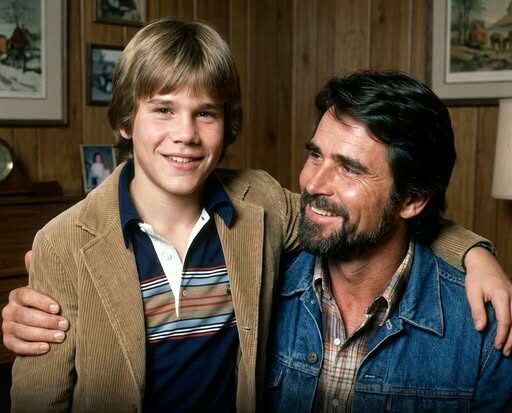
Josh Brolin Reflects on a Chaotic Childhood, Addiction and the Choice That Changed His Life
A Childhood Far Removed From Hollywood Glamour
Josh Brolin eventually became one of Hollywood’s most recognizable actors, building a career filled with major films, acclaimed performances and high-profile roles.
Behind that success, however, was a childhood shaped by instability, fear and experiences that remained with him long after he became famous.
Brolin has described growing up in an environment where danger could feel strangely normal. His mother kept wild animals around the family property, and some of the experiences involving them were anything but ordinary.
One of the most unsettling memories involved his mother directing animals toward him as part of what she apparently treated as a game.
For a child, the experience created a complicated mixture of fear and attachment. The person he depended upon for love and security could also place him in situations that felt threatening and unpredictable.
Fear and Love Existed Side by Side
Brolin’s relationship with his mother was not simple.
Even while remembering frightening experiences from childhood, he continued to want her attention and presence. That emotional contradiction became part of the complicated way he understood his upbringing later in life.
Children can adapt to environments that adults would immediately recognize as chaotic. When instability becomes part of everyday life, it can begin to feel ordinary even when it is not.
For Brolin, some of the danger surrounding his early years would eventually become easier to understand only after he had grown older and gained distance from it.
Success did not erase those memories.
No amount of money, recognition or professional achievement could change the reality that the person appearing on movie screens carried experiences from childhood that had helped shape his ideas about fear, risk and survival.
Losing His Mother Became a Major Turning Point
Brolin’s mother died at 55, leaving him to confront both grief and the unresolved complexity of their relationship.
Her death also gave the age of 55 a powerful significance in his own life.
For years, the idea of dying relatively young had existed in the background of his thinking. When someone close dies at a particular age, reaching and eventually passing that same milestone can create an unexpected emotional reckoning.
For Brolin, outliving his mother’s age forced him to examine how casually he had once approached his own mortality.
He had spent significant parts of his life behaving as though reaching old age was not necessarily something he expected or even valued.
Eventually, that perspective changed.
Risk-Taking Extended Beyond Childhood
The instability of Brolin’s early years did not simply disappear when he became an adult.
He continued living with patterns of risk-taking and substance use that would follow him for decades.
His exposure to drugs began remarkably early. What might have appeared to others as dangerous experimentation became part of a broader pattern that eventually developed into serious addiction.
At the same time, his professional life was moving forward.
That contrast is one of the most striking elements of Brolin’s story. A person can appear successful publicly while privately struggling with behaviors that threaten relationships, health and even survival.
Hollywood achievement did not automatically provide protection from those problems.
Alcohol Became Part of a Longer Struggle
Brolin’s problems with alcohol continued even as his acting career became increasingly established.
Like many people dealing with addiction, recognizing the seriousness of the problem was not immediate.
Denial can allow destructive habits to continue even after they begin affecting daily life. For Brolin, people close to him eventually became important voices challenging the way he viewed his drinking.
One of those people was his stepmother, Barbra Streisand.
Rather than treating his behavior as harmless excess or simply part of his personality, Streisand confronted the issue directly.
Her willingness to identify his alcoholism for what it was became another moment that challenged the explanations Brolin had used to avoid fully confronting the problem.
Tough Love Cut Through the Denial
Families often face a difficult balance when someone they love is struggling with addiction.
Protecting a person from consequences can sometimes make it easier for destructive behavior to continue. Direct confrontation, while uncomfortable, can force a problem into the open.
Streisand’s approach was firmly on the side of confrontation.
Her message did not allow Brolin to hide behind the idea that his drinking was simply part of a wild lifestyle.
It was a serious problem.
That recognition did not instantly change everything, but moments of uncomfortable truth accumulated as Brolin moved closer to confronting the direction of his life.
A Deathbed Visit Became Impossible to Ignore
One of the most important moments arrived when Brolin went to see his 99-year-old grandmother near the end of her life.
He arrived after drinking and was dealing with the physical consequences of another night of alcohol.
The contrast between his grandmother’s final moments and his own condition struck him deeply.
Here was a woman who had lived almost a century, approaching the natural end of an extraordinarily long life. Standing beside her was Brolin, considerably younger and still treating his own future with a level of carelessness that suddenly became impossible to dismiss.
The experience forced him to look at himself without the usual excuses.
Instead of seeing drinking as simply part of his identity or lifestyle, he was confronted with the possibility that he was actively shortening the life he had been given.
Shame Became a Moment of Clarity
Brolin’s condition at his grandmother’s deathbed left him with a profound sense of shame.
Yet that feeling ultimately became part of a turning point rather than another reason to continue the same cycle.
Addiction can survive for years because tomorrow always seems to provide another opportunity to change.
A person can repeatedly promise to stop later while continuing the same behavior today.
For Brolin, the deathbed experience made that approach much harder to maintain.
Mortality was no longer an abstract idea.
He had already lost his mother at 55. He was now standing beside someone who had reached 99. Between those two ages was an entire range of possibilities, and Brolin was forced to consider which direction he wanted his own life to take.
Sobriety Changed the Way He Viewed Aging
Brolin eventually stopped drinking and began building a sober life.
The change did not erase his childhood or undo the years affected by substance use, but it altered the way he approached the future.
At 56, aging no longer represented something he treated casually.
Instead, growing older became evidence that he had survived long enough to experience years he once seemed willing to throw away.
That perspective is especially meaningful because he had now passed the age at which his mother died.
Reaching 56 was not simply another birthday. It represented territory his mother never reached and a stage of life Brolin himself once seemed uncertain he would ever experience.
Growing Older Became a Privilege Rather Than a Fear
Popular culture often presents aging as something to resist.
Actors in particular work in an industry where youth can be treated as a form of professional currency. Physical appearance is constantly examined, and getting older can become part of the public conversation surrounding a performer’s career.
Brolin’s experiences gave him a very different reason to think about age.
Wrinkles, gray hair and another birthday were no longer evidence of something being lost.
They were signs that he was still alive.
After years involving dangerous behavior, addiction and a complicated relationship with mortality, simply continuing to age became something worth appreciating.
Success Could Not Repair the Past
Brolin’s career eventually brought the kind of success many actors spend their entire lives pursuing.
He worked in major productions, earned critical recognition and became familiar to audiences around the world.
Yet professional achievement could not rewrite his childhood.
It could not remove memories of being frightened by animals or erase the emotional complexity surrounding his mother.
It could not undo the years in which drugs and alcohol became part of his life.
What success could provide was an opportunity to keep moving forward, but the deeper transformation required Brolin to confront experiences that existed long before fame entered the picture.
His Mother’s Death Continued to Shape His Perspective
The death of Brolin’s mother at 55 remained an important reference point.
Their relationship had included love, longing, fear and unpredictability, making the loss emotionally complicated.
Grief does not always arrive in a simple form, especially when the relationship with the person who died contained both affection and pain.
Passing the age his mother reached therefore became more than a numerical milestone.
It represented an opportunity to recognize that his own life did not have to follow the same timeline or remain controlled by the chaos that had once surrounded him.
He could continue.
The Meaning of a Second Chance
Brolin’s later years have increasingly become a story about what someone chooses to do after recognizing destructive patterns.
His past did not vanish when he became sober.
The frightening childhood remained part of his history. His mother’s death remained permanent. The years affected by substance use could not simply be returned.
But the future was still available.
That distinction sits at the center of his story.
A second chance does not require pretending the first part of a life never happened. It can instead mean acknowledging what happened and deciding that the next chapter will not be governed by the same forces.
Family Played an Important Role in Confronting the Problem
Brolin’s journey also shows how people around someone struggling with addiction can influence the eventual moment of change.
Barbra Streisand’s direct assessment of his alcoholism challenged his denial.
His grandmother’s deathbed created another confrontation, this time without anyone needing to lecture him.
The circumstances themselves were powerful enough.
Eventually, those experiences combined with Brolin’s own willingness to make a different choice.
No family member could become sober for him. The final decision still had to be his.
Hollywood’s Tough Guy Had to Confront a Different Kind of Battle
On screen, Brolin became associated with characters capable of facing violence, danger and overwhelming odds.
Real life presented challenges that could not be resolved by physical strength.
Childhood trauma cannot simply be defeated in a dramatic confrontation. Addiction rarely disappears because someone decides once that it should. Grief does not follow a predictable script.
Those struggles require a different kind of endurance.
Brolin’s decision to pursue sobriety represented a move away from a life in which danger had become familiar and toward one in which survival itself carried greater value.
He No Longer Treats Survival as Something Guaranteed
Perhaps the largest transformation involved Brolin’s relationship with mortality.
There had been a time when dying young seemed almost acceptable within the chaotic worldview he had developed.
That changed as losses accumulated and age gave him a different perspective.
Watching his grandmother reach 99 while remembering that his mother had died at 55 created two dramatically different examples of how long a life might last.
Eventually, Brolin began choosing the possibility of more years.
Sobriety became part of that choice.
Aging Now Represents Something He Fought to Reach
At 56 and sober, Brolin can look at growing older through the perspective of someone who once lived very differently.
For him, another year is not merely evidence of time passing.
It represents survival beyond a period of his life when destructive behavior might easily have produced a different outcome.
His story does not suggest that success automatically heals childhood trauma or that sobriety erases addiction’s history.
Instead, it shows a man learning to value the future after spending years behaving as though he might not have one.
A Life Defined by More Than the Chaos That Came First
Josh Brolin’s public image will remain connected to major films and memorable characters, but his personal history tells another story alongside the Hollywood career.
It is a story that begins with an unpredictable childhood, continues through profound loss and decades of substance use, and eventually reaches a point where survival becomes something to protect rather than gamble away.
The wild circumstances surrounding his early years helped teach him that chaos was normal.
Adulthood required him to learn something different.
Today, the fact that Brolin has lived beyond the age his mother reached carries meaning that awards and box-office numbers cannot provide.
At 56 and sober, growing older has become a hard-earned privilege.
It is evidence that the patterns of the past did not have to dictate the ending.
The childhood scars remain part of him, as do the losses and mistakes that followed. But they are no longer the entire story.
What remains is the possibility that confronting the most painful parts of a life can become the beginning of something different—and that simply being here long enough to grow older can sometimes be the most meaningful second chance of all.