
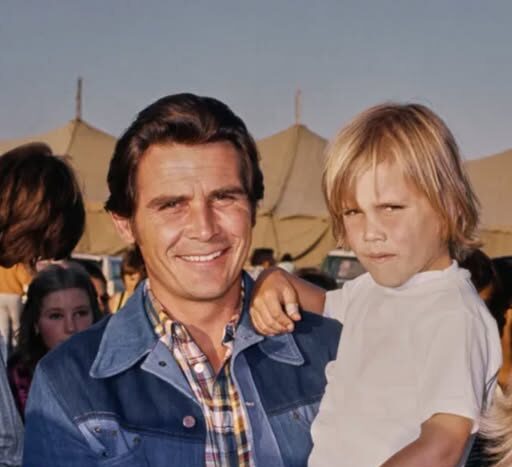
Josh Brolin Reflects on a Turbulent Childhood, Addiction, and the Sobriety That Changed His Life
The Actor Reveals the Difficult Experiences Behind His Hollywood Success
Celebrity lives are often viewed through the polished images seen on movie screens, red carpets, and magazine covers. Successful actors can appear to have effortless careers, financial security, and access to opportunities that most people can only imagine.
Behind that public image, however, personal struggles can remain hidden for decades. Josh Brolin has now opened a deeply personal chapter of his life, sharing memories of an unconventional childhood, years of substance use, painful family experiences, and the moment that finally pushed him toward sobriety.
Through his memoir, the actor presents a side of himself that audiences rarely see. His reflections show that professional success did not protect him from instability, addiction, grief, or the consequences of choices that began when he was still very young.
A Memoir Built Around Difficult Memories
Brolin’s memoir, titled “From Under the Truck,” explores different stages of his life and the events that shaped the person he eventually became. The book includes stories about his family, his upbringing, his struggles with alcohol and drugs, and his changing perspective on aging.
The title connects to a disturbing incident involving his mother’s boyfriend. After a night of heavy drinking, the man passed out beneath a vehicle, becoming part of a memory that remained with Brolin as he looked back on the unpredictable environment of his youth.
Rather than presenting his life as a straightforward journey toward Hollywood success, Brolin focuses on the disorder, danger, humor, and emotional contradictions that surrounded him. His memories reveal how complicated it can be to understand a parent who inspired both fear and affection.
An Unconventional Childhood Around Wild Animals
Brolin and his brother, Jess, were raised by their mother, Jane, who worked as a wildlife conservationist. Their upbringing brought them into unusually close contact with wild animals, including cougars, coyotes, and bobcats.
Some of the childhood experiences Brolin describes went far beyond ordinary interactions with animals. He recalled that his mother would sometimes direct the animals toward the boys by saying “Sic ’em,” forcing them to run for safety.
He described the urgency of those frightening moments in vivid terms: “You knew if you didn’t get on the other side of that shut door within a couple of seconds, you’d be cleaning up fresh bloody marks somewhere on your body for the rest of the day.”
The memory presents an alarming picture of two children trying to reach a closed door before an animal caught up with them. Even so, Brolin has resisted describing every experience from that period in simple terms such as terrifying or abusive.
He has said he remains “loath to say” that the memories were entirely horrifying. His relationship with his mother was filled with contradictions. She could be difficult and intimidating, yet she was also someone whose presence he continued to want.
That emotional tension appears throughout his reflections. He does not erase the danger of what happened, but he also does not reduce his mother to one characteristic or one set of actions.
Losing His Mother at 55
Jane died in a car accident in 1995 when she was 55 years old. Her death became one of the major events through which Brolin later examined his own behavior, his addiction, and his understanding of mortality.
During the most destructive period of his substance use, he viewed 55 as a reasonable age to die. At the time, he believed someone who reached that point had already lived a sufficiently long and complete life.
His opinion changed as he approached and passed the age his mother had been when she died. At 56, Brolin understood that 55 was not old and that his earlier way of thinking had been heavily influenced by the condition of his life at the time.
Becoming older than his mother ever had the chance to be gave him a different view of the years ahead. Instead of treating life as something that had already run its course, he began to appreciate the possibility of continuing to grow, change, and remain present for the people around him.
A Family Connected to Hollywood
Josh Brolin is the son of actor James Brolin, who is married to Barbra Streisand. Although Josh built his own acting career, his family relationships have remained an important part of the way he understands his past and present.
He has spoken openly about Streisand’s role as his stepmother and the direct manner in which she sometimes confronted him. Her willingness to address his drinking became one example of the “tough love” he remembers with appreciation.
Brolin recalled entering his father and stepmother’s home and asking for alcohol. “Well into our happily-ever-after I walked into their house one day: ‘I’ll have a glass of wine’, I said. She looked at me and cocked her head, so I repeated myself. ‘I’ll have a glass of red wine, please.’
He continued describing Streisand’s response: “She took a slow breath then hit me with it: ‘Aren’t you an alcoholic?’ It was a pretty ballsy thing to say … She always had a way of washing her tongue with a bulls*** cleanser before she talked with me.”
The conversation did not end there. Brolin remembered answering her directly: “(I said) ‘I’m an alcoholic, but I like red wine’. (She said) ‘You shouldn’t drink’.”
The exchange was blunt, but Brolin now recalls it fondly. Streisand did not ignore the contradiction between his acknowledgment of alcoholism and his request for wine. She confronted it without attempting to soften her message.
Substance Use Began at a Very Young Age
Brolin’s struggle with addiction began long before he became a successful adult actor. In his memoir, he recalls trying marijuana when he was only 9 years old.
By the age of 13, he had also experimented with acid. Those experiences placed substance use inside his life during childhood and early adolescence, years before he had the maturity to understand the long-term consequences.
As time passed, alcohol became part of a destructive pattern that affected his decisions, his relationships, and the way he viewed his own future. His public career continued to develop, but his private life remained vulnerable to addiction.
The actor’s memories make clear that addiction was not one isolated period or a single mistake. It was a long struggle that followed him through different stages of adulthood and required a decisive personal turning point before he could leave it behind.
The Moment That Became His Final Warning
That turning point arrived in 2013 during the final days of his grandmother’s life. She was 99 years old and lying on her deathbed when Brolin came to see her.
He had awakened hungover on the streets and arrived at her bedside still smelling strongly of alcohol. The contrast between his grandmother reaching the end of a long life and his own condition forced him to confront what he was doing to himself.
In that moment, Brolin realized he did not want his life to end early. He understood that he still wanted years ahead of him and that continuing to drink threatened those years.
“I knew that was going to be the last time I drank,” Brolin shared.
The decision marked the beginning of a new period in his life. Since that incident in 2013, he has maintained his sobriety for more than a decade.
His recovery did not erase what happened before it. Instead, sobriety gave him the opportunity to look back clearly, take responsibility for his behavior, and understand the people and events that influenced him.
Finding More Enjoyment Without Alcohol
Brolin has described sobriety as something that improved his life rather than restricting it. He no longer views alcohol as necessary for enjoyment, relaxation, or dealing with difficult experiences.
“I love being sober. I have more fun,” he shared. “There’s nothing that I go through that I am absolutely certain wouldn’t be worse if I was drinking.”
His words reflect a major change from the period when drinking was closely connected to his lifestyle. Sobriety has allowed him to face both ordinary problems and serious challenges without adding the instability that alcohol once created.
It has also changed his understanding of aging. Instead of looking at growing older as something negative, Brolin sees it as permission to slow down and stop living with constant pressure.
“I like getting older. It’s like a great excuse to finally go, ‘OK, just mellow out, you don’t need to constantly spin,’” the actor said.
A Different Perspective on Life at 56
At 56, Brolin has reached an age he once considered beyond the natural limit of a full life. He now recognizes how distorted that belief was and how closely it was connected to addiction and unresolved grief.
He has lived longer than his mother, remained sober for more than a decade, and reached a point where he can examine his childhood without denying either the affection or the danger that existed within it.
His memoir brings those complicated experiences together. It does not present recovery as a simple transformation or portray the past as something that can be neatly resolved.
Instead, Brolin’s story shows a man reconsidering the events that shaped him. He remembers a mother who could be frightening but deeply missed, a childhood filled with unusual risks, and years when alcohol threatened to shorten his life.
The actor’s professional achievements may be the part of his life most familiar to audiences, but his private journey offers a different measure of success. Remaining sober, accepting age, and finding greater peace have become achievements with meaning far beyond fame.
Looking Forward With Gratitude
Brolin’s reflections reveal how dramatically a person’s understanding of life can change. He once thought 55 was old enough to die. After reaching 56 himself, he sees how much life can still remain and how valuable those additional years can be.
His grandmother’s final days gave him the clarity to stop drinking. His stepmother’s direct words challenged the excuses he once made. The memory of his mother continues to shape the way he thinks about family, loss, and survival.
More than a decade after choosing sobriety, Brolin speaks about his life with appreciation. He is no longer constantly searching for escape or assuming that alcohol will improve an experience.
His journey demonstrates that an outwardly successful life can still contain deep personal struggles. It also shows that change can begin after years of destructive behavior when a person finally recognizes what is at stake.
For Brolin, sobriety has brought more enjoyment, greater self-awareness, and a healthier relationship with aging. The experiences described in his memoir remain painful and complicated, but they are now part of a life he is grateful to have continued living.