
Gold Dancer’s Final Race Sparks Fresh Outrage Over Horse Racing Safety
Shock and Silence at Aintree Festival
The final moments of Gold Dancer’s last race have triggered widespread criticism and renewed debate surrounding the safety standards of professional horse racing. What unfolded during the closing seconds of the Mildmay Novices Chase at the Aintree Festival left spectators stunned and many viewers deeply disturbed.
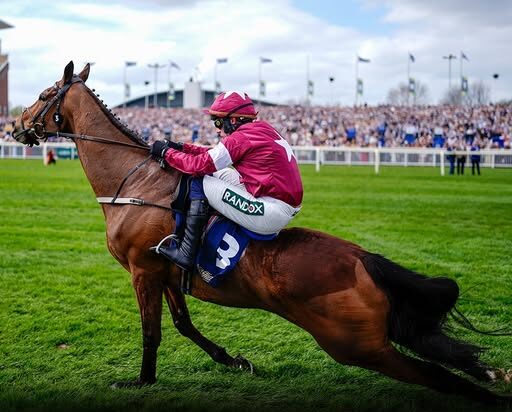
The seven-year-old gelding suffered a devastating injury after the final fence on April 10, 2026. Despite clearly struggling, Gold Dancer continued moving toward the finish line before collapsing shortly afterward.
Witnesses described the atmosphere around the course as tense and emotional as the horse attempted to continue after the incident. The distressing scene has since fueled growing concerns about the risks horses face during high-pressure racing events.
The Moment Everything Changed
Gold Dancer had entered the closing stages of the race appearing strong and competitive. Throughout much of the event, the gelding showed impressive pace and stamina, placing himself among the leading runners.
Everything changed at the final obstacle.
As Gold Dancer landed after clearing the last fence, his hindquarters slipped violently on the turf. The awkward movement caused his back legs to spread outward in what many observers immediately recognized as a serious physical breakdown.
Even after the slip, the horse continued moving toward the finish line. Spectators watched in disbelief as Gold Dancer struggled to maintain balance while attempting to complete the race.
Moments later, the horse collapsed.
The images from the race quickly spread across social media platforms, leading to intense public reaction and emotional responses from both racing supporters and critics.
Questions Raised About Race Decisions
The incident has intensified long-running arguments over whether injured horses should be stopped immediately during races rather than encouraged to continue.
Many critics argued that the race should have been halted the moment Gold Dancer showed signs of severe distress after the final landing.
The highly competitive environment of major racing festivals has once again come under scrutiny, with animal welfare advocates questioning whether pressure to finish races can sometimes outweigh immediate concerns for a horse’s condition.
Debate has also centered on the continued use of whips during the closing moments of races, especially when horses appear to be struggling physically.
The distressing footage from Aintree reignited emotional discussions online, with many viewers expressing anger over what they considered an avoidable tragedy.
Another Tragedy Deepens Concerns
The controversy surrounding Gold Dancer’s death intensified further because another horse reportedly lost its life at the same venue just one day later.
Get on George died during the Aintree Festival on April 11, 2026, adding to mounting criticism from campaigners who believe the sport places horses in dangerous situations.
The back-to-back incidents created renewed pressure on racing authorities to address safety concerns surrounding fences, race intensity, and overall welfare standards.
For many activists, the deaths became symbolic of larger concerns that have surrounded horse racing for years.
Calls for stronger regulations, stricter medical intervention, and changes to racecourse design quickly intensified in the days following the festival.
Officials Respond to the Incident
James Given, the director of equine health and welfare for the British Horseracing Authority, later commented on the incident involving Gold Dancer.
He explained that after the slip at the final fence, the horse appeared to regain coordination quickly enough to continue moving toward the finish line.
Given stated that Gold Dancer seemed to reorganize himself almost immediately after the landing issue, taking a half stride before continuing forward.
Those comments have become part of the wider debate over how race officials determine whether a horse is capable of safely continuing after an apparent injury.
Supporters of the sport argue that decisions during live racing situations often happen within seconds and rely on the judgment of experienced professionals.
Critics, however, believe the incident demonstrates the need for faster intervention protocols whenever a horse shows visible signs of distress or instability.
Growing Pressure From Animal Welfare Campaigners
Animal welfare organizations and campaigners reacted strongly following the events at Aintree.
Many described the incident as evidence that the physical demands of modern horse racing continue to place animals at unacceptable levels of risk.
Public criticism intensified as video footage circulated widely online, with viewers focusing on Gold Dancer’s struggle after the final fence.
Campaigners have renewed calls for sweeping reforms to the sport, including changes to race conditions and stronger protections for horses during major events.
Some activists have gone further, demanding an end to racing festivals that involve high-intensity jumps and large competitive fields.
The emotional reaction surrounding Gold Dancer’s death has once again placed the horse racing industry under intense public examination.
Aintree’s Long History Under Scrutiny
The Aintree Festival remains one of the most recognizable horse racing events in the world. Every year, thousands of spectators attend the races while millions more watch internationally.
However, the event has also faced repeated criticism over horse fatalities and injuries connected to jump racing.
Safety improvements have been introduced over the years, including modifications to fences and veterinary procedures. Despite those efforts, incidents involving severe injuries continue to generate controversy.
Gold Dancer’s death has now become another painful chapter in the ongoing conversation about how much danger should exist within the sport.
For supporters of racing, the sport represents tradition, athleticism, and a deep bond between horses and trainers.
For critics, tragedies like this reinforce concerns that competitive pressure may still expose horses to unacceptable physical risks.
Public Reaction Continues to Grow
Reaction to the incident has remained intense across social media and sports communities.
Some racing fans defended the sport and emphasized the unpredictable nature of competitive athletics involving animals. Others argued that accidents, while tragic, can occur despite safety precautions.
At the same time, many viewers expressed heartbreak over the final moments of Gold Dancer’s race and questioned whether more could have been done to prevent the outcome.
The incident has also reopened broader ethical debates about the role of animals in competitive entertainment.
As discussions continue, the images from Aintree remain difficult for many people to forget.
A Defining Moment for the Sport
The death of Gold Dancer has become one of the most talked-about moments of the 2026 racing season.
Beyond the immediate shock, the tragedy has intensified pressure on horse racing authorities to review existing welfare policies and emergency response procedures.
The conversation now extends beyond a single race or a single festival. Questions are being raised about the future direction of the sport itself and whether additional reforms are necessary to maintain public trust.
For many observers, the final moments of Gold Dancer’s race represented more than an isolated incident. They became a symbol of the growing tension between tradition, competition, and animal welfare.
As the debate continues, the events at Aintree are likely to remain at the center of ongoing discussions about how horse racing balances spectacle with responsibility.