
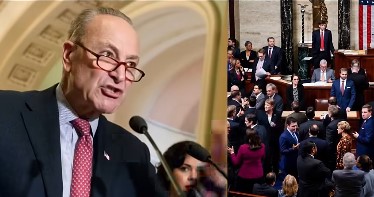
Party-Line Senate Vote Places Arthur Roberts Jones on Federal Bench in South Texas
The confirmation of Arthur Roberts Jones to the United States District Court for the Southern District of Texas has intensified the national debate over judicial appointments, lifetime tenure, and the growing political importance of the federal courts.
Approved by a narrow party-line vote, Jones enters one of the country’s most consequential federal judicial districts. The court handles major disputes involving the U.S.-Mexico border, immigration enforcement, organized crime, drug trafficking, national security, government corruption, and the limits of presidential authority.
Republicans presented Jones as an experienced legal professional prepared for the demands of a court operating in a region shaped by complex criminal and national-security challenges. Democrats viewed his confirmation as another strategic victory in a broader conservative effort to influence federal law for decades through lifetime judicial appointments.
A Confirmation Defined by Political Division
The Senate vote reflected the deep partisan divide that now surrounds many federal judicial nominations. Rather than producing broad agreement around a nominee’s professional qualifications, the process became a larger confrontation over ideology, institutional power, and the future direction of the judiciary.
Republicans supported Jones as a nominee with extensive experience in federal prosecution and military law. His background included approximately two decades as a federal prosecutor, along with service as an Air Force judge advocate general officer.
Supporters argued that this combination gave him practical knowledge of law enforcement, organized criminal activity, national security concerns, and the responsibilities of government attorneys. They maintained that such experience was especially relevant in the Southern District of Texas.
Democrats remained united against the nomination. Their opposition focused not only on Jones as an individual nominee, but also on the long-term consequences of placing another conservative-aligned judge in a lifetime federal position.
The sharply divided vote demonstrated how judicial confirmations have become extensions of the country’s wider political battles. Each appointment can affect the interpretation of federal law long after the president and senators responsible for the nomination have left office.
A Court at the Center of the Border Debate
The Southern District of Texas occupies an unusually important place within the federal court system because of its location and the range of cases that regularly reach its courtrooms.
Its jurisdiction includes areas directly affected by activity along the U.S.-Mexico border. As a result, judges in the district may oversee cases involving immigration policy, federal enforcement actions, alleged cartel operations, drug prosecutions, terrorism concerns, public corruption, and disputes involving executive power.
These subjects are not limited to local interests. Decisions made in South Texas can become part of national legal conflicts, particularly when federal policies are challenged or when enforcement programs raise constitutional questions.
Immigration remains one of the most divisive issues in American politics. Cases involving detention, removal efforts, border restrictions, executive directives, and federal agency authority can place district judges in the middle of disputes between presidential administrations, states, advocacy groups, and individuals affected by government action.
Jones will therefore serve in a district where legal decisions may quickly attract political attention. Even routine procedural rulings can become significant when they involve policies that are already the subject of intense national disagreement.
Republicans Emphasize Experience and Enforcement
Republican supporters framed Jones as a nominee whose professional history matched the needs of the district. They highlighted his work as a federal prosecutor and his military legal service as evidence of discipline, courtroom knowledge, and familiarity with serious federal matters.
Federal prosecutors are responsible for representing the United States in criminal proceedings and other legal matters. Jones’ lengthy prosecutorial career placed him in an environment involving investigations, evidence, federal statutes, courtroom procedure, and the government’s responsibility to enforce the law.
His Air Force legal experience added another element to the argument made by supporters. Military legal officers operate within a system that requires attention to national security, institutional responsibility, command structure, and specialized legal standards.
Republicans contended that a district confronting cross-border crime and national-security concerns benefits from a judge who understands the demands placed on federal law-enforcement agencies.
They portrayed his confirmation as a decision based on preparation and professional experience rather than a purely ideological effort. From their perspective, Jones brings a law-enforcement-centered background to a court where criminal and security-related cases form an important part of the workload.
Democrats Warn of Long-Term Judicial Influence
Democrats interpreted the nomination through a different lens. They viewed Jones’ confirmation as part of a sustained effort to build a more conservative federal judiciary by selecting nominees who can remain on the bench for many years.
Federal district judges receive lifetime appointments after Senate confirmation. That structure is intended to protect judicial independence, but it also makes each confirmation politically significant.
A relatively young judge may serve through multiple presidential administrations and congressional majorities. Decisions made during that period can influence how federal laws are applied, how government actions are reviewed, and how constitutional disputes are resolved.
Democratic opposition reflected concern that the cumulative effect of ideologically similar appointments could move federal courts in a lasting conservative direction.
To Jones’ critics, the confirmation represented more than the selection of one judge for one district. It became another step in a long-term struggle over the legal interpretation of immigration rules, executive authority, criminal enforcement, and federal power.
Lifetime Appointments and Political Strategy
The debate surrounding Jones illustrates why federal judicial nominations have become some of the most closely contested matters in Washington.
Presidents serve limited terms, and members of Congress must regularly face voters. Federal judges, however, can remain in office for decades, giving judicial appointments an influence that extends far beyond a single election cycle.
Political parties increasingly treat each vacancy as an opportunity to shape the legal system. A confirmed judge may eventually rule on policies created by future administrations, laws passed by later Congresses, or constitutional disputes that were not anticipated at the time of confirmation.
This long time horizon encourages both parties to evaluate nominees not only by their resumes, but also by how they may approach questions of government authority and statutory interpretation.
The result is a confirmation process in which professional qualifications and ideological concerns are often discussed together. Supporters may focus on experience and temperament, while opponents examine the broader direction in which a nominee could move the judiciary.
Jones’ party-line confirmation showed how difficult it has become to separate judicial nominations from national political strategy.
Cases With National Consequences
As a federal district judge, Jones will be responsible for applying existing law to the facts and arguments presented in individual cases. His courtroom will not function as a legislative chamber, but the consequences of judicial rulings can still extend far beyond the parties directly involved.
Immigration cases may determine whether specific federal actions can continue. Criminal proceedings may involve alleged cartel activity, trafficking networks, or other organized operations connected to the border region.
Corruption cases may require the court to evaluate the conduct of public officials or individuals accused of abusing positions of authority. Terrorism-related matters may involve sensitive evidence, government security concerns, and difficult questions about federal power.
Disputes over presidential authority may test how far an administration can go when implementing policy through executive action. Such cases can place district courts at the beginning of legal battles that later move through appellate courts.
Although higher courts may review some decisions, the district judge plays a critical role in developing the factual record, addressing preliminary requests, interpreting the law, and issuing the first major ruling.
The Judiciary as a Political Battleground
Jones’ confirmation reflects a broader transformation in the way federal courts are discussed in American politics.
Judicial nominations were once more likely to receive substantial support from members of both parties when nominees possessed conventional qualifications. Increasingly, however, confirmation votes divide along party lines.
This shift has occurred as courts have become central to conflicts that elected officials cannot resolve through legislation or political negotiation.
When Congress remains divided, major policy disputes often move into litigation. States challenge federal actions, presidential administrations defend executive policies, and opposing groups ask judges to determine whether government decisions comply with federal law and the Constitution.
As a result, political victories and defeats increasingly depend on courtroom decisions. The judges chosen today may determine how future disputes are handled, giving every lifetime appointment added importance.
For Republicans, Jones’ confirmation secures a judge they believe possesses the experience needed for a demanding border district. For Democrats, it deepens concern that conservative judicial influence is being strengthened through strategically important appointments.
A Lasting Role in South Texas
With the confirmation process complete, Jones now assumes responsibility for deciding cases independently within the boundaries of federal law.
The political arguments surrounding his nomination will not disappear, but his daily work will take place through hearings, written motions, evidentiary disputes, criminal proceedings, and judicial opinions.
His decisions will affect defendants, federal agencies, communities, government officials, and individuals challenging official policies. In some cases, the impact may remain limited to the immediate dispute. In others, the ruling may contribute to a wider national debate or become the foundation for an appeal.
The Southern District of Texas will continue to occupy a prominent position in conflicts involving the border and federal authority. Its judges will remain responsible for translating broad laws and policies into decisions that directly affect real cases.
Jones’ arrival on the bench gives him a lasting role in that process. Because the appointment is for life, his influence may continue through changing administrations, shifting congressional majorities, and evolving national priorities.
A Vote With Consequences Beyond Washington
The narrow Senate margin may have been counted in Washington, but the practical effects of the confirmation will be felt in South Texas courtrooms.
Jones will now participate in a federal judicial system facing some of the country’s most politically sensitive and legally difficult disputes. His background as a prosecutor and military legal officer will form part of the experience he brings to those responsibilities.
Republicans see the confirmation as the placement of a qualified enforcement-minded judge in a district that requires familiarity with complex federal cases.
Democrats see it as another example of lifetime judicial power being used to create a durable conservative influence over the interpretation of national law.
Those competing views explain why the vote generated such a strong reaction. The dispute was not simply about one nominee’s career. It was about who shapes the judiciary, how long that influence lasts, and which legal philosophy will guide courts when the country’s most contested policies are challenged.
Arthur Roberts Jones now holds the authority and responsibility of a federal judge in one of America’s most closely watched legal regions. His confirmation marks the end of a partisan Senate battle, but it also begins a judicial tenure that may shape immigration, criminal enforcement, national security, corruption, and presidential-power cases for many years.