
Caitlin Burke Solved a 27-Letter Wheel of Fortune Puzzle With Only One Letter Showing
A Single L and an Apostrophe Were Enough to Surprise Pat Sajak
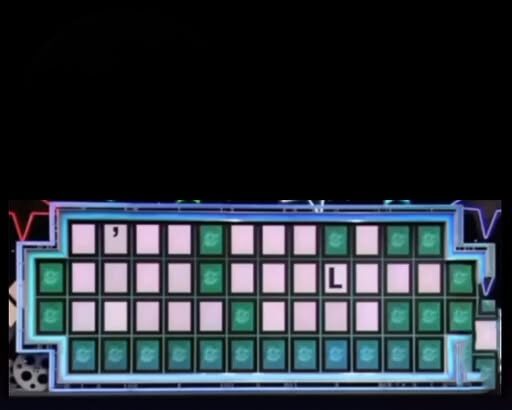
In 2010, Wheel of Fortune contestant Caitlin Burke produced a solution that seemed far ahead of the information on the board. With only one letter revealed, she correctly identified a seven-word phrase containing 27 letters.
The answer was “I’VE GOT A GOOD FEELING ABOUT THIS”. The only visible letter was an L, while an apostrophe and the arrangement of the blank spaces provided additional clues.
Her decision to solve caught host Pat Sajak by surprise. For viewers, the striking feature was the contrast between the nearly empty board and Burke’s confidence in supplying the complete phrase.
The moment became memorable because it showed how much information can exist in a puzzle before many letters have been uncovered. Burke recognized a structure and connected it with familiar language before the answer appeared obvious to others.
The Board Was Sparse, but It Was Not Without Clues
Describing the achievement as a one-letter solution captures what made it remarkable. It does not mean Burke had only a single piece of information available.
The spaces established how many words the answer contained and how long each word needed to be. The apostrophe supplied another important feature, narrowing the possibilities for the opening word.
The revealed L then gave her a position within that larger pattern. Instead of treating it as an isolated character, she could consider how it fitted into a complete expression.
That distinction helps explain the solution without diminishing it. Many people could look at the same clues and still find the answer difficult to recognize.
The challenge was to combine the visible details quickly and arrive at a phrase matching the entire board. Burke managed that while the majority of the answer remained hidden.
Once she spoke, the phrase was easy to understand. Before she did, the empty spaces had left Sajak and viewers waiting for information she apparently no longer needed.
The Apostrophe Helped Her Find a Starting Point
Burke later explained that she began with the first word. Its apostrophe suggested a contraction, giving her a manageable place to start rather than requiring her to solve every word simultaneously.
From there, she considered how an opening could develop into a familiar phrase. Recognizing a possible beginning gave the remaining spaces a context.
The process illustrates why punctuation can matter in a word puzzle. Although an apostrophe supplies no letter by itself, it changes the kinds of words that can occupy a position.
Word lengths then help test whether a possible answer belongs on the board. A phrase may sound plausible yet fail because one of its words requires too many or too few letters.
Burke’s successful answer met the full pattern. The opening contraction, the sequence of word lengths, and the position of the L aligned with the expression she recognized.
Her explanation makes the moment less mysterious while leaving its speed impressive. Understanding the available clues afterward is different from combining them successfully during a televised game.
Recognizing the Phrase Turned Separate Clues Into an Answer
The solution contained seven words, but Burke did not need to discover each one independently. Once a familiar expression came to mind, she could evaluate it as a complete possibility.
That is an important feature of pattern recognition in this particular moment. The board’s separate details became useful together, rather than requiring a letter-by-letter reconstruction.
The phrase also had a natural conversational rhythm. Its opening led into a statement about a feeling, followed by a familiar ending.
Recognizing that structure offered a route through the puzzle. Instead of imagining every word that could fit each space, Burke could test an expression whose parts already belonged together.
That does not establish that every similarly arranged puzzle would be easy or have only one possible answer. It explains how a promising phrase can become recognizable before the board is mostly filled.
The achievement lay in noticing the right possibility and committing to it. Burke’s answer demonstrated that she had connected the clues successfully.
Pat Sajak Had Little Time to Anticipate the Solve
Sajak’s surprise became part of the moment’s appeal. A request to solve arrived when the board still appeared to offer very little assistance.
For the host, the exchange moved quickly from revealing one L to hearing a full seven-word answer. The sudden change made Burke’s confidence particularly noticeable.
Her response was also memorable because the answer itself seemed to describe her decision. Saying that she had a good feeling about the puzzle sounded appropriate both as the solution and as an expression of confidence.
That coincidence gave the moment a simple quality viewers could remember. The phrase explained the board while also appearing to comment on what had just happened.
There was no need for an elaborate account of the reaction to appreciate the contrast. An almost blank puzzle had become a complete answer within a brief exchange.
The host’s astonishment reflected the same question viewers were asking: how had she reached the phrase so much earlier than they expected?
The Famous Solve and Her Overall Winnings Are Different Figures
Accounts of Burke’s appearance should distinguish the reward for this particular puzzle from the total she accumulated during the game. The one-letter solution did not, by itself, produce a $54,600 payout.
The puzzle earned her a Caribbean vacation, along with money associated with that round. Her overall winnings were a separate result of the full appearance.
Contemporaneous reports described her total as approximately $53,000, although summaries did not all present the prize figures in the same way. That variation makes it important not to attach an unsupported exact total to the single solve.
The essential distinction is straightforward: the celebrated answer was one moment within a larger game. Its particular prize should not be confused with everything she won.
Burke’s achievement remains notable without combining those figures. A seven-word solution with one letter showing is impressive on its own terms.
Keeping the accounting separate also preserves what viewers actually witnessed. They saw a contestant solve a sparse board, not receive an entire game’s winnings for one spoken phrase.
Why the Moment Is Easy to Remember
Some game-show achievements require considerable explanation before an audience understands their difficulty. Burke’s solution communicates its challenge almost immediately.
The board had 27 letters, seven words, and only one revealed letter. The answer arrived before most of that structure had been filled.
Those details create a clear before-and-after contrast. Viewers can see the lack of visible letters and then hear an ordinary expression that suddenly makes the whole arrangement understandable.
The explanation is equally accessible. Word lengths, punctuation, and familiar phrasing were present all along, but Burke connected them before the answer became apparent to everyone watching.
Her confidence and Sajak’s surprise gave the exchange its personality. The wording of the solution supplied an additional touch that made the scene especially easy to recall.
Burke’s 2010 appearance remains an example of a contestant seeing more in a puzzle than its visible letters alone. One L was on the board, but it was her understanding of the surrounding pattern that brought the answer into focus.